
Why do so many C10 projects stall in the garage, a collection of expensive parts that refuse to speak the same language? It’s a common tragedy in the restomod world. You’ve likely felt the pull of nostalgia, the desire to marry the iconic lines of a classic Chevy with the relentless reliability of modern power. Yet, the path is often cluttered with conflicting advice and hidden technical hurdles. The sheer volume of engine variants and accessory drives can turn a passion project into a logistical nightmare. It’s the difference between a running truck and a masterpiece.
We believe every vintage truck is a bespoke piece of functional art. To achieve that level of excellence, you need more than a parts list. You need an engineering blueprint. This guide offers a comprehensive LS swap C10 build sheet example to help you master the synergy between heritage and high performance. We’ll explore the critical components of a professional build, from fuel system integration to the nuances of electronic control units. You’ll gain the clarity needed to plan a build that delivers both brute force and refined comfort. Your truck should be built to be driven, not just displayed.
Key Takeaways
- Learn why a comprehensive LS swap C10 build sheet example is the essential engineering blueprint for ensuring mechanical compatibility and long-term reliability.
- Discover how to select the perfect LS engine variant and pair it with a modern electronic overdrive transmission to achieve the ideal balance of power and drivability.
- Identify the critical supporting systems, including high-pressure fuel delivery and specialized cooling, required to sustain modern performance within a vintage engine bay.
- Understand the vital role of chassis and suspension upgrades in transforming a classic truck into a high-performance machine capable of handling modern torque.
- See how a meticulous planning process serves as the foundation for creating an investment-grade, Elite Certified restomod that is built to be driven.
Defining the LS Swap C10 Build Sheet
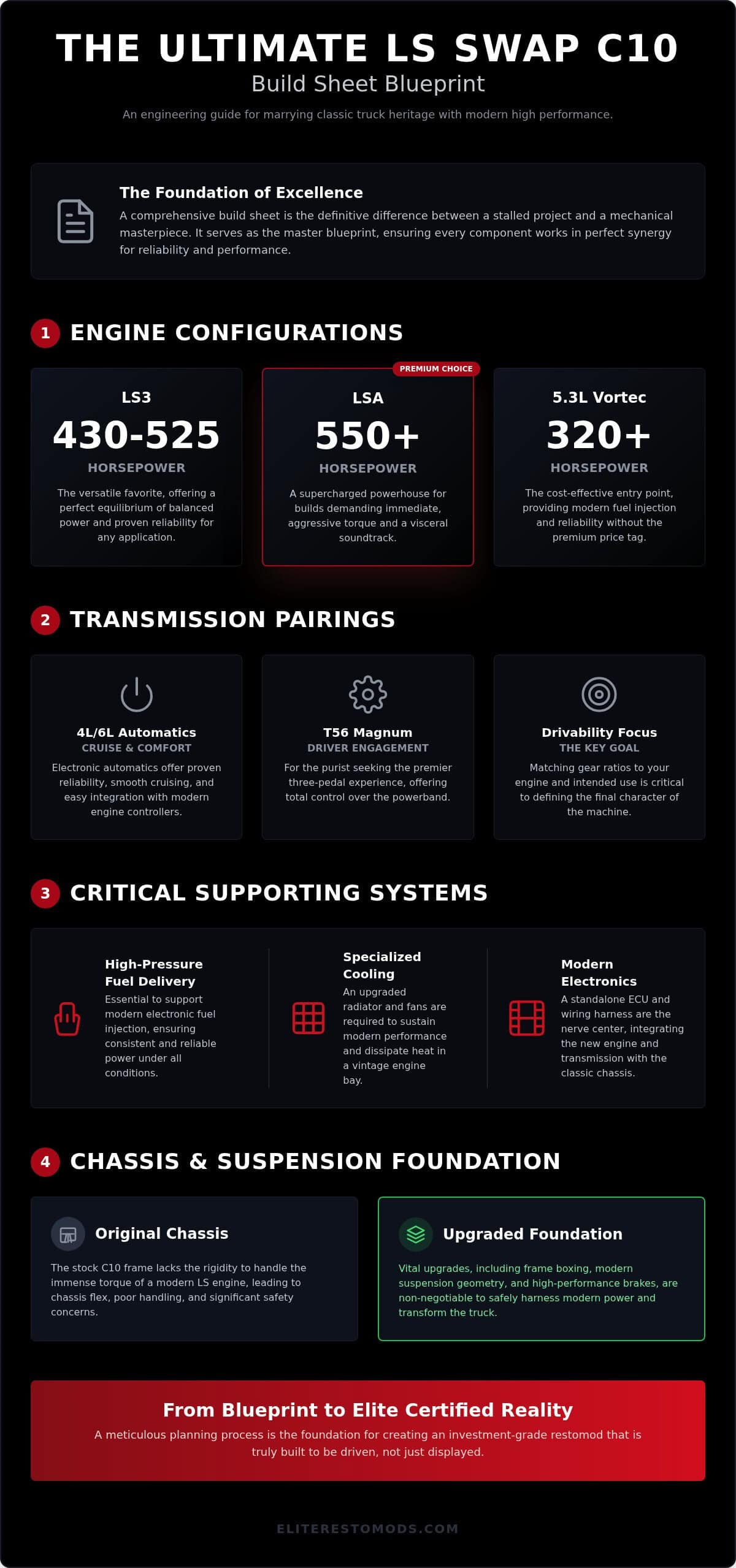
The blueprint is the definitive difference between a lingering project and a mechanical masterpiece. An LS swap C10 build sheet example is a comprehensive engineering document that details every component required to modernize a classic. It serves as the master blueprint, ensuring that the vintage Chevrolet C/K truck platform functions with the precision of a modern supercar. Professional builders use these sheets to categorize hardware into distinct systems: engine, drivetrain, cooling, and electronics. This isn’t just about organization. It’s about future proofing your investment. A documented build provides a transparent history that significantly enhances vehicle valuation, proving that every detail was handled with perfectionism.
The Purpose of a Detailed Build Document
Precision starts on paper. A detailed document simplifies the complex procurement process for high performance components, preventing the frustration of mismatched parts. It provides a definitive roadmap for both master builders and dedicated enthusiasts. By accounting for every bolt and bracket before the first wrench turns, you eliminate the delays that plague lesser builds. This systematic approach ensures that the synergy between classic aesthetics and modern capability remains unbroken throughout the transformation. It’s the first step toward achieving an Elite Certified result, where reliability is as paramount as raw power.
Why the LS Platform Dominates C10 Restomods
The LS engine is the heart of the modern restomod movement. It offers unmatched power to weight ratios and the relentless reliability of contemporary fuel injection. For the 1960 to 1987 Chevrolet C10 chassis, the aftermarket support is massive, allowing for a seamless integration of brute force into a vintage frame. There is a visceral thrill in experiencing modern torque while sitting behind the wheel of a classic truck. This duality defines the core of our work: the marriage of raw excitement and refined engineering. It’s about creating a vehicle that is meant to be utilized and enjoyed, not just parked in a collection. By following a proven LS swap C10 build sheet example, you ensure that your truck possesses the vision to exist in the modern era without losing its soul.
Every choice made during the planning phase dictates the final character of the machine. Whether you’re sourcing an LS3 for its high revving nature or an LSA for supercharged dominance, the build sheet remains your primary guide. It’s the bridge between a long held dream and a tangible, high performance reality.
Essential Engine and Transmission Configurations
The engine and transmission selection defines the very character of your restomod. It’s the moment where visceral power meets modern engineering. When developing your LS swap C10 build sheet example, you must decide whether you’re building a refined cruiser or a track capable beast. This choice dictates every subsequent hardware decision. The LS3 stands as the gold standard for naturally aspirated C10 builds in 2026, offering a perfect equilibrium of power and reliability. Whether you’re chasing raw speed or smooth highway miles, the drivetrain is the heartbeat of the machine.
Popular LS Variants for C10 Trucks
Selecting the right variant is about matching output to your driving aspirations. Each engine brings a unique personality to the vintage chassis, requiring specific considerations for plumbing and electronics.
- The LS3: Delivering 430 to 525 horsepower, it’s the versatile favorite for those who value balanced, reliable performance.
- The LSA: This supercharged powerhouse provides 550 plus horsepower, ideal for high end builds that demand immediate, aggressive torque and a visceral soundtrack.
- The 5.3L Vortec: Often sourced from late model trucks, it remains a cost effective entry point into the LS ecosystem without sacrificing the benefits of modern fuel injection.
Transmission Pairings for Modern Cruising
A modern engine requires a sophisticated partner to translate that power to the pavement. Drivability is won or lost in the transmission tunnel, where gear ratios must align with your intended use.
- 4L60E and 4L80E: These four speed electronic automatics are the workhorses of the swap world, offering proven reliability and easy integration with most controllers.
- T56 Magnum: For the purist, this six speed manual provides the premier three pedal experience, offering total control over the modern power plant.
- 6L80E: This six speed automatic offers a tighter gear spread for improved acceleration and superior highway fuel economy.
Achieving perfect engine placement requires more than just dropping the block into the bay. Proper motor mounts and specialized crossmembers are essential to ensure correct driveline angles and necessary hood clearance. For a detailed technical breakdown of these physical components, referencing a professional LS swap guide is invaluable for getting the geometry right the first time. You also face the pivotal choice between a brand new crate engine and a salvaged powerplant. While salvaged units are budget friendly, a new crate engine offers the peace of mind that comes with a warranty and zero mile longevity. If you prefer a turnkey solution where every mechanical intricacy is already perfected by masters of the craft, exploring our custom build services can turn your vision into an Elite Certified reality. Every project we curate treats the mechanical assembly as a bespoke piece of functional art, ensuring the brute force is always tempered with refined comfort.
Supporting Systems: Fuel, Cooling, and Electronics
The brute force of a modern V8 requires a sophisticated support network to function reliably. In a professional LS swap C10 build sheet example, the supporting systems are treated with the same meticulous care as the engine itself. This is where a project transitions from a collection of parts to a fully sorted, investment-grade machine. High-pressure fuel delivery, efficient thermal management, and seamless electronic integration are the silent partners of high performance. It’s the difference between a truck that starts occasionally and one that’s ready for a cross-country journey at a moment’s notice.
EFI Fuel System Essentials
Modern fuel injection demands consistent, high-pressure delivery that vintage mechanical pumps simply cannot provide. For an elite build, in-tank pumps are the professional choice over external units. They run cooler, quieter, and offer superior longevity by being submerged in fuel. Pairing these with EFI-ready baffled tanks is essential to prevent fuel starvation during spirited cornering or rapid acceleration. To ensure compatibility with modern ethanol-blended fuels, you should utilize PTFE-lined hoses and high-quality fuel pressure regulators. These components guarantee that the lifeblood of your engine remains untainted and under perfect control. It’s about building for modern operational reliability while preserving the soul of a classic icon.
Advanced Cooling and Electrical Integration
High-horsepower engines generate significant thermal loads that can overwhelm a vintage radiator. High-flow aluminum radiators equipped with integrated electric fan shrouds provide the necessary cooling capacity for reliable daily driving. These systems are often controlled directly by the ECU, ensuring fans only engage when required, which reduces parasitic draw and noise. This systematic approach to thermal management is a hallmark of a master builder who understands that no detail is too small to be overlooked in the pursuit of excellence.
The electronic integration serves as the bridge between the LS ECU and the classic C10 chassis. A standalone wiring harness acts as the modern nervous system, merging contemporary engine functions with the nostalgia of classic truck gauges. This process often includes mounting an electronic throttle pedal and performing meticulous Drive-By-Wire calibration to ensure a responsive, visceral driving experience. To safeguard these sophisticated systems, a dedicated power distribution center is vital. It centralizes fuses and relays, providing the electrical reliability required for a vehicle meant to be utilized and enjoyed. This level of detail is what transforms an LS swap C10 build sheet example into a true engineering blueprint for a high-performance reality.
Chassis and Suspension for LS-Powered Trucks
The brute force of a high-performance LS engine demands a foundation that can withstand modern levels of torque. A vintage frame, originally engineered for the modest outputs of the 1960s and 70s, requires strategic reinforcement to prevent structural twist and maintain alignment under load. When reviewing a professional LS swap C10 build sheet example, the chassis and suspension sections are just as critical as the engine specifications. You aren’t just building a faster truck; you’re engineering a vehicle that remains composed and predictable under extreme pressure. This structural transformation ensures the machine feels as refined on a winding mountain pass as it does on a wide-open straightaway. It’s the marriage of brute force and sophisticated control.
Pro-Touring Suspension Upgrades
Achieving modern handling characteristics requires a systematic replacement of aging, flexible components with high-performance hardware. Coilover conversions are the professional’s choice, allowing for precise, adjustable ride height and significantly improved damping for a smooth yet responsive ride. By integrating tubular control arms, you improve suspension geometry and gain the structural strength necessary for aggressive cornering. To truly master the power, replacing traditional leaf springs with a rear 4-link setup is the definitive choice for maximizing traction. This sophisticated arrangement eliminates wheel hop and provides the stability required to put 500 plus horsepower to the pavement with absolute confidence. It transforms the truck from a vintage utility vehicle into a bespoke piece of functional art.
Braking and Steering Precision
Stopping power must always outpace acceleration to ensure a safe, luxury driving experience. For investment-grade builds, big brake kits featuring 4-piston or 6-piston calipers are essential components. These systems provide the fade-resistant, high-speed stopping power that modern highway speeds demand. In the tight confines of a modern LS-swapped engine bay, a hydroboost braking system often replaces traditional vacuum boost to save valuable space while significantly increasing hydraulic line pressure. By following a rigorous LS swap C10 build sheet example, you ensure that every component, from the frame rails to the spindles, is prepared for the modern era.
Steering modernization is the final piece of the precision puzzle, replacing the vague feel of an aging steering box with the immediate, tactile feedback of a modern rack-and-pinion setup. You must also ensure power steering pump compatibility with your modern LS accessory drive to maintain consistent assistance across the entire RPM range. This level of mechanical synergy is what distinguishes a professional-grade build from a common project. If you’re ready to see how these meticulous engineering choices manifest in a finished vehicle, browse our inventory of Elite Certified restomods to find your next masterpiece.
From Build Sheet to Elite Certified Reality
The transition from a technical document to a high-performance asset is where true craftsmanship begins. An LS swap C10 build sheet example serves as the definitive guide, but the execution requires a master’s touch to reach investment-grade status. There is a profound difference between a running project and a fully sorted machine. A project truck might possess the right components, yet it often lacks the meticulous calibration and system integration that defines an Elite Certified restomod. Professional commissioning ensures every detail on your blueprint is executed to perfection, transforming a collection of high-end parts into a cohesive, reliable masterpiece. It’s the bridge between a long-held dream and a tangible reality.
The Elite Restomods Build Philosophy
We treat every Chevrolet truck as a bespoke piece of functional art. Our process is rooted in the marriage of brute force engineering and refined comfort. While the engine bay might house the visceral power of a supercharged LS, the cabin is an environment of luxury craftsmanship and artisanal finishes. This duality is central to our vision. We don’t just build machines for display. We create vehicles that are ready for reliable daily driving, ensuring that the nostalgia of the classic era is always supported by the confidence of modern engineering. Every stitch in the leather and every torque spec on the chassis is a testament to our perfectionism. It’s about reliability without compromise.
Commissioning Your Custom Build
Planning is the foundation, but realization is the reward. We utilize a comprehensive LS swap C10 build sheet example to guide our custom build services, ensuring that your specific vision is translated into a high-performance reality. This systematic approach eliminates the uncertainty often associated with high-end restorations. It allows you to move from the logical breakdown of technical work to the visceral excitement of your first drive with absolute trust in the vehicle’s capability. The process is a transformative journey that we invite you to participate in, rather than a simple transaction.
The long-term value of a documented, high-quality build cannot be overstated. A transparent history of professional execution provides the exclusivity and pride that discerning collectors demand. To see these engineering blueprints in action, you can explore our current inventory of Elite Certified Restomods. These vehicles represent the final realization of the planning process, where every mechanical intricacy has been mastered to provide a world-class driving experience. Your dream truck shouldn’t just be a machine; it should be an investment in excellence that is meant to be utilized and enjoyed for generations.
Realizing Your High Performance Vision
Transforming a vintage asset into a modern masterpiece requires more than just high end parts. It demands a systematic approach to engineering that prioritizes synergy across every mechanical system. Precision is paramount. You’ve seen how a comprehensive LS swap C10 build sheet example serves as the foundation for this journey, ensuring technical precision and long term reliability. From the brute force of a supercharged engine to the refined control of a modern suspension, every choice dictates the final character of the machine. This meticulous planning is what distinguishes a common project from an investment grade restomod.
We specialize in bringing these blueprints to life with our Elite Certified quality assurance and deep expertise in high performance engine swaps. Our team understands that every project is a bespoke piece of functional art meant to be utilized and enjoyed. Heritage meets horsepower. With national enclosed vehicle transport available, we bridge the gap between your vision and a high performance reality. Commission your dream LS-swapped C10 with Elite Restomods and take the first step toward owning a masterpiece. Your journey from a classic icon to a modern legend starts today.
Frequently Asked Questions
What is the average cost of an LS swap for a C10 truck?
The total investment varies significantly based on your performance goals and the level of craftsmanship desired. A project featuring a salvaged engine and basic hardware represents a different tier than an investment-grade build utilizing a new crate engine and artisanal finishes. Professional execution involves costs for high-performance components, custom fabrication, and specialized electronics to ensure the vehicle is fully sorted and reliable.
Can I use the original C10 transmission with an LS engine?
It’s possible to adapt a vintage gearbox using specialized adapter plates, but it’s rarely the recommended path for an elite build. Modern LS powerplants generate torque levels that can easily overwhelm aging transmissions. Transitioning to a modern electronic overdrive unit ensures the drivability and reliability expected of a contemporary restomod, allowing you to enjoy the brute force of the engine without mechanical compromise.
Do I need to change my fuel tank for an LS swap?
A specialized EFI-ready fuel tank is essential for maintaining the high, consistent pressure required by modern fuel injection. Vintage tanks lack the internal baffling and high-pressure pump mounts needed to prevent fuel starvation during spirited cornering. Including a baffled tank in your LS swap C10 build sheet example ensures the engine receives a steady flow of fuel, supporting modern operational reliability for daily driving.
Which LS engine is easiest to install in a classic Chevy truck?
The 5.3L Vortec is widely regarded as a straightforward entry point due to its availability and common accessory drive configurations. However, for those seeking a premium balance of high-end power and refined engineering, the LS3 is a favorite among master builders. Its massive aftermarket support for the C10 chassis simplifies the integration of cooling systems, exhaust routing, and electronic control units during the transformation process.
Will an LS swap increase the value of my classic C10?
A professionally executed conversion significantly enhances the valuation and market exclusivity of a vintage truck. Discerning collectors seek out vehicles that offer the visceral excitement of modern performance paired with iconic design. When you document the project through a meticulous LS swap C10 build sheet example, you prove the vehicle is a bespoke piece of functional art, which drastically increases its appeal as an investment-grade asset.
What are the most common mistakes on an LS swap build sheet?
The most frequent error is neglecting the synergy between supporting systems like cooling, fueling, and chassis reinforcement. Many builders focus exclusively on horsepower while overlooking the high-flow radiators or high-pressure regulators needed to sustain that power. Forgotten electrical details, such as dedicated power distribution centers or proper ground paths, often lead to reliability issues that prevent the truck from being truly utilized and enjoyed.
How long does a professional LS swap typically take to complete?
Achieving an Elite Certified standard of quality typically requires several months of dedicated engineering and artisanal work. This timeline allows for a systematic breakdown of the vehicle, precision mounting of the drivetrain, and a rigorous quality assurance process. It’s a transformative journey that ensures every mechanical intricacy is perfected, moving the project from a logical breakdown of parts to a tangible, high-performance reality.