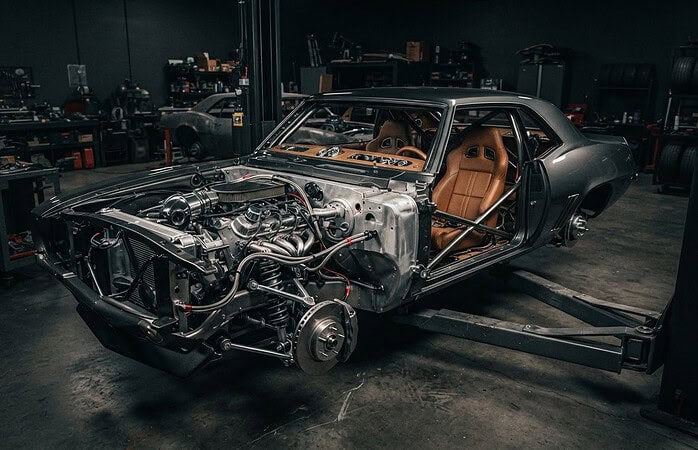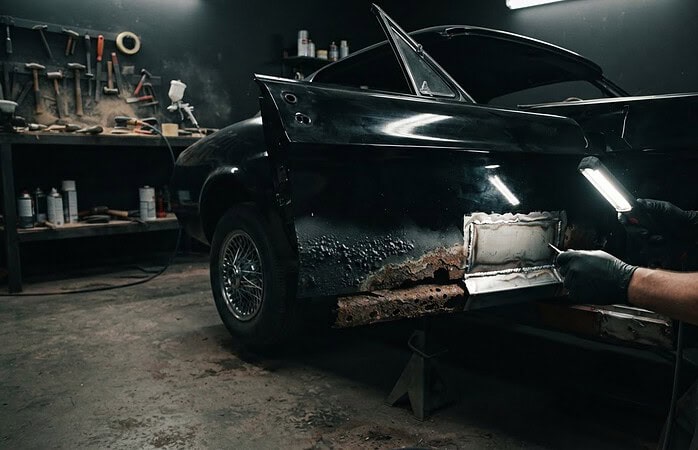

The raw, visceral howl of a 5.0L modular V8 under the hood of a vintage fastback isn’t just a dream; it’s a meticulously engineered reality that demands a precise financial blueprint. You likely recognize that while the classic small block has its nostalgic charm, it cannot match the relentless power and turn-key reliability of Ford’s modern masterpiece. However, the true Coyote swap Mustang cost is often obscured by hidden variables and the “nickel and dime” reality of supporting components. We understand that your goal is a fully sorted vehicle that balances brute force with refined comfort.
This 2026 guide provides a comprehensive breakdown of the investment required to modernize your Mustang, from the $3,000 salvage finds to the $21,000 Gen 4 crate engines. We will explore the critical necessity of upgraded K-members, fuel systems, and braking hardware that ensure your car handles as well as it accelerates. Whether you are weighing the precision of professional labor or the grit of a DIY project, you’ll gain the clarity needed to bridge the gap between a vintage asset and a high-performance reality.
Key Takeaways
- Identify the tiered pricing for Gen 1 through Gen 4 engines to determine which performance level matches your vision and budget.
- Uncover the often overlooked expenses for critical supporting hardware, including modern fuel systems, custom K-members, and high-performance cooling solutions.
- Master the total Coyote swap Mustang cost by analyzing the financial differences between a salvaged component approach and the security of new Ford Performance hardware.
- Compare the time investment of a DIY build against the precision and reliability of professional custom build services to ensure a fully sorted result.
- Learn how to transform a vintage asset into a functional piece of art that offers modern operational reliability alongside its classic aesthetic.
The Anatomy of an Investment: Why the Coyote Swap is the Modern Standard
The classic Ford small block is a legend of the asphalt. It defined an era of American muscle with its rhythmic lope and mechanical simplicity. Yet, as we move through 2026, the demand for a more sophisticated driving experience has shifted the gold standard toward the DOHC modular platform. Transitioning to a modern V8 is about more than just raw numbers. It is about the marriage of heritage and contemporary capability. When calculating the Coyote swap Mustang cost, one must look beyond the initial parts list to the transformative nature of the investment itself. This is a total vehicle evolution that replaces the temperamental nature of carburetors with the surgical precision of direct injection.
The Evolution of the 5.0L Platform
Since its debut in 2011, the Coyote engine has undergone four distinct iterations of refinement. The early Gen 1 and 2 units established the foundation for modular power, but the Gen 3 and Gen 4 platforms have pushed the boundaries of naturally aspirated performance to new heights. A vintage iron-block 302 typically weighs around 460 pounds. In contrast, the aluminum-block Coyote remains remarkably light despite its larger physical footprint. This weight advantage improves front-end geometry and handling characteristics. Twin Independent Variable Cam Timing (Ti-VCT) allows the engine to breathe with incredible efficiency across the entire RPM range. It provides a flat torque curve that makes a 1967 fastback feel like a modern supercar on the open road.
Restomod vs Restoration: Choosing the High-Performance Path
Choosing a Coyote swap fundamentally moves a vehicle from a simple restoration into the prestigious category of the restomod. This path is for the curator who refuses to compromise on operational reliability or street manners. Market demand for modernized classics continues to climb, as enthusiasts seek the soul of a vintage asset without the mechanical headaches of the past. At Elite Restomods, we view every project as a bespoke piece of functional art. By integrating modern power into a vintage chassis, you create a machine meant to be utilized and enjoyed. You can explore our comprehensive custom build services to see how we bridge the gap between a client’s dream and a high-performance reality. This meticulous approach ensures the Coyote swap Mustang cost results in a fully sorted, investment-grade asset that retains its value and delivers a visceral, world-class driving experience every time you turn the key.
Breaking Down Component Costs: The 2026 Parts List
Precision costs money. While the emotional allure of a modern V8 is undeniable, the clinical reality of the bill of materials defines the success of your project. Calculating the Coyote swap Mustang cost requires a granular look at everything from the block itself to the high-pressure fuel lines that feed it. Every component must be selected with the final vision in mind. A mismatched driveline or a subpar cooling system won’t just hinder performance; it will compromise the reliability you’re investing so heavily to achieve.
The Core Engine and Electronics
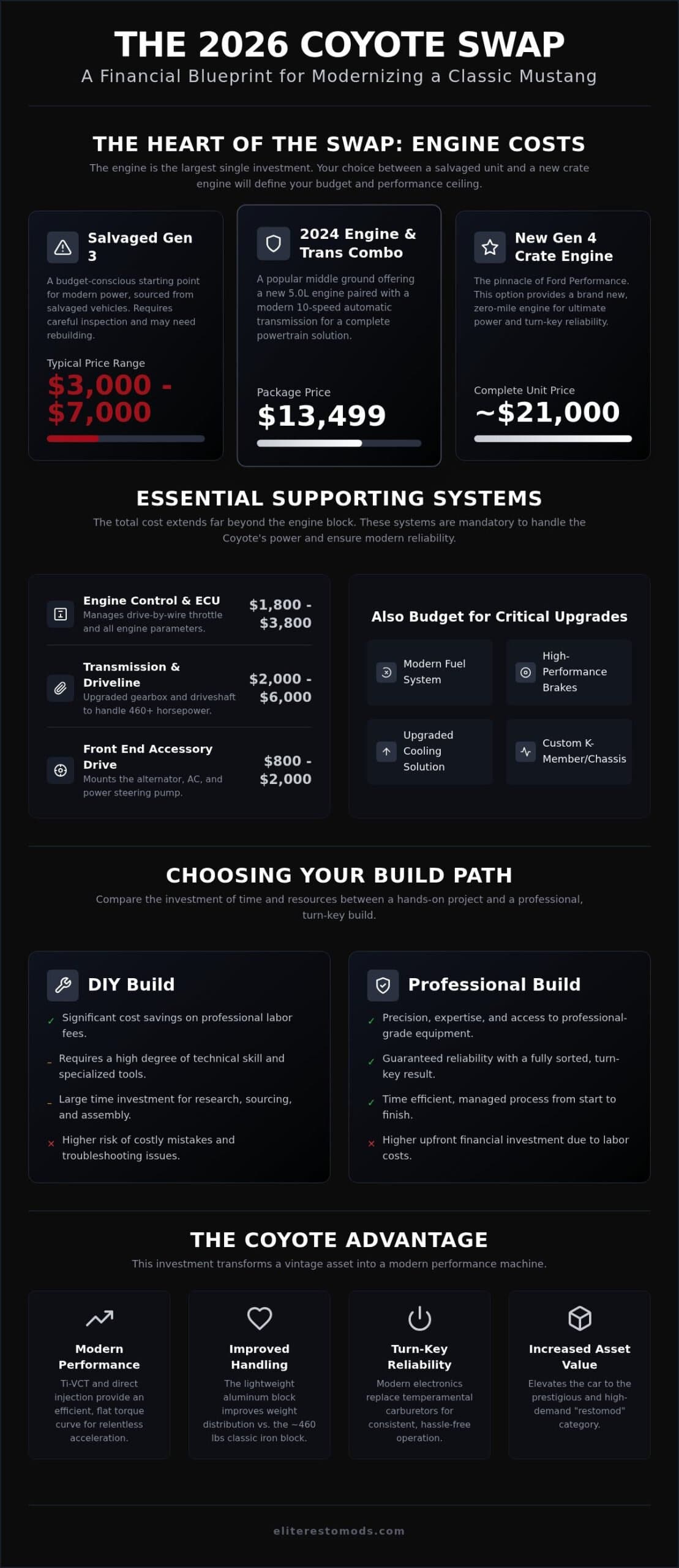
Your journey begins with the heart of the machine. As of mid-2026, a new Gen 4 crate engine represents the pinnacle of Ford Performance, often reaching prices near $21,000 for a complete unit. If you’re looking for a balance of value and power, used Gen 3 engines from salvaged vehicles can be sourced for approximately $3,000 to $7,000, though these require careful inspection. A popular middle ground is the 2024 5.0L engine paired with a 10-speed automatic transmission, which was recently listed for $13,499. Beyond the block, you must budget for the following:
- Control Pack and ECU: Essential for drive-by-wire throttle and engine management, these kits range from $1,800 to $3,800.
- FEAD Kits: Front End Accessory Drive kits are necessary to mount your alternator and AC compressor, typically adding $800 to $2,000 to the total.
- Wiring Harnesses: Integrating modern sensors into a vintage chassis demands high-quality, specialized looms to prevent electrical gremlins.
Transmission and Driveline Upgrades
The torque of a Coyote engine will quickly overwhelm a stock T-5 or C4 transmission. To handle the 460-plus horsepower of a modern 5.0L, most builders opt for a T-56 Magnum 6-speed manual or the lightning-fast 10R80 automatic. These conversions, including the necessary bellhousings and clutch or torque converter assemblies, generally cost between $2,000 and $6,000. Don’t overlook the secondary driveline components. A custom aluminum driveshaft and a strengthened 8.8-inch or 9-inch rear end are vital to ensuring that power actually reaches the pavement without snapping a factory axle.
Supporting Chassis Modifications
A Coyote engine is physically wider than a traditional 302, which creates immediate clearance issues. While some choose to notch the original shock towers, this often compromises structural rigidity. The K-member swap is the preferred method for modern engine fitment, providing the necessary clearance and optimized suspension geometry for a high-performance build. This upgrade often goes hand-in-hand with a move to power rack-and-pinion steering and Hydroboost brakes, as the factory vacuum-assisted systems rarely fit alongside the massive DOHC heads. Commissioning a custom build service ensures these complex systems harmonize perfectly, transforming a collection of expensive parts into a cohesive, investment-grade vehicle.
The Reality of Professional Labor and Hidden Expenses
A project of this magnitude is rarely a simple bolt-in affair. While the crate engine represents the most visible portion of the Coyote swap Mustang cost, the invisible hours of engineering and integration define the final product’s soul. It’s easy to overlook the “nickel and dime” hardware that accumulates during a build. Experienced builders follow the 20 percent rule. This means adding a significant buffer to your initial budget for specialized fittings, high-pressure fuel lines, and unexpected fabrication requirements that only emerge once the old engine is pulled.
Integration is where the complexity truly lies. Wiring a modern Ford ECU into a chassis built in the 1960s requires more than just a soldering iron; it demands a deep understanding of electrical architecture. You must account for custom engine mounts and oil pan clearance to ensure the engine sits correctly within the bay. Proper steering shaft geometry is equally critical. If the shaft isn’t perfectly phased, you’ll experience binding that ruins the driving experience. Once the mechanical assembly is complete, the car requires professional dyno tuning and a rigorous break-in procedure to ensure every system operates in perfect harmony.
The Value of Professional Engineering
Labor is the bridge between a collection of parts and a functional masterpiece. For a basic installation, you might expect 20 to 40 hours of shop time. However, a highly customized, investment-grade build often requires 60 to 120 hours to achieve a refined, factory-plus finish. This investment prevents the long-term reliability issues that plague amateur swaps. Professional integration ensures that every sensor, cooling fan, and fuel pump operates as intended. You can view our detailed restoration process to understand the meticulous standards required for a truly sorted vehicle.
Addressing the Steering and Suspension Bottleneck
Stock Mustang suspension wasn’t designed to handle the 460-horsepower output of a modern 5.0L. The sheer physical width of the Coyote heads forces a departure from the original steering box. A power rack and pinion conversion is essentially mandatory, costing between $700 and $1,000 for the kit alone, excluding labor. This change provides the necessary clearance and modern feedback. To ensure safety and predictable handling, coilover upgrades are a non-negotiable requirement. These systems allow for precise ride height and damping adjustments, ensuring your classic can actually harness its newfound power without compromising control on the road.
Coyote Swap Budget Frameworks: DIY vs. Professional
Every project begins with a vision. Some builders see a weekend challenge; others see a legacy. The Coyote swap Mustang cost is ultimately a reflection of where you place your value, whether it is in the grit of the process or the perfection of the final product. Choosing a budget framework requires a deliberate balance between your mechanical aptitude and your long-term goals for the vehicle’s performance and resale value.
- The Budget Build: This tier typically utilizes a salvaged F-150 power plant and significant sweat equity. It prioritizes raw functionality over aesthetic perfection. While the initial buy-in for parts is lower, the time to completion can easily stretch into 12 to 24 months as the builder troubleshoots used sensors and complex wiring gremlins.
- The Mid-Tier Build: This path pairs a new Ford Performance crate engine with high-end bolt-on suspension kits. It offers a significant leap in reliability and street manners. Most enthusiasts find this to be the sweet spot between a raw project and a professional masterpiece.
- The Elite Restomod Build: This represents the pinnacle of automotive craftsmanship. It features full chassis integration, bespoke wiring, and luxury finishes. These builds are fully sorted from day one, offering a turn-key experience that mirrors the reliability of a modern showroom floor.
The Hidden Cost of the DIY Learning Curve
The allure of the garage build often masks a significant investment in specialized infrastructure. Modular engine work requires a high-end specialized lexicon of tools, including cam phaser locks, modular-specific engine stands, and advanced diagnostic software. Amateurs frequently struggle with the sorting phase, which is the final 10 percent of the build where small errors lead to persistent leaks or electrical ghosts. A vehicle without professional documentation often faces a lower resale value. Collectors pay a premium for the peace of mind that comes with a verified, expert-executed build that functions as a cohesive unit.
Professional Builds as a Financial Investment
Choosing a professional path transforms a mechanical project into a documented financial asset. An Elite Certified build provides a level of ROI that DIY projects rarely achieve. This is due to the meticulous nature of the documentation, the inclusion of warranty support, and the use of industry-standard hardware throughout the chassis. For those looking to realize a dream without the mechanical headaches, our custom build services offer a streamlined path to ownership. By treating the car as a piece of functional art, you ensure its value remains as robust as its performance on the asphalt. This professional integration ensures that your Coyote swap Mustang cost results in a vehicle that is meant to be utilized and enjoyed, not just displayed.
The Ultimate Solution: Commissioning Your Elite Coyote Mustang
The complexity of a modern powertrain integration often overshadows the joy of ownership. While calculating the Coyote swap Mustang cost is a necessary exercise in performance budgeting, the true value lies in the precision of the execution. Commissioning a professional build removes the burden of troubleshooting and fabrication from your shoulders. It allows you to focus on the sensory experience of the drive. At Elite Restomods, we treat every project as a transformative journey. We ensure that the final product is not just a collection of expensive parts, but a cohesive, investment-grade asset that performs with clinical precision. It’s the difference between a project car and a piece of functional art.
Our approach balances brute force with refined comfort. You aren’t just choosing an engine; you’re selecting a bespoke driving environment. From performance-tuned suspension systems to artisanal interiors hand-stitched by master craftsmen, every detail is meticulously curated. This level of quality assurance provides a peace of mind that DIY projects simply cannot replicate. You receive a vehicle that is fully sorted, reliable, and ready to be utilized on the open road. We bridge the gap between a long-held dream and a tangible, high-performance reality through perfectionism and pride.
Starting Your Custom Build Journey
The process begins with a shared vision between the client and our master builders. We guide you through the selection of the ideal donor vehicle and the specific powertrain requirements for your driving style. Whether you desire the high-revving nature of a naturally aspirated Gen 4 or the relentless power of a supercharged variant, we provide the technical expertise to realize that goal. Our team manages the logistical intricacies of sourcing hardware and managing the build timeline. You can explore our custom build services to understand how we transform a vintage chassis into a modern masterpiece with modern operational reliability.
Finding Your Ready-to-Drive Mustang
For those who wish to bypass the build timeline, our current inventory offers a selection of Elite Certified vehicles. Buying a completed restomod is often more cost-effective when you factor in the thousands of hours required for engineering, wiring, and sorting. These vehicles represent the ultimate marriage of traditional aesthetics and modern capability. You can view our current inventory to find a Coyote-powered classic that is ready for immediate delivery. Experiencing the visceral roar of a modern 5.0L within a vintage frame is a transformative event. It is the realization of a legacy, brought into the modern era with the confidence of world-class engineering.
Realizing Your High-Performance Legacy
The journey to modernizing a classic is an exercise in both passion and precision. You now understand that the true Coyote swap Mustang cost involves more than just a crate engine. It’s a holistic integration of high-pressure fuel systems, reinforced drivelines, and sophisticated electronics. Balancing the grit of a DIY project against the refined excellence of a professional build is the final step in your planning process. This decision defines whether your car remains a perpetual project or becomes a documented, high-value financial asset.
At Elite Restomods, we bridge the gap between your long-held dream and a tangible reality. Our Elite Certified quality assurance process ensures every vehicle is fully sorted for the modern road. Specialized classic car financing options make investment-grade performance accessible. We handle the logistical complexities, including nationwide enclosed vehicle transport, so you can focus on the visceral thrill of the drive. Your vision of a bespoke piece of functional art is within reach. Explore our inventory of fully sorted Coyote-powered Mustangs to begin your journey today.
Frequently Asked Questions
Is a Coyote swap worth the money for a classic Mustang?
A Coyote swap is widely considered worth the investment because it provides modern reliability and 460-plus horsepower. This transformation turns a temperamental classic into a turn-key machine that you can drive daily. While the Coyote swap Mustang cost is significant, the performance gap between a pushrod engine and a DOHC modular V8 is massive. You gain the confidence of modern engineering without sacrificing the soul of your vintage asset.
How much does a Gen 3 Coyote engine cost in 2026?
In 2026, a Gen 3 Coyote engine typically costs between $3,000 for a used salvage unit and $13,499 for a recent engine and transmission combination. New crate engines from Ford Performance can reach up to $21,000 depending on the generation and included accessories. These prices reflect the engine’s status as the industry standard for high-performance restomods. Investing in a new unit ensures maximum longevity and performance on the open road.
Can I keep my original transmission with a Coyote swap?
You cannot keep your original classic transmission because it lacks the structural integrity to handle modern torque levels. A Coyote engine produces over 420 lb-ft of torque, which would quickly shred a factory T-5 or C4 transmission. Most successful builds utilize a T-56 Magnum 6-speed or a 10R80 10-speed automatic. These modern gearboxes provide the durability and gear ratios required to harness the engine’s power effectively and reliably.
What is the cheapest way to Coyote swap a Mustang?
The most affordable path involves sourcing a used engine from a salvaged F-150 and performing the labor yourself. This approach can keep your Coyote swap Mustang cost closer to the $7,800 entry point. You’ll need to handle the wiring, fabrication, and assembly without professional assistance. While this saves on labor, it requires a significant investment in specialized tools and an extensive time commitment to ensure the vehicle is safe for high-speed driving.
How long does a professional Coyote swap take to complete?
A professional, turn-key Coyote swap typically takes between 60 and 120 labor hours to complete to an elite standard. This timeline includes the mechanical installation, custom wiring integration, and the critical sorting phase. Basic installations might take as little as 20 to 40 hours, but these often lack the refined finishes and reliability of a comprehensive build. A professional schedule ensures every component, from the cooling system to the fuel lines, is perfectly harmonized.
Do I need to cut my Mustang’s frame to fit a Coyote engine?
You don’t need to cut or notch your Mustang’s frame if you utilize an aftermarket K-member designed for the swap. These specialized components provide the necessary clearance for the wide DOHC cylinder heads while improving front-end suspension geometry. While some builders choose to notch the original shock towers, this often compromises the vehicle’s structural rigidity. An aftermarket K-member is the preferred method for maintaining safety and modern performance standards.
What is the difference between an F-150 Coyote and a Mustang Coyote engine?
The primary differences between F-150 and Mustang Coyote engines are the camshaft profiles, compression ratios, and intake manifold designs. Mustang engines are tuned for higher peak horsepower and higher RPM limits, whereas F-150 units prioritize low-end torque for towing. While F-150 engines are often cheaper to source, they may require different front-end accessory drives or intake swaps to fit correctly within the tight confines of a classic engine bay.
Will a Coyote swap increase the resale value of my classic car?
A professionally executed swap significantly increases the resale value of a classic car by appealing to modern collectors. Buyers in 2026 prioritize drivability and operational reliability over pure historical accuracy. An investment-grade build with documented quality assurance provides a level of security that drives market demand. When the project is fully sorted, it transitions from a simple car into a high-value piece of functional art that retains its worth.