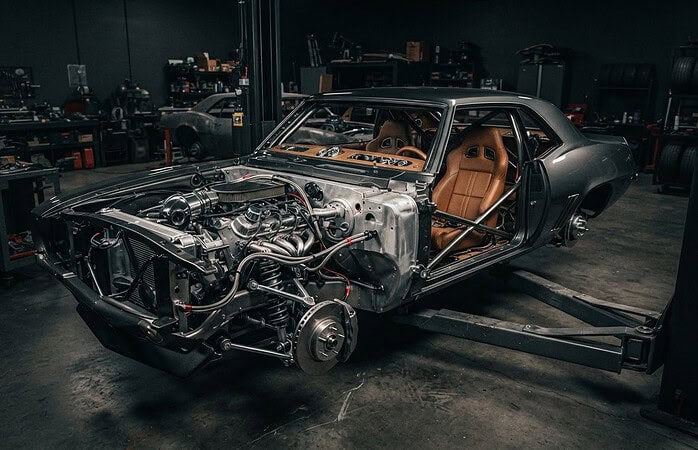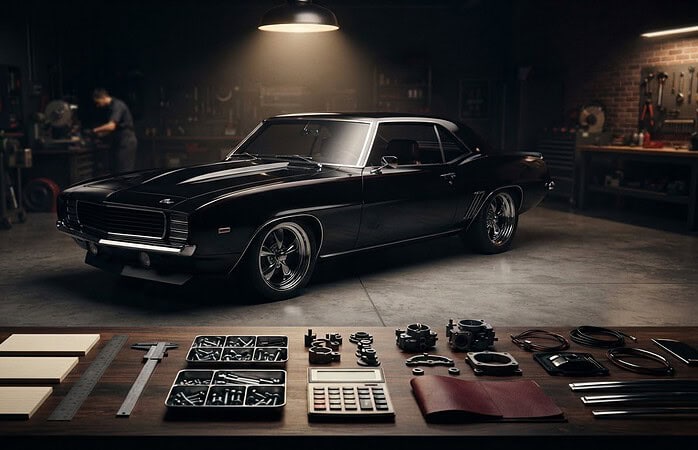

Why do some six-figure builds languish on the auction block while others spark a bidding war before the hammer even falls? The difference isn’t just in the paint. It’s in the strategy. When you’re calculating restomod ROI, you’ve likely felt the anxiety of over-capitalizing on a project car that consumes cash but lacks the mechanical soul to ever break even. It’s a valid fear. Many enthusiasts find themselves trapped between the nostalgia of a vintage silhouette and the harsh reality of hidden mechanical failures that surface only after the check is signed.
This guide provides the definitive framework for your investment, moving beyond guesswork to evaluate modernization costs against real-world market appreciation. You’ll discover how specific, high-performance upgrades like the LS376/525 crate engine or a Tremec TKX 5-speed transmission act as equity in your build rather than sunk costs. We’ll explore the critical resale ceilings for iconic models and the importance of a fully sorted vehicle in securing a premium price. By the end, you’ll have the confidence to choose a builder who treats your car as a bespoke piece of functional art, ensuring it remains a high-value asset for years to come.
Key Takeaways
- Learn the precise formula for calculating restomod ROI by balancing acquisition and build costs against the critical sorting phase.
- Identify high-equity mechanical upgrades like modern powertrain swaps and precision suspension systems that drive the highest market appreciation.
- Discover why the sorting period is the most overlooked financial factor in determining the final resale value of a bespoke build.
- Understand how elite certification and rigorous 150-point inspections remove buyer uncertainty to secure a higher price ceiling.
- Master the timing of your market exit by leveraging professional consignment services and monitoring high-profile auction trends.
The Financial Evolution: Why Restomods Outpace Traditional Restorations
The restomod market has undergone a radical transformation. Traditionalists once argued that every bolt must remain factory-correct, but the landscape has shifted. For the modern collector, the true return on investment lies at the intersection of timeless vintage aesthetics and uncompromising modern performance. When calculating restomod ROI, you must look beyond the initial purchase price to the utility of the machine itself. It’s about the marriage of heritage and capability.
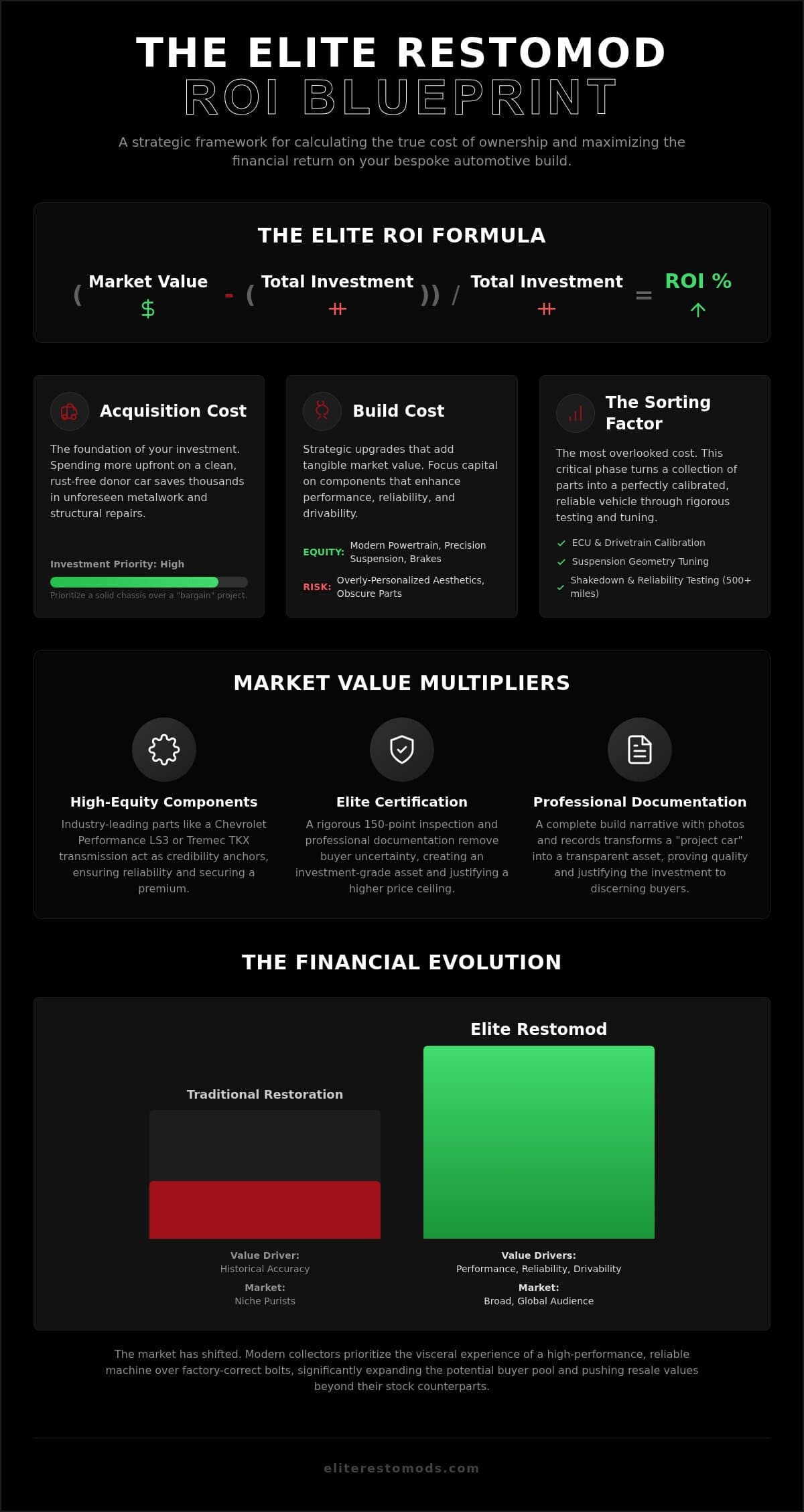
A significant shift in collector demographics is driving this change. Buyers under 40 now prioritize operational reliability over historical accuracy. They want the visceral roar of a 1960s muscle car but demand the cold air conditioning and fuel-injected precision of a modern luxury sedan. This demand creates a much broader market than the narrow pool of factory-original purists. It’s a move toward usability.
The emotional dividend is equally vital. There is immense value in actually driving your investment. A trailer queen sits in a garage. It accumulates dust. It accumulates maintenance costs. A fully sorted restomod is a functional piece of art designed to be utilized and enjoyed. It’s the difference between a static display and a high-performance reality.
The Resale Ceiling for Modernized Classics
Iconic silhouettes like the Mustang or Camaro command the highest premiums in the current market. A well-executed restomod can often double the price of a stock restoration because it appeals to a global audience that values drivability. Brand-name components act as anchors for valuation. When a buyer sees a Tremec TKX 5-speed or a Chevrolet Performance LS3, they see immediate credibility. These industry-standard components ensure the vehicle isn’t just a project, but a reliable asset. This level of craftsmanship allows the vehicle to punch through the traditional price ceilings of its stock counterparts.
The Sunk Cost Fallacy in Amateur Builds
DIY projects often fall into the trap of inconsistent quality. An amateur build without a cohesive developmental narrative creates a financial floor that is difficult to recover from. If the mechanical work is suspect, the resale value craters regardless of the paint quality. Professional documentation throughout the custom build services ensures every step is recorded. This transparency is what transforms a project car into an investment-grade asset. Without it, you’re merely spending money on a hobby rather than building equity in a machine. Reliability is the ultimate currency in this market.
The Elite ROI Formula: Calculating the True Cost of Ownership
Precision is the hallmark of a master builder, and it must also be the foundation of your financial strategy. Traditional investment metrics often fail to capture the nuance of a bespoke automotive build. When calculating restomod ROI, you aren’t just looking at a simple purchase and sale delta. You’re measuring the efficiency of a transformation. The elite formula for success is (Market Value – (Acquisition + Build Cost + Sorting)) / Total Investment. This equation accounts for the reality that a vehicle’s worth is tied to its operational perfection as much as its aesthetic appeal.
Hidden variables often derail a budget. Professional vehicle sourcing is a non-negotiable first step to secure a rust-free foundation, preventing the financial hemorrhage associated with unforeseen metalwork. Additionally, preserving the artisanal finish of an investment-grade build requires accounting for climate-controlled storage. These costs aren’t merely expenses. They’re safeguards for your capital. Without a protected environment, the value of bespoke leather and high-end paint begins to depreciate the moment the project is completed.
The Acquisition to Build Ratio
The temptation of a bargain barn find is a siren song for the unprepared. A vehicle that requires extensive metal fabrication to rectify decades of structural decay will consume your budget before the first performance component is even ordered. Spending more upfront on a clean, documented donor car consistently saves thousands in the long-term. Your capital should be allocated toward the things that drive value. Prioritize high-performance mechanical systems and artisanal interior finishes over the endless labor costs of structural repair. A clean canvas allows for a more efficient build narrative.
The Sorting Factor: Turning Parts into a Vehicle
A collection of high-end parts does not make a high-performance vehicle. Sorting is the most overlooked phase when calculating restomod ROI. This process involves 500 to 1000 miles of rigorous testing to perfect every system, from the suspension geometry to the ECU mapping. It’s the difference between a car that looks fast and one that is truly reliable. Industry data suggests that a fully sorted, turn-key vehicle commands a 20 to 30 percent premium at auction. Buyers will pay significantly more for the confidence of a machine that is ready for daily driving. Professional labor during this phase is an investment in the final resale ceiling.
Strategic Upgrades: Which Components Drive the Highest Returns?
The heart of any investment-grade build is the powertrain. When calculating restomod ROI, the choice of engine often dictates the final resale ceiling. Chevrolet Performance LS3 crate engines remain a gold standard for liquidity. A base LS3 430HP long block starts around $7,550.60, while the high-output LS376/525 6.2L engine reaches $12,197.18. These aren’t just parts; they’re verifiable assets. Ford enthusiasts look to the Coyote, and Mopar fans demand modern Hemi power. These swaps offer the reliability of a modern daily driver while retaining the visceral soul of the original machine.
Stopping power is equally critical. Modern suspension systems and Wilwood braking kits transform a wandering vintage chassis into a precision instrument. These components provide the brute force and refined comfort that modern buyers expect, which is a vital factor in calculating restomod ROI for a high-performance asset. Inside the cabin, bespoke customization should be tempered with restraint. Vintage Air systems are mandatory for the modern market, providing the reliability of a contemporary climate control system within a classic dashboard. However, technology like digital gauges and high-end audio must be integrated with a subtle hand. If the interior looks like a spaceship, you risk alienating the traditionalists who drive market value.
Performance vs. Aesthetics: Where to Spend
Mechanical excellence always outlasts trendy paint colors in the resale market. While a deep, glass-like finish is essential, it must be supported by structural integrity. A high-quality paint job and meticulous bodywork alignment are the first things a collector notices. However, if the car doesn’t perform, the visual appeal won’t sustain the price. Choosing a builder who understands investment-grade specs ensures that every dollar spent on custom build services translates into equity. Every aesthetic choice must serve the broader developmental narrative of the build.
The Hidden Value of Modern Safety Features
Safety features are often the silent drivers of ROI. LED lighting and improved structural rigidity broaden the buyer pool to include older drivers and families who prioritize security. Power steering and modern fuel injection make these vehicles accessible and easy to operate. Finally, protecting this investment is paramount. Utilizing enclosed vehicle transport during delivery ensures that the artisanal finishes and mechanical components arrive in concours condition, ready for the next chapter of their journey. A protected asset is a high-value asset.
Market Dynamics: Timing Your Exit for Maximum Appreciation
High-profile auctions like Barrett-Jackson serve as the market’s pulse. They set the trends that define current valuations. A restomod isn’t just a car; it’s a high-performance asset that gains legitimacy through these public sales. Calculating restomod ROI effectively requires monitoring these results to understand which silhouettes and engine configurations are currently commanding premiums. These events provide the data points necessary to bridge the gap between a builder’s passion and an investor’s logic. For instance, the 2026 SEMA Show is projected to host 70,000 buyers, signaling a massive, hungry market for well-executed builds that prioritize modern operational reliability.
Timing is everything in the lifecycle of a modernized classic. While the aesthetic remains timeless, the underlying technology has a peak period before it is surpassed by newer iterations. Selling while your fuel injection systems and suspension geometry are still considered state-of-the-art ensures you capture the highest possible return. It’s a strategic move. Professional consignment program services maximize this visibility, positioning your vehicle in front of serious collectors who understand the value of a fully sorted machine. This prevents your asset from sitting in climate-controlled storage long after the market’s peak interest has shifted.
The Pitfalls of Private Sales
Selling a high-value asset privately is fraught with frustration. You face security risks and a parade of low-ball offers from unqualified buyers who don’t appreciate the meticulous nature of the build process. Specialized consignment services reach a national audience, using professional marketing and high-definition media to justify a premium price. They handle the vetting process, ensuring that only serious investors engage with your machine. This professional barrier protects the vehicle’s provenance and ensures the final transaction reflects its true investment-grade status.
Financing as a Value Multiplier
The expansion of classic car financing has fundamentally changed the market. It allows buyers to treat a restomod as a diversified part of their portfolio rather than a simple cash purchase. This availability of capital increases the overall liquidity of the market, making it easier to exit your investment when the time is right. It also opens the door for buyers who want to participate in the developmental narrative of a custom build without liquidating other assets. If you are ready to realize the value of your build, consider our consignment program to reach a vetted network of global buyers.
Elite Certification: The Gold Standard for Restomod ROI
In the pursuit of automotive excellence, the greatest risk to your capital is the unknown. Elite Certification serves as the ultimate safeguard for your investment. When calculating restomod ROI, discerning collectors must account for the peace of mind that comes from a vehicle that has already endured the gauntlet of professional scrutiny. Our rigorous 150-point inspection isn’t merely a checklist. It’s a comprehensive validation of the machine’s structural, mechanical, and aesthetic integrity. This process ensures that the transition from a vintage icon to a modern performance asset is both seamless and verified.
The financial value of a fully sorted guarantee cannot be overstated. It eliminates the post-build headache that often plagues amateur or uncertified projects. By removing the sorting phase from the owner’s responsibility, we deliver a vehicle that is ready for reliable daily driving from the moment it leaves the enclosed transport. This certification is the final piece of the puzzle in calculating restomod ROI, as it bridges the gap between a long-held dream and a tangible, high-performance reality. Your investment is protected by the highest standards of modern engineering and luxury craftsmanship.
The Elite Certified Difference
Buying a pre-certified vehicle offers a higher immediate return than embarking on a years-long build from scratch. You bypass the volatility of labor market shifts and component lead times. Every machine in our collection represents a finished narrative of craftsmanship and capability. These vehicles have been through the fire of testing and refinement, emerging as investment-grade assets. We invite you to explore our current Elite Certified inventory to find a vehicle that meets your specific investment goals and performance expectations. These are not just cars; they are sorted, certified, and ready for the open road.
Your Collaborative Investment Journey
For those who seek to create something entirely unique, the process of commissioning a bespoke piece of functional art is a collaborative investment journey. Our expert curators work alongside you to select the ideal donor vehicle and define a specification that balances personal taste with market appreciation. We understand the soul of these vintage assets and possess the vision to bring them into the modern era with absolute perfectionism. This partnership ensures that every detail, from the roar of the engine to the artisanal stitch of the leather, aligns with your vision of excellence. Contact our team today to discuss our services and begin the transformation of your vision into a high-performance reality.
Securing Your Automotive Legacy
The journey from a vintage silhouette to a high-performance investment requires more than just capital. It requires a vision rooted in mechanical perfection. By focusing on the critical sorting phase and selecting industry-standard components like LS series engines and Wilwood braking systems, you ensure your build survives the scrutiny of the open market. Successfully calculating restomod ROI is about recognizing that a fully sorted, certified machine is a diversified asset rather than a simple hobby. Every detail matters. Every bolt contributes to the final valuation.
Elite Restomods provides a comprehensive ecosystem to support your investment, offering everything from professional vehicle sourcing to climate-controlled storage. As a national dealership with specialized expertise, we redefine the classic car experience by delivering vehicles that are ready for immediate, reliable use. Our 150-point inspection process removes the risk of the unknown, allowing you to focus on the visceral excitement of the drive. It’s time to bridge the gap between your long-held dream and a tangible, high-performance reality. Browse our inventory of investment-grade Elite Certified Restomods and begin your journey toward owning a bespoke piece of functional art today. The road ahead is yours to command.
Frequently Asked Questions
Is it cheaper to build a restomod or buy one already completed?
Buying an already completed, certified vehicle is generally more cost-effective than starting a custom build from scratch. You avoid the volatility of labor rates and the prolonged timeline of parts procurement. Completed builds also eliminate the financial risk of the sorting period, which can consume thousands in unexpected mechanical refinements. This immediate entry into the market allows you to enjoy the asset while bypassing the developmental headaches that often derail a project’s budget.
Which classic car models currently have the best ROI when restomodded?
Iconic 1960s American muscle cars like the Chevrolet Camaro and Ford Mustang consistently lead the market in resale value. High-performance trucks, particularly the first-generation Chevrolet Blazer, have also seen a dramatic rise in demand among younger collectors. These models possess a timeless silhouette that justifies the high cost of modernization. When calculating restomod ROI, these specific silhouettes act as the safest anchors for your capital due to their broad global appeal and historical significance.
How much does the sorting process typically cost for a custom build?
The sorting process generally requires 40 to 60 hours of professional labor, though complex builds may demand more. High-end restoration shops often command labor rates of $135 per hour for this specialized work. This phase ensures the marriage of heritage and modern capability is seamless. While it represents a significant upfront expense, it is a non-negotiable step to prevent hidden mechanical failures that could compromise the final resale value of your investment-grade machine.
Do restomods hold their value as well as numbers-matching original cars?
High-end restomods often hold their value better than numbers-matching originals because they appeal to a wider demographic of modern collectors. While purists value factory-correct parts, today’s buyers prioritize a visceral driving experience and operational reliability. A well-executed build that utilizes industry-standard hardware offers a level of usability that traditional restorations cannot match. This drivability translates into higher liquidity and more competitive bidding at high-profile automotive auctions where performance is the primary currency.
What is the average time it takes to see a positive return on a restomod investment?
Investors typically see a positive return within a three to five-year window, depending on the initial build quality and broader market trends. The appreciation of a restomod is driven by the scarcity of fully sorted, investment-grade examples. As the demand for modernized classics continues to outpace the supply of elite-level builds, the value of a certified machine naturally climbs. Patience is required to allow the market to recognize the craftsmanship and mechanical integrity of the asset.
How does professional consignment help in achieving a higher resale price?
Professional consignment services leverage a national network of vetted buyers to maximize the visibility of your high-performance asset. Unlike private sales, which often attract unqualified offers, a consignment program positions your vehicle within a curated environment that justifies a premium price. Expert curators utilize high-definition media and professional detailing to showcase the mechanical intricacies of the build. This structured approach ensures that the narrative of your investment-grade machine reaches the right audience.
Can I finance the build costs of a custom restomod project?
Specialized classic car financing options have evolved to support the costs of custom restomod projects. Lenders now recognize that a bespoke build is a significant capital asset rather than a simple consumer purchase. By utilizing structured loan programs, you can preserve your liquid capital while participating in the developmental journey of your vehicle. This financial flexibility allows for higher-spec components, which ultimately contribute to calculating restomod ROI more effectively by ensuring the final product meets investment-grade standards.
What are the most essential safety upgrades for an investment-grade build?
Essential safety upgrades include high-performance disc brake systems and improved LED lighting for superior visibility. Modern fuel systems, including stainless steel lines and baffled tanks, are also critical to ensure consistent delivery and prevent leaks. Beyond performance, these upgrades provide the structural rigidity and operational security that modern buyers demand. Integrating these features into a classic silhouette ensures the vehicle is safe for daily driving while maintaining its status as a bespoke piece of functional art.