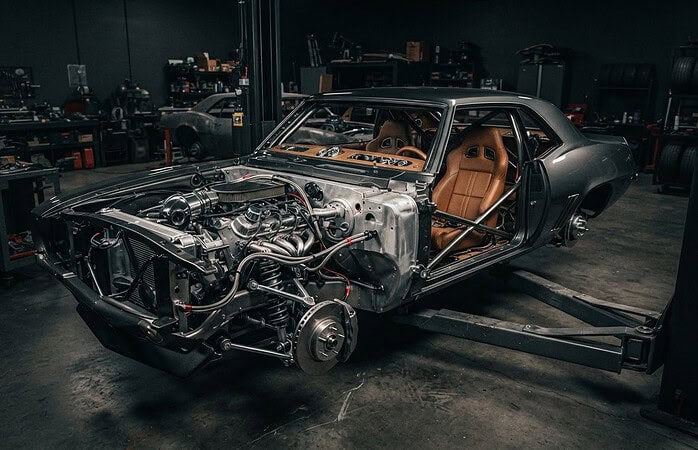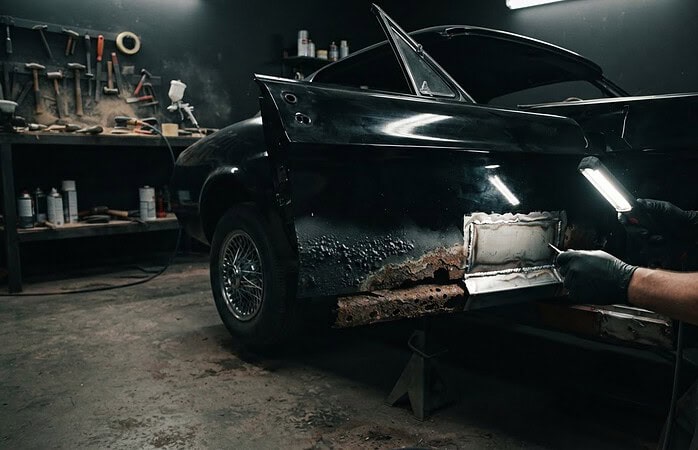

Your investment-grade restomod is more than a machine; it is a bespoke piece of functional art that demands a forensic level of care before it ever touches a trailer floor. You have spent years perfecting the marriage of vintage aesthetics and modern performance. It is natural to feel a sharp sense of anxiety regarding paint damage or the complexities of insurance liability when your asset leaves your sight. We understand that protective obsession. Every hand-stitched leather detail and mirror-finish paint job represents a legacy that deserves absolute preservation during transit.
This guide provides the definitive blueprint on how to prepare a car for enclosed transport to ensure your vehicle arrives in the same pristine condition it left. You will learn the meticulous steps required to safeguard your investment, from managing fuel levels to executing a professional-grade photo audit. We will walk through the technical requirements and documentation rituals that provide total peace of mind. By the end, you will have the confidence of a master curator, knowing your vehicle is fully prepared for its journey in a climate-controlled environment.
Key Takeaways
- Learn why climate-controlled enclosed transport is the gold standard for protecting your vehicle’s paint and mechanical integrity against atmospheric degradation.
- Master how to prepare a car for enclosed transport by conducting a forensic-level documentation of its state and verifying carrier cargo insurance limits.
- Understand the technical necessity of the quarter-tank fuel rule to ensure optimal safety and weight distribution during national transit.
- Communicate precise ground clearance specifications and secure custom components to prevent damage to low-profile investment-grade assets.
- Establish a seamless pickup protocol that includes precise scheduling and the secure transfer of keys and specialized remote fobs.
The Enclosed Transport Advantage for Investment-Grade Vehicles
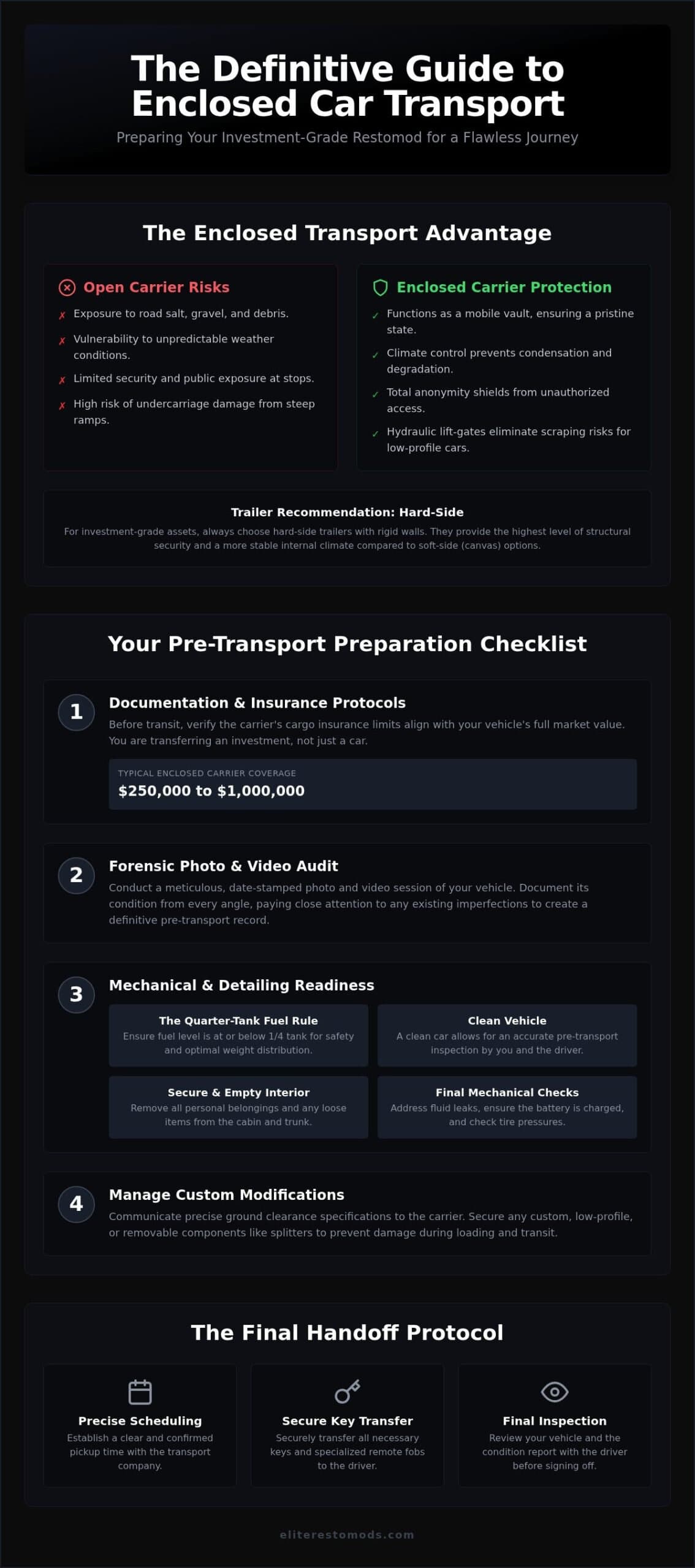
Enclosed transport represents the gold standard for high-value vehicle logistics. It is the only choice for an asset that demands absolute preservation. While open carriers expose a vehicle to the relentless assault of road salt, gravel, and unpredictable weather, an enclosed trailer functions as a mobile vault. This environment is essential for protecting the meticulous finish of a restomod. For a machine that has undergone hundreds of hours of paint correction and ceramic coating, even a single rock chip is an unacceptable failure. The trailer provides a physical barrier that ensures the car remains in a controlled, pristine state throughout its national journey.
Climate control plays a critical role in preventing condensation and paint degradation during transit. Temperature fluctuations can cause moisture to settle in hidden crevices, potentially leading to micro-pitting or the corrosion of high-performance mechanical components. Understanding how to prepare a car for enclosed transport involves recognizing that the trailer itself is a tool for preservation. These specialized carriers utilize advanced filtration and temperature regulation systems that prevent atmospheric moisture from compromising delicate interior materials or hand-finished metal surfaces. This level of environmental stability is a hallmark of the white-glove experience provided by elite transporters.
To better understand this concept, watch this helpful video:
When selecting a carrier, the distinction between hard-side and soft-side trailers is vital. Soft-side trailers use heavy-duty canvas curtains which offer protection from the sun but can still allow fine dust or moisture to permeate the cargo area. Hard-side carriers utilize rigid walls, providing the highest level of structural security and a more stable internal climate. For investment-grade assets, the hard-side option is the only logical choice to mitigate risk and ensure the vehicle remains untouched by external variables.
Protection Beyond the Elements
Enclosed trailers provide a layer of security that transcends physical weather protection. They shield your vehicle from unauthorized access and the prying eyes of the public at rest stops or during overnight stays. This anonymity is crucial for high-value assets. Additionally, these trailers often utilize hydraulic lift-gates rather than traditional ramps. This is a technical necessity for vehicles with aggressive stances or low-profile custom splitters. Lift-gate loading keeps the vehicle perfectly level, eliminating the risk of undercarriage scraping during the loading process. This engineering precision provides a profound sense of peace of mind for the collector.
The Value of Specialized Handling
Professional transporters who specialize in enclosed vehicle transport understand the nuances of a custom restomod. They recognize that an LS-swapped classic or a vehicle with a bespoke air-ride system requires a different mechanical approach than a standard production car. Standard auto hauling is a volume-based business; white-glove service is a detail-oriented craft. When you evaluate the cost-to-risk ratio, the investment in specialized handling is negligible compared to the potential expense of repairing a unique, one-of-one component. Every strap and tie-down is applied with the knowledge that they are handling a piece of history brought into the modern era.
Essential Documentation and Insurance Protocols
Securing a vintage asset involves more than just physical protection; it requires a rigorous administrative defense. When you are learning how to prepare a car for enclosed transport, the administrative layer is what ensures your financial interests remain as polished as your paintwork. You are not just moving a vehicle. You are transferring a high-value investment. This necessitates a level of scrutiny that goes beyond standard automotive hauling protocols. Before the trailer arrives, you must verify that the carrier’s cargo insurance limits align with the true market value of your restomod.
Enclosed carriers typically provide cargo insurance coverage ranging from $250,000 to $1,000,000 per vehicle. This is significantly higher than open carriers, yet it may still fall short for elite, one-of-one builds. Contact your classic car insurance provider to discuss a transit rider or gap coverage. Many specialized policies require prior notification before a vehicle is moved across state lines. Additionally, ensure your registration and title are easily accessible. While the driver rarely needs the original title, having a clear copy in your documentation folder is a legal necessity for national transit.
Verifying Carrier Liability
Always request a Certificate of Insurance (COI) directly from the transport company. Do not rely on verbal assurances. A professional broker or carrier will provide a document that outlines their specific liability limits and deductible structures. Read the fine print to understand what is excluded, such as “Acts of God” or specific mechanical failures. If your vehicle has appreciated due to a recent professional restoration, ensure the coverage reflects that new valuation. Ask your transporter about their vetting process for drivers; elite logistics firms only employ operators with clean safety records and experience handling luxury craftsmanship.
The Pre-Transport Inspection Report
The Bill of Lading (BOL) is the most critical document in the entire logistics chain. It serves as your primary receipt and a forensic record of the vehicle’s condition at the moment of handoff. You must conduct a joint inspection with the driver. Record every blemish, no matter how microscopic, to ensure there is no ambiguity upon delivery. This level of detail mirrors the rigorous quality assurance process we apply to every build. Once the inspection is complete, create a comprehensive folder for the driver. This should include your contact details, a secondary emergency contact, and any specific quirks related to your vehicle’s modern performance upgrades.
If you are planning to add a new masterpiece to your collection, you can view our current inventory of fully sorted, investment-grade restomods. Having your documentation in order is the final step in ensuring your asset remains protected throughout its journey.
Detailing and Mechanical Readiness Checklist
The visceral thrill of a restomod begins with its aesthetic perfection. To maintain this, you must engage in a forensic exterior wash before the transport trailer arrives. This process is not merely about presentation; it is a technical necessity to reveal the true condition of the paint and bodywork. Dust and road grime can camouflage micro-scratches or chips that must be documented on the Bill of Lading. By presenting a spotless vehicle, you ensure that the pre-transport inspection is accurate and indisputable. This level of preparation is a hallmark of how to prepare a car for enclosed transport when the asset in question is a bespoke piece of functional art.
Fuel management is another critical component of mechanical readiness. Industry standards require maintaining no more than a quarter tank of fuel during transit. This rule balances the need for enough fuel to load and unload the vehicle with the necessity of minimizing weight and fire risk. High-performance builds often feature custom, high-capacity fuel cells that can add significant weight when full. Reducing the volume ensures the carrier remains within legal weight limits and enhances the overall safety of the shipment. Additionally, inspect the undercarriage for any active fluid leaks. A single drop of oil or coolant can damage the trailer floor or, in multi-car carriers, the vehicle positioned below yours.
Aesthetic Preparation for Inspection
A truly sorted vehicle is clean from the top down. Cleaning the undercarriage allows you to identify active mechanical issues that might be exacerbated by the vibrations of long-distance travel. If the vehicle is moving through our consignment program, a pristine interior is equally vital for professional representation. When photographing the vehicle for your records, utilize natural, indirect lighting. Capture high-resolution images from every angle, including the roof and lower valance, to provide a forensic baseline of the vehicle’s state before handoff.
Mechanical Stability for Transit
Stability on the trailer deck depends on meticulous mechanical checks. Verify that tire pressures are set to the manufacturer’s specifications to prevent the car from shifting against its tie-downs. Ensure the braking system is fully operational for reliable loading and unloading, especially if the vehicle features a modern performance upgrade like a Wilwood or Brembo conversion. Finally, provide the driver with a single, clear sentence regarding any unique starting procedures or kill-switch locations. If the car has a high-security alarm, deactivate it entirely to prevent battery drain or mid-transit disruptions. A fully charged battery is essential to ensure the vehicle starts promptly upon arrival at its destination.
Managing Custom Modifications and Low-Profile Clearances
A bespoke restomod is a symphony of custom engineering. It often defies the factory dimensions of its vintage donor. Its stance is aggressive. Its profile is intentionally low. These aesthetic choices create unique challenges for logistics professionals. Understanding how to prepare a car for enclosed transport means accounting for every custom modification that deviates from the original chassis geometry. You are not just shipping a car; you are moving a high-performance machine with specific clearance requirements that must be respected to avoid undercarriage trauma.
Communicating ground clearance specifications to your driver is the first line of defense. Provide exact measurements for the front splitter, side skirts, and rear diffuser. Professional enclosed carriers use specialized ramps and lift-gates, but the operator must know if your vehicle requires extra approach-angle assistance or specialized blocking. Additionally, consider the placement of your vehicle within the trailer. If your build features a bespoke artisanal interior, request a position away from the trailer doors or ramps to minimize sun exposure when the trailer is open. This protects delicate leathers and exotic wood veneers from UV degradation during loading and unloading stops.
Soft-tie downs are a non-negotiable requirement for any investment-grade asset. Standard metal chains or abrasive nylon straps will mar the finish of high-performance suspension components or powder-coated subframes. Every point of contact between the trailer and the car should be cushioned. This ensures that the visceral excitement of your first drive at the destination isn’t dampened by avoidable cosmetic damage to the mechanical artistry beneath the car.
Suspension and Stance Considerations
If your vehicle features an air-ride system, set the suspension to a neutral, stable ride height before loading. Don’t leave the bags fully deflated. This prevents the chassis from bottoming out against the trailer deck during the vibrations of national transit. Low-hanging exhaust systems and custom front splitters are particularly vulnerable to movement. For examples of high-performance builds that require this level of care, you can explore our latest restomod projects to see the complexity involved in modern chassis engineering and stance management.
Securing Performance Hardware
Wide-body flares and oversized spoilers require extra scrutiny. Ensure every fastener is torqued to specification and hood pins are locked tight. Non-permanent custom exterior components, such as magnetic rock guards or clip-on mirrors, should be removed and stored securely in the trunk. Custom wheels deserve specialized protection; ensure the driver uses wheel nets or soft straps that avoid metal-on-metal contact with the rims. This meticulous attention to detail is what distinguishes a collector who values longevity from a casual owner.
Ready to secure your next high-performance asset? Explore our current inventory of Elite Certified Restomods to find a vehicle that is already fully sorted and ready for the road.
The Final Handoff: Logistics for High-Value Assets
The final handoff is the technical ritual that concludes the preparation process. It is the moment where your meticulous planning meets professional execution. Mastering how to prepare a car for enclosed transport leads to this critical moment of transition. Precision is paramount. You must confirm the pickup and delivery windows with the carrier at least 48 hours in advance. For enclosed logistics, the typical pickup window is 2 to 5 days. This timeframe allows the driver to navigate national routes while maintaining the safety of the high-value cargo onboard. Being present for this exchange ensures that your expectations for white-glove service are met from the first mile.
Handing over the keys and specialized remote fobs is a moment of profound trust. Ensure the driver understands the operation of any modern security systems or custom ignition sequences you have installed. A joint walk-around with the transport professional is the final forensic check. You are not just looking for damage; you are verifying the baseline state of a bespoke machine. This collaborative inspection ensures that both parties agree on the vehicle’s condition before it enters the mobile vault of the trailer. It is the definitive step in safeguarding your investment against the uncertainties of the road.
The Bill of Lading Execution
The Bill of Lading (BOL) is the legal anchor of the transport process. Whether it is a digital or paper document, you must execute it with absolute accuracy. Note any exceptions or minor existing blemishes clearly. This is your primary defense in the event of an insurance claim. Document the odometer reading at the exact point of handoff to ensure the vehicle is not driven beyond the necessary loading and unloading movements. Never let the trailer depart without a signed copy of the BOL in your possession. This document represents the official transfer of liability to the carrier’s cargo insurance, which typically ranges from $250,000 to $1,000,000 for enclosed shipments.
Post-Transport Integration
The journey doesn’t end when the car rolls off the lift-gate. Inspect the vehicle immediately upon delivery for any signs of shifting or atmospheric impact. If the vehicle is transitioning directly into climate-controlled car storage, establish a routine for battery tending and fluid monitoring. Long-distance transit can occasionally loosen non-permanent fasteners or settle the suspension. For those looking to maintain the highest standards of preservation after the haul, understanding the science of preserving investment-grade vehicles is the next logical step. This ensures that the modern operational reliability of your restomod remains intact, whether it is on the road or in the showroom.
Securing Your Automotive Legacy
Protecting a high-performance restomod during transit is a technical ritual that demands absolute perfectionism. By mastering how to prepare a car for enclosed transport, you ensure that every bespoke detail and mirror-finish paint job remains untouched. You’ve learned to prioritize forensic documentation through the Bill of Lading and the technical necessity of managing mechanical stability. These meticulous steps are the final bridge between your vision and a damage-free delivery. Whether you are moving a vehicle across the country or into a climate-controlled storage facility, your commitment to these protocols reflects the true value of the asset itself.
At Elite Restomods, we mirror this dedication through our Elite Certified quality assurance process and a nationwide secure transport network. We treat every vehicle as a piece of functional art, deserving of the highest level of professional care and specialized handling. If you are ready to expand your collection or require expert assistance in high-end logistics, explore our inventory of fully sorted restomods and professional transport services. Your next journey starts with the confidence that your investment is in the hands of master curators. Drive forward with the peace of mind that your automotive dream is fully protected.
Frequently Asked Questions
Is enclosed transport really worth the extra cost for a classic car?
Yes, enclosed transport is the definitive choice for an asset that demands absolute preservation. While it typically costs between 30% and 60% more than open shipping, it provides a mobile vault against road salt, gravel, and weather. For an investment-grade restomod, this premium is a calculated protection of its market value. It prevents the rock chips and environmental degradation that can compromise a mirror-finish paint job during national transit.
How much fuel should I leave in my car for enclosed shipping?
You should maintain no more than a quarter tank of fuel for the duration of the journey. This is a technical requirement designed to balance safety with weight distribution on the trailer deck. It provides sufficient fuel for the loading and unloading process while minimizing the fire risk and keeping the carrier within legal weight limits. Managing your fuel level is a vital step in how to prepare a car for enclosed transport.
Can I ship personal items inside my car during enclosed transport?
No, you must remove all personal belongings before the transport trailer arrives. Carriers are not licensed to transport household goods, and their cargo insurance policies specifically exclude personal items left inside the cabin. These objects can shift during transit, potentially damaging bespoke interior materials or artisanal leather finishes. Keeping the vehicle clear ensures a professional logistics experience and protects the structural integrity of your vehicle’s refined interior cabin.
What happens if my restomod is damaged during enclosed shipping?
You must document any new damage on the Bill of Lading immediately upon delivery. This document serves as your primary receipt and forensic evidence for an insurance claim. Enclosed carriers typically provide high-limit cargo coverage ranging from $250,000 to $1,000,000 per vehicle. Take high-resolution photos of the affected area and contact the carrier’s claims department promptly. A signed Bill of Lading with clear exceptions is essential for a successful resolution.
Do I need to be present for the pickup and delivery of my vehicle?
Yes, you or an authorized representative must be present at both the origin and destination. This presence is necessary to conduct a joint walk-around inspection with the driver and execute the Bill of Lading. You’ll need to provide the vehicle’s registration, proof of insurance, and a valid photo ID during the handoff. This allows you to verify the vehicle’s state and discuss any unique performance modifications with the transport professional.
How far in advance should I book enclosed transport for a classic car?
You should aim to book your transport at least two to three weeks before your desired move date. While the typical pickup window for enclosed carriers is 2 to 5 days, availability for specialized trailers can be limited during peak seasons. Booking early ensures you secure a spot with a reputable carrier that understands the nuances of high-performance builds. This lead time allows for precise coordination of national logistics schedules.
Will my lowered restomod be able to clear the transport ramps?
Professional enclosed transporters utilize hydraulic lift-gates or extended racing ramps specifically designed for low-clearance vehicles. This engineering choice prevents undercarriage trauma and protects custom front splitters from scraping. When learning how to prepare a car for enclosed transport, always communicate your exact ground clearance specifications to the driver. This allows them to utilize specialized blocking or adjust the loading angle to ensure a seamless transition onto the trailer deck.
Does enclosed transport provide protection against temperature extremes?
Yes, elite enclosed carriers utilize advanced climate-control systems to maintain a stable internal environment throughout the journey. This prevents the condensation that often leads to micro-pitting in paint and the corrosion of high-performance mechanical components. While standard enclosed trailers offer a physical barrier, climate-controlled units regulate temperature and humidity levels. This is critical for preserving delicate interior materials and artisanal finishes as the vehicle moves through diverse national climates.