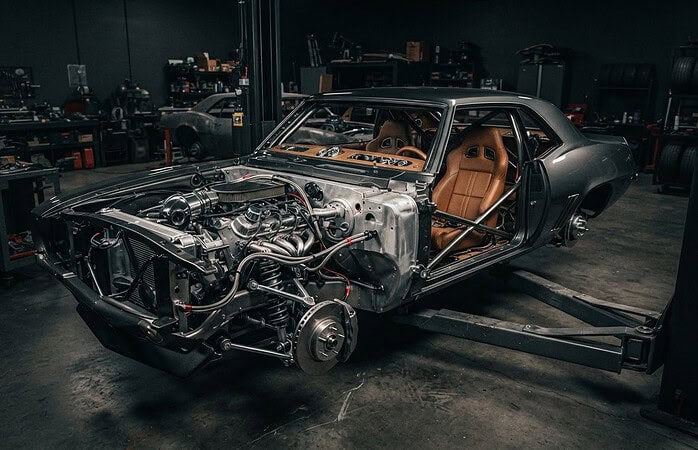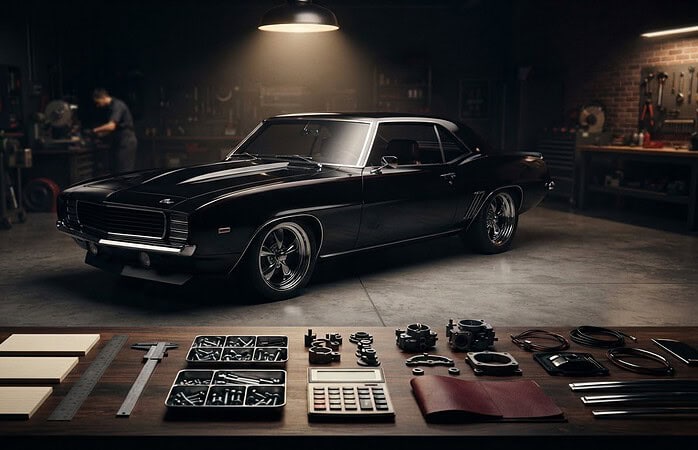

A world-class restomod isn’t just a car; it’s a bespoke piece of functional art where vintage soul meets modern precision. You likely crave the raw, visceral excitement of a classic era but dread the mechanical anxiety that often follows. It is common to feel overwhelmed when calculating how much does a restomod build cost, especially when you fear over-capitalizing on a project that might never feel truly finished. We understand that tension between nostalgia and engineering excellence.
This guide will help you master the complex journey of planning an investment-grade build that delivers both heritage and modern operational reliability. You’ll gain a clear roadmap for selecting synchronized components, avoiding costly delays, and ensuring your vehicle is as refined as a contemporary luxury machine. From professional sourcing to the final turn-key reality, we will explore how to curate a high-performance asset that’s meant to be driven and enjoyed, not just displayed. Your dream deserves a foundation of perfectionism and technical synergy.
Key Takeaways
- Define the vehicle’s primary purpose early to balance visceral performance with the refined comfort required for a modern luxury driving experience.
- Prioritize structural integrity when sourcing a donor vehicle to minimize intensive metal labor and better manage how much does a restomod build cost.
- Ensure mechanical synergy by integrating pro-touring suspension architecture with modern powerplants for reliable, daily drivability.
- Combine heritage aesthetics with artisanal interior craftsmanship and bespoke finishes to create a piece of functional art that holds long-term value.
- Partner with a professional builder who provides a systematic, in-house engineering process to ensure the final product is fully sorted and investment-grade.
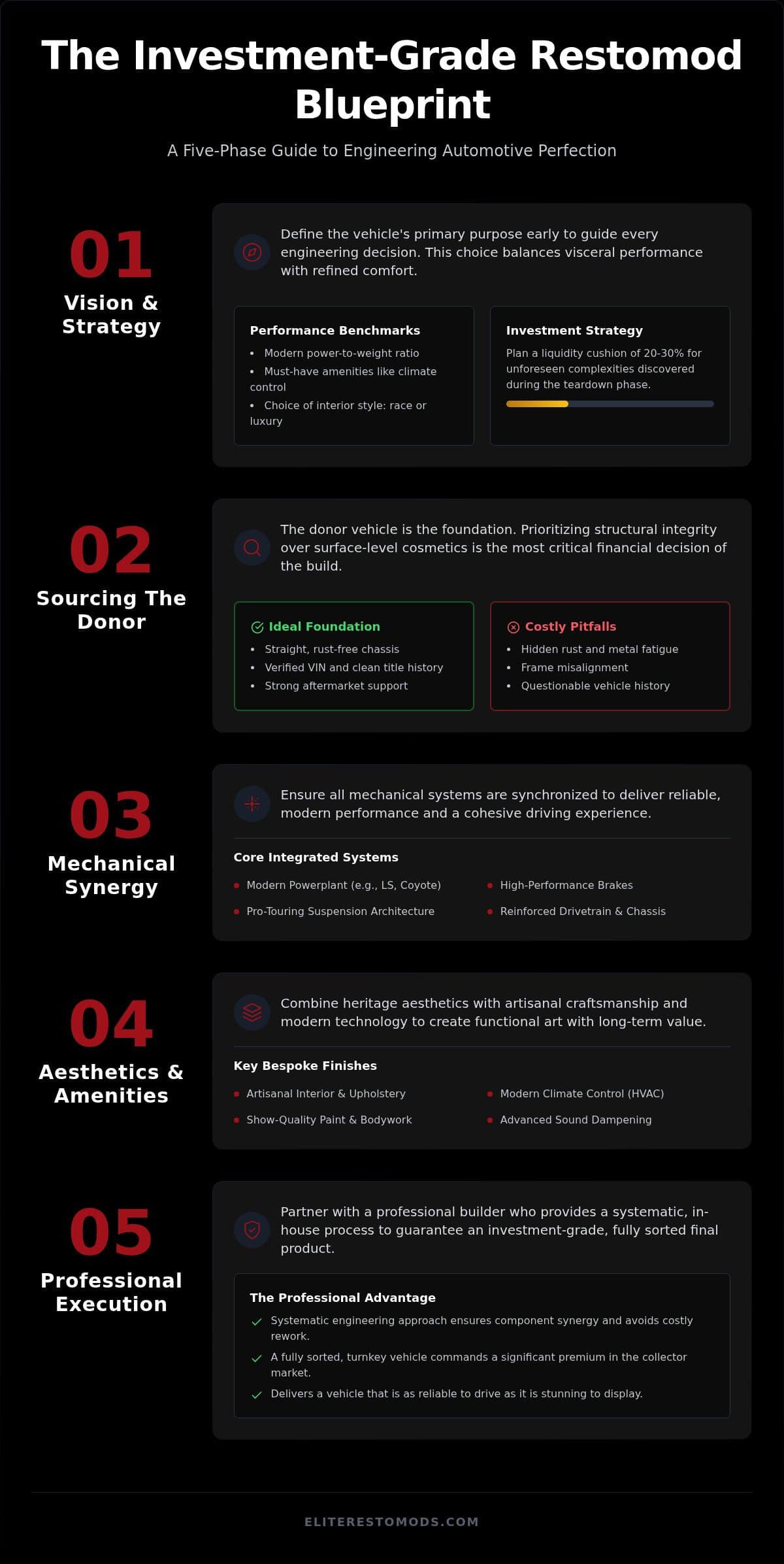
Phase 1: Defining the Vision and Investment Strategy
The journey from a vintage shell to a high-performance masterpiece begins with a singular, uncompromising vision. It’s about more than just aesthetics. You are deciding how this machine will live. Industry literature often defines a restomod as the intersection of classic style and modern technology, but for the discerning collector, it’s a calculation of synergy. Whether you envision a daily driver that rivals a modern luxury sedan or a show-stopping investment, the architecture of your plan must be flawless from the start.
Defining the performance envelope is your first critical hurdle. Do you prioritize brute force and raw feedback, or are you seeking the refined comfort of a grand tourer? This choice directly influences how much does a restomod build cost because specialized engineering requires specific mechanical ecosystems. A realistic strategy must account for an unforeseen factor of 20 to 30 percent. Custom builds are inherently complex. Discoveries made during the teardown phase often require pivoting; therefore, a liquidity cushion is essential to maintain the project’s momentum and quality. Understanding how much does a restomod build cost relative to its eventual appraisal value is the difference between an expensive hobby and a sound financial move.
The Investment-Grade Mindset
A fully sorted vehicle commands a distinct premium in the collector market. It isn’t enough for a car to look stunning. It must perform with modern operational reliability. Balancing personal bespoke touches with future marketability ensures a maximum return on investment. If a build is too idiosyncratic, its resale appeal narrows significantly. Many elite collectors utilize classic car financing to manage capital while ensuring the build process never compromises on component quality. This approach treats the vehicle as a tangible asset rather than a simple transaction.
Setting Your Performance Benchmarks
Modern interstate traffic moves at a pace the original engineers never anticipated. You need a power-to-weight ratio that allows for effortless merging and sustained high-speed cruising. Identifying must-have amenities early is vital for long-term satisfaction. Climate control, power steering, and advanced sound dampening transform a loud, vintage cabin into a sanctuary. Choosing the right interior philosophy means deciding between the visceral feedback of a race-inspired cockpit and the artisanal leather comfort of a bespoke luxury interior. These benchmarks dictate every subsequent engineering choice.
Phase 2: Sourcing the Ideal Donor Vehicle
The donor vehicle is the foundation of your vision. It’s the canvas upon which modern engineering will be etched. Choosing the wrong starting point can lead to a financial spiral that quickly eclipses your original projections. While a weathered exterior might seem like a bargain, hidden structural decay often dictates how much does a restomod build cost in the long run. A vehicle with severe metal fatigue or frame misalignment requires hundreds of hours of specialized fabrication before the first performance part is even ordered. You should prioritize a straight, rust-free chassis over a car with shiny paint but questionable bones.
Selecting a platform with robust aftermarket support is another strategic move. Popular models benefit from a vast ecosystem of engineered components, which ensures that modern suspensions and powerplants fit with surgical precision. This reduces the need for expensive one-off custom fabrication. While matching numbers are the holy grail for a concours restoration, they hold less weight in the restomod world. A clean-title blank canvas is often more desirable, as it allows for the complete transformation of the drivetrain without the guilt of discarding historical components. If you’re looking for a shortcut to excellence, professional vehicle sourcing can help you find a high-integrity platform that’s ready for transformation.
Criteria for an Elite Donor
Before any metal is cut, a rigorous assessment of the vehicle’s structural integrity is mandatory. Rust is the silent enemy of investment value. Even minor surface oxidation can mask deeper rot in the floor pans or torque boxes. Professional vetting ensures that every candidate is evaluated for frame straightness and historical documentation. Clear title history and verified VINs provide the investment security required for a world-class build. This meticulous process prevents the heartbreak of discovering hidden damage halfway through the assembly phase.
Popular Platforms for Custom Builds
The 2026 market continues to favor the legendary silhouettes of 1960s muscle cars and trucks. Their timeless design provides the perfect contrast to modern, high-revving powerplants. However, a new frontier is emerging. 1980s and 90s icons are increasingly sought after for their unique aesthetics and improved base ergonomics. These modern classics offer a different kind of nostalgia, blending boxy heritage with the potential for extreme performance upgrades. You can explore our current inventory to see examples of donor platforms that have been transformed into fully sorted, investment-grade assets. Finding the right balance between era-specific charm and modern capability is the first step in managing how much does a restomod build cost while securing a vehicle that you will truly use and enjoy.
Phase 3: Engineering Mechanical Synergy
A world-class restomod is far more than a collection of expensive parts. It’s a cohesive mechanical ecosystem where every component is synchronized to perform in harmony. While many enthusiasts focus on raw horsepower, true investment-grade builds prioritize synergy. You aren’t just adding power; you’re re-engineering the vehicle’s soul for the modern era. This level of technical integration is a primary driver in how much does a restomod build cost, as it requires meticulous planning to ensure the drivetrain, suspension, and braking systems communicate perfectly. Without this balance, you risk creating a machine that’s fast but unrefined.
Engineering synergy begins with the chassis, ensuring it can handle the stress of modern performance. When you double the original factory torque, the frame and suspension must be up to the task. This phase is about transforming a vintage asset into a high-performance reality that feels like a single, unified machine. By focusing on how components interact, you avoid the common pitfall of mismatched hardware that plagues many amateur projects.
Modern Engine Swaps and Reliability
Choosing your powerplant defines the car’s character. Modern fuel-injected platforms like the LS, Coyote, or Hemi offer the turn-key reliability and efficiency of a new luxury vehicle. These engines provide consistent performance across varying altitudes and temperatures, making them ideal for cross-country touring. However, integrating these high-revving hearts requires advanced cooling systems capable of handling modern climates. You must also account for high-end electronics and bespoke wiring harnesses. These elements ensure that your vintage asset starts every time, providing the confidence to treat it as a reliable daily driver rather than a fragile museum piece.
The Pro-Touring Chassis Philosophy
To truly bring a classic into the 21st century, you must move beyond antiquated leaf springs. A pro-touring approach utilizes modern multi-link suspension and rack-and-pinion steering to provide surgical precision on the road. This transition from raw feedback to refined control is essential for managing increased horsepower. Your braking system must be matched to your engine’s output; high-performance multi-piston calipers are mandatory when you’ve upgraded the drivetrain. Selecting specific gear ratios ensures that your car is equally capable of neck-snapping acceleration and effortless highway cruising. Understanding the meticulous build process is essential to ensure your project meets these elite standards while clarifying how much does a restomod build cost at each technical milestone.
Phase 4: Curing the Aesthetics and Modern Amenities
The visual impact of a world-class restomod is immediate. It’s the first thing you notice. But the true depth of the build is found in the tactile details that bridge the gap between heritage and modern capability. Curing the aesthetics is a meticulous process of selection and execution. You need a cohesive color palette that respects the original era while feeling contemporary. This isn’t just about paint; it’s about the interplay of light, texture, and modern amenities. Integrating technology like Bluetooth audio, digital gauges, and LED lighting must be done with surgical precision to avoid disrupting the vintage atmosphere. The labor-intensive nature of these high-end finishes is a primary variable in how much does a restomod build cost, as artisanal craftsmanship requires time and precision.
Sound deadening and insulation are the hidden heroes of a premium build. They provide the quiet, luxury driving experience expected in a modern machine while housed within a vintage shell. Properly integrating these features while maintaining the vehicle’s soul is a complex task that influences how much does a restomod build cost, yet it’s essential for long-term value. If you’re ready to begin your own transformative journey, explore our custom build services to see how we bring these details to life.
Bespoke Interior Design
Reimagining a classic cabin requires an ergonomic overhaul. You need seating that offers long-distance support without sacrificing the iconic look of the original interior. Artisanal leathers and CNC-machined trim pieces add a level of exclusivity that factory interiors never possessed. Custom dashboards must house modern HVAC systems and audio elegantly, keeping the technology invisible until it’s needed. Refinement is found in the silence. High-quality weather stripping and modern seals ensure the cabin remains a sanctuary, free from the wind noise and rattles of the past. It’s a marriage of brute force and refined comfort.
Exterior Refinement and Paint
The exterior finish must possess a depth and durability that traditional lacquers couldn’t achieve. Modern paint technology provides a mirror-like surface that resists the elements, ensuring your investment-grade asset retains its luster. Subtle body modifications often separate the elite builds from the rest. Tucked bumpers, shaved handles, and custom-flush glass create a streamlined silhouette that emphasizes the car’s natural lines. Wheels and tires are the critical intersection of stance and performance. They must provide the necessary grip for your upgraded drivetrain while perfectly filling the wheel wells for that aggressive, purposeful look. This level of curation ensures your vehicle is a piece of functional art, meant to be utilized and enjoyed.
Phase 5: Executing the Build: The Professional Path
Execution is the crucible where vision meets reality. It’s the most demanding phase of the journey. While the initial planning phases establish the framework, the quality of the execution ultimately dictates the vehicle’s long-term value and reliability. Many enthusiasts ask how much does a restomod build cost without realizing that professional project management is as vital as the high-performance hardware itself. Commissioning a master builder with in-house design and engineering capabilities ensures that no detail is lost in translation between departments. This unified approach prevents the mechanical mismatches that often plague fragmented builds. It transforms the restoration process into a purposeful, developmental narrative rather than a series of disjointed transactions.
Choosing Your Build Partner
Vetting a shop requires looking beyond the finished photos in a portfolio. You need to understand their technical depth, transparency, and communication standards. A shop that provides a systematic, documented build process is essential for managing a project of this magnitude. A fully sorted vehicle isn’t an accident; it’s the result of a rigorous quality assurance phase where every system is tested under real-world conditions. This meticulous attention to detail is a significant factor in how much does a restomod build cost, but it’s the only way to ensure the final product is truly investment-grade. You are looking for a partner who treats your project as a bespoke piece of functional art, not just another machine on the assembly line.
The Final Transformation
The journey doesn’t end when the last bolt is tightened. The shake-down period is critical. Putting miles on the build before delivery allows the engineering team to fine-tune the mechanical synergy and ensure modern operational reliability. This period of validation leads to elite certification, a mark of excellence that confirms the vehicle is fully sorted and ready for the road. This certification provides owner peace of mind and reinforces the asset’s market value. Beyond the build, comprehensive post-build support including climate-controlled storage and a professional consignment program ensures your masterpiece is protected. Whether you choose to enjoy the visceral excitement of the drive or preserve the vehicle as a show-stopping investment, the professional path ensures your dream becomes a tangible, high-performance reality.
Realize Your Vision of Automotive Perfection
A world-class restomod represents the pinnacle of bespoke engineering. It’s a transformative journey that turns a vintage dream into a high-performance reality. By prioritizing a high-integrity donor vehicle and focusing on mechanical synergy, you ensure your project remains a valuable asset. While many collectors focus solely on how much does a restomod build cost, the true measure of success is the delivery of a fully sorted machine that performs with the precision of a modern luxury car. Every detail, from artisanal leather interiors to fuel-injected powerplants, must work in harmony to create a piece of functional art.
We provide the professional path to excellence through our Elite Certified quality assurance process and investment-grade sourcing. Whether you require nationwide enclosed transport or specialized guidance, our team bridges the gap between heritage and innovation. It’s time to experience the visceral excitement of a classic era without compromising on modern reliability. Explore our inventory of elite certified restomods or commission your dream build today to begin your own legacy. Your masterpiece is waiting to be driven.
Frequently Asked Questions
How much does a professional restomod build typically cost?
A professionally executed restomod typically starts around $300,000, while high-end commissions can exceed $500,000. These figures reflect the thousands of hours of specialized labor and premium components required for an investment-grade result. Factors like the donor car’s condition and the complexity of modern engine integration largely dictate how much does a restomod build cost. Choosing a master builder ensures that every dollar spent contributes to a fully sorted, reliable machine.
How long does a full restomod build take from start to finish?
A world-class restomod project generally requires 18 to 36 months to reach completion. This timeline accounts for the initial teardown, custom fabrication, and the meticulous assembly of modern mechanical systems. High-end builds often require 4,000 to 5,000 hours of professional labor to ensure every detail meets elite certification standards. Rushing this process compromises the mechanical synergy and refined finish that distinguish a bespoke piece of functional art from a standard restoration.
Will a restomod hold its value as well as an original restoration?
Investment-grade restomods often hold their value better than traditional restorations in the current market. Modern buyers increasingly prioritize drivability and reliability alongside classic aesthetics. A fully sorted vehicle that can be driven daily without anxiety commands a distinct premium among collectors. While a concours restoration appeals to a specific niche, the broader demand for vintage soul paired with modern engineering ensures that a professionally built restomod remains a high-performance asset.
What is the best donor car for a first-time restomod project?
The 1964 to 1970 Ford Mustang and 1967 to 1969 Chevrolet Camaro are premier choices for first-time projects. These platforms benefit from an extensive aftermarket ecosystem, which simplifies the integration of modern suspensions and powerplants. Choosing a model with high parts availability helps manage how much does a restomod build cost by reducing the need for expensive one-off fabrication. These iconic silhouettes also offer strong market liquidity, ensuring your investment remains secure.
Can I use classic car financing for a custom build project?
Specialized classic car financing is available for custom builds and can be a strategic way to manage capital. These programs are tailored to the unique appraisal values of high-end restomods rather than standard used car metrics. Utilizing financing allows you to maintain liquidity while ensuring the build process never compromises on elite components or craftsmanship. It treats the vehicle as a tangible asset, providing a structured path from the initial vision to a turn-key reality.
What is the difference between a restomod and a pro-touring car?
A restomod focuses on the marriage of classic design and modern comfort, while a pro-touring car is specifically engineered for track-level performance. Pro-touring builds emphasize extreme handling, aggressive braking, and high-revving powerplants meant for autocross or road courses. Restomods typically prioritize a balance of brute force and refined luxury, making them more suitable for cross-country touring. Both philosophies utilize modern technology, but their primary purpose on the road differs significantly.
Do restomod cars require special maintenance compared to modern vehicles?
Restomods require a hybrid maintenance approach that combines modern drivetrain care with classic body preservation. The modern fuel-injected engines and electronics generally follow the same service intervals as a contemporary luxury car. However, the vintage chassis and bespoke interior materials require specialized attention to prevent wear and oxidation. Keeping the vehicle in climate-controlled storage is essential to protect the high-end paint and artisanal finishes from environmental degradation over time.
Is it better to build a restomod or buy one that is already fully sorted?
Buying a fully sorted, Elite Certified restomod offers immediate gratification and eliminates the 18 to 36 month wait time of a custom build. Purchasing an existing masterpiece allows you to verify the mechanical synergy and driving dynamics before making a commitment. However, commissioning a custom build provides the opportunity to participate in a transformative journey, tailoring every artisanal detail to your personal lifestyle. Both paths result in a high-performance asset that is meant to be utilized.