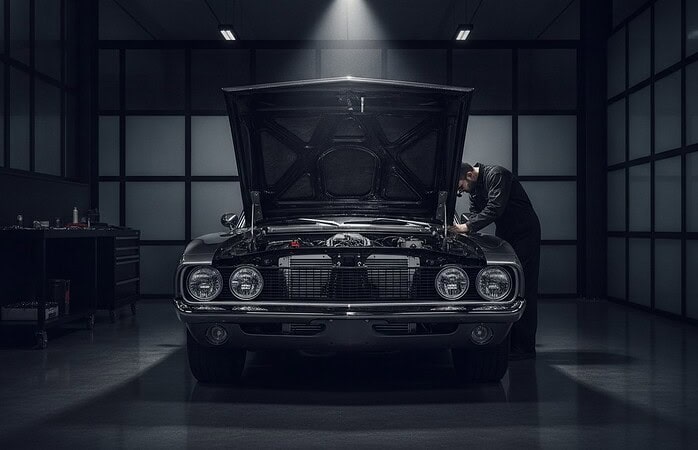

Your residential garage, no matter how well-appointed, is often the most significant threat to your investment-grade restomod’s longevity. It’s a harsh reality for collectors in 2026. You’ve spent years curating a vehicle that captures the soul of a vintage era while delivering modern operational reliability. You naturally want to keep it close. Yet, the anxiety of fluctuating humidity, invasive pests, or a stray bicycle scratch in a multi-use space never truly fades. When evaluating the merits of professional car storage vs home garage options, the decision impacts more than just convenience; it defines the future of your vehicle’s mechanical integrity.
A restomod is a bespoke piece of functional art. It’s a marriage of brute force and refined comfort that requires a meticulous environment to thrive. This guide provides a clear framework to evaluate storage risks and offers proof that professional climate-controlled environments are the ultimate strategy for asset preservation. You’ll discover how expert oversight and routine maintenance checks keep your vehicle in a showroom-ready state. We provide the confidence that every time you turn the key, the experience is as visceral and flawless as the day the build was completed.
Key Takeaways
- Identify the hidden environmental hazards that turn a standard residential garage into a liability for high-performance mechanical components and bespoke finishes.
- Gain a clear framework for comparing professional car storage vs home garage limitations to protect your vehicle’s long-term resale value and structural integrity.
- Explore the technical advantages of climate-controlled environments that prevent the degradation of artisanal interiors and sensitive modern electronics.
- Learn how active maintenance protocols, including battery tending and tire monitoring, ensure your asset remains in a state of constant daily-driver readiness throughout 2026.
- Understand the strategic benefits of professional oversight, ranging from potential insurance advantages to the seamless execution of a future consignment program.
The Evolution of Vehicle Preservation for Restomod Owners
The landscape of automotive collecting has undergone a radical transformation. We’ve moved far beyond the era of simple cosmetic restorations. Today, the focus is on the investment-grade restomod. These vehicles are bespoke pieces of functional art. They demand a level of care that matches their sophisticated engineering. As we move through 2026, the debate over professional car storage vs home garage utility is no longer about convenience. It’s about risk mitigation for complex mechanical systems and high-end finishes. Collectors are shifting away from the hobbyist mindset. They are embracing a model of professional asset management that treats the vehicle as a high-performance reality rather than a weekend project.
The Rise of the Investment-Grade Restomod
Traditional vintage cars were mechanically simple; modern restomods are a different breed entirely. They feature high-output LS swaps, intricate electronic control units, and advanced wiring harnesses. These components are sensitive. They require a stable environment to maintain peak performance and long-term reliability. A humid residential space can lead to micro-corrosion in modern electrical connectors. This compromises the modern operational reliability you expect from a world-class build. Transitioning to professional management ensures these technical intricacies are preserved. It’s the bridge between a long-held dream and a tangible, high-performance asset that holds its value over time.
The Limitations of Traditional Preservation
The residential garage is a multi-use battlefield. It’s where bicycles lean against walls and lawnmowers kick up dust. For an Elite Certified Restomod, this environment is a constant liability. Many owners rely on high-end car covers as a primary defense. This is often a mistake. Covers can trap ambient moisture against the paint or cause fine micro-scratches during every application. The emotional toll of home storage is significant. You shouldn’t spend your evenings worrying about accidental door dings or the slow degradation of an artisanal interior.
True asset preservation means your vehicle is always daily-driver ready. It must be a turnkey experience every time you feel the urge to drive. Professional management removes the friction of routine maintenance. It allows you to enjoy the visceral thrill of the drive without the administrative headache of home upkeep. This evolution reflects a broader trend in 2026. Owners now prioritize the marriage of brute force and refined comfort. They understand that a meticulous storage environment is simply an extension of the build quality itself. By choosing professional oversight, you ensure the soul of your vintage asset remains untarnished by the hazards of a standard home garage.
The Home Garage: Convenience vs Hidden Hazards
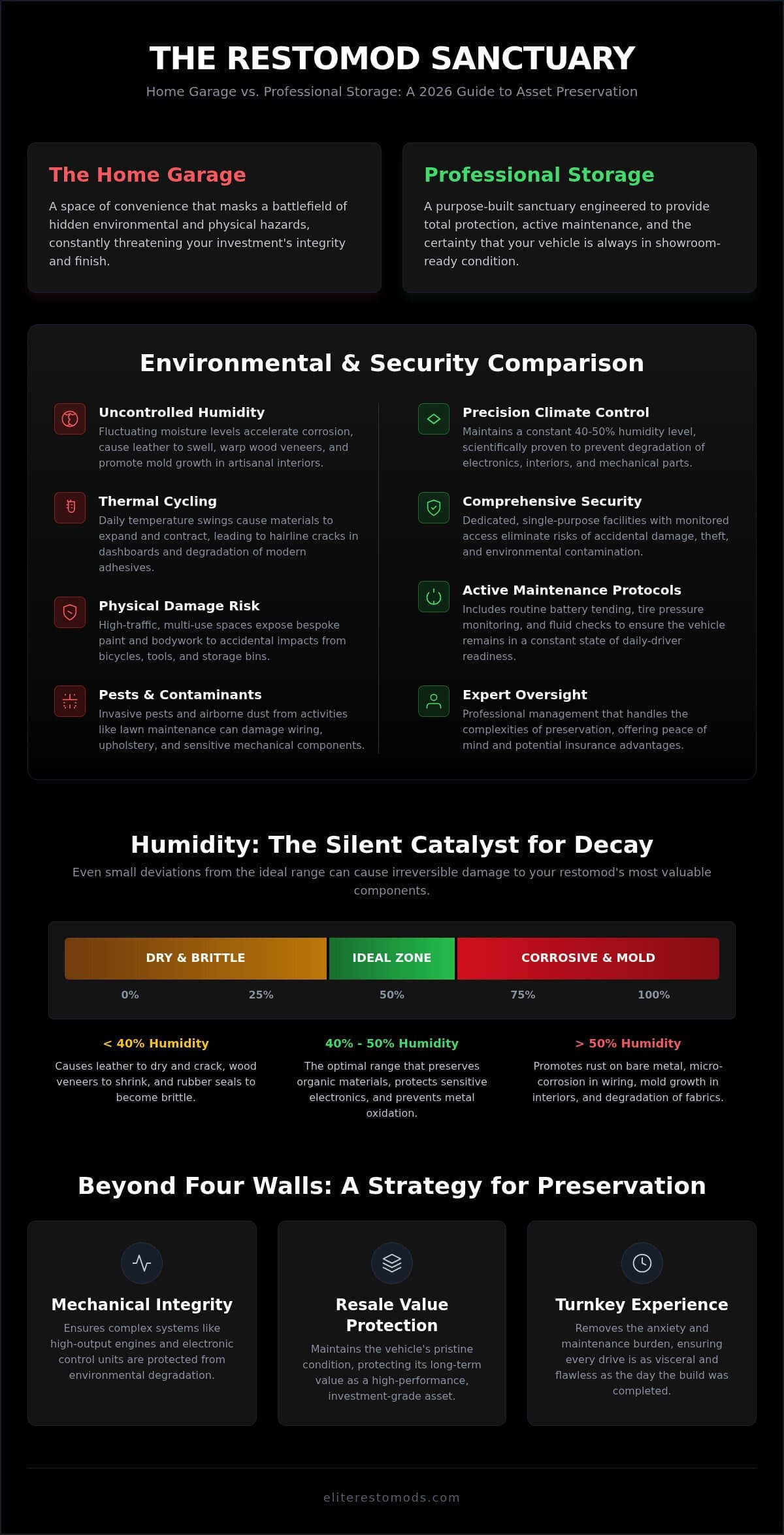
The allure of the home garage is undeniable. You want to see your investment every morning. You want the convenience of a spontaneous Sunday drive. However, the perceived safety of a residential space is frequently an illusion. When comparing professional car storage vs home garage environments, the technical disparities are stark. Thermal cycling is a relentless enemy. Daily temperature swings cause materials to expand and contract at different rates. This stress eventually leads to hairline cracks in vintage-style dashboards and the degradation of modern adhesives used in contemporary restomod builds.
Concrete floors present a hidden mechanical threat. Concrete is essentially a hard sponge. It constantly pulls moisture from the soil and releases it as vapor. Without a commercial-grade vapor barrier, this moisture settles on the cool metal of your undercarriage. It initiates oxidation in places you can’t see. Even a fully sorted, ceramic-coated vehicle isn’t immune to the corrosive effects of a damp floor. Beyond the chemistry, there is the physical risk. A multi-use garage is a high-traffic zone. Every time a door opens or a tool is moved, your bespoke paintwork is at risk of accidental impact from bicycles, ladders, or storage bins.
Humidity and the Science of Corrosion
By 2026, shifting climate patterns have made humidity control more difficult for the average homeowner. Most residential structures aren’t built to maintain the precise 40 to 50 percent humidity levels required for organic materials. While temperature matters, humidity is the true catalyst for decay. It causes leather to swell and wood veneers to warp. A climate-controlled environment isn’t just about comfort. It’s a scientific necessity for preserving the soul of a vintage asset and preventing mold growth within artisanal interiors.
Security Beyond the Deadbolt
Residential security is often reactive. A standard deadbolt or a basic smart-home camera provides a false sense of confidence. Professional facilities employ active, 24/7 monitoring and sophisticated fire suppression designed specifically for high-fuel-load environments. If you’re serious about protecting your build, consider how our climate-controlled storage offers a level of defense that no suburban neighborhood can replicate. It’s about moving from a state of constant anxiety to one of absolute certainty, ensuring your vehicle remains a pristine piece of functional art.
Professional Storage: The Architecture of Protection
A world-class storage facility is a masterpiece of engineering. It’s a sanctuary designed for the singular purpose of asset preservation. While a residential space offers proximity, the architecture of a professional environment offers something far more valuable: absolute control. In the context of professional car storage vs home garage utility, the difference lies in the technical infrastructure. We don’t just park cars. We curate their environment. High-efficiency particulate air (HEPA) filtration systems eliminate the dust and airborne contaminants that act as abrasives on high-end clear coats. Every cubic foot of air is managed to ensure your investment remains in a state of perpetual excellence. When evaluating the technical merits of professional car storage vs home garage facilities, it becomes clear that residential spaces cannot replicate this level of HVAC precision.
Precision Climate Control Standards
Maintaining the golden ratio of 50 percent relative humidity and a stable 68 degrees Fahrenheit is critical. It’s the only way to prevent the degradation of bespoke functional art. These standards go beyond human comfort. They are engineered to protect the integrity of modern engine seals and gaskets. In an Elite Certified environment, these components remain supple. They don’t succumb to the drying or cracking common in fluctuating residential climates. Filtered air further protects artisanal finishes, ensuring that the raw, visceral excitement of your car’s aesthetic is never dulled by environmental oxidation.
Concierge Maintenance and Readiness
A professional facility provides active oversight that no smart-home system can match. Modern restomods are complex. They rely on sophisticated Electronic Control Units (ECUs) and advanced wiring that require consistent power. Our climate-controlled storage includes integrated battery tending as a baseline standard. This prevents the voltage drops that can lead to software glitches or hardware failure. Beyond electronics, we address the physical realities of long-term placement.
- Regular tire pressure monitoring prevents flat spots on high-performance rubber.
- Scheduled tire rotations ensure the structural integrity of the carcass remains intact.
- Fluid level checks and leak detection protocols identify potential issues before they become catastrophic failures.
This level of care ensures your vehicle is always daily-driver ready. It’s the difference between a car that merely sits and an asset that is prepared for a high-performance reality at a moment’s notice. The human element of vehicle oversight provides the final layer of security. Our staff understands the soul of a vintage asset. They possess the vision to maintain it to a master builder’s standard, treating every machine with the respect it deserves.
Calculating the Real Cost of DIY Preservation
The decision between professional car storage vs home garage placement is often framed as a choice of convenience. This is a fiscal oversight. In 2026, the real cost of DIY preservation includes more than just electricity. It encompasses the hidden capital required to upgrade a residential space to a professional standard. To replicate a world-class environment, a homeowner must invest in industrial-grade HVAC, high-end security monitoring, and moisture-sealed flooring. These are sunken costs that rarely offer a full return on home equity. Conversely, professional management acts as a strategic depreciation hedge. It preserves the capital you’ve already invested in the build itself. When you analyze the total expenditure, the professional car storage vs home garage debate shifts from a luxury expense to a logical investment in asset protection.
Time is your most finite resource. Maintaining a fully sorted restomod requires constant vigilance. You must manage battery tending, fluid circulation, and tire health. When you outsource these tasks, you reclaim the hours spent on administrative upkeep. You trade the labor of a curator for the enjoyment of a driver. It’s about moving from a state of constant maintenance to a state of constant readiness.
Mitigating Accelerated Depreciation
The market for high-end restomods is discerning. Buyers in 2026 prioritize provenance. A vehicle with a documented history of professional management commands a premium over one stored in a standard residential setting. These records act as a mechanical pedigree. They prove the vehicle has never suffered from thermal cycling or humidity-induced oxidation. By maintaining this status, you protect the resale value of your functional art. It remains a liquid asset, ready for our consignment program whenever you decide to evolve your collection. This professional oversight ensures your build retains its fully sorted status, making it a more attractive prospect for the next generation of collectors.
Insurance and Liability Advantages
Specialized classic car insurers recognize the reduced risk profile of a professional facility. Residential garages are high-risk zones for no-fault claims. Household accidents, such as falling tools or fire hazards from adjacent appliances, drive up premiums. Professional facilities feature advanced fire suppression and 24/7 monitoring that residential systems cannot match. Many providers offer significant rate reductions for vehicles kept in these controlled environments. This creates a tangible offset to the monthly storage fee. It’s a calculated move that satisfies both the heart of a collector and the mind of an investor. By choosing professional management, you’re not just buying space; you’re securing a comprehensive insurance policy for your vehicle’s future.
The Elite Standard: Beyond Four Walls
The choice between professional car storage vs home garage placement isn’t just about where the vehicle rests; it’s about who oversees its soul. Elite Restomods treats every asset as a bespoke piece of functional art. We don’t offer mere parking. We provide a sanctuary where heritage meets modern capability. Our facility acts as an extension of our master builder philosophy. It ensures that the raw power and refined comfort of your build remain perfectly preserved. By integrating storage into a total ownership experience, we remove the friction of maintenance. We replace it with the confidence of a showroom-ready reality that is prepared for the high-performance demands of 2026.
A Synergistic Approach to Ownership
Storage is the vital bridge between a custom build and a successful consignment program. In our world, hibernation doesn’t mean stagnation. While your vehicle is with us, it remains under the watchful eye of the same experts who understand its mechanical intricacies. We ensure every Elite Certified Restomod stays daily-driver ready. This holistic care includes the logistical convenience of enclosed vehicle transport. It connects your residence to our facility without exposing the vehicle to road debris or unpredictable weather. This synergy ensures that when you’re ready to drive, or eventually ready to sell, the asset is in its absolute peak state. Having master builders oversee your vehicle’s hibernation provides a level of technical security that a standard residential space simply cannot match.
Next Steps for the 2026 Collector
As you evaluate your strategy for the coming year, conduct a critical audit of your current residential setup. Look for the hidden hazards we’ve identified: thermal swings, moisture release from concrete sponges, and the inherent risks of a multi-use environment. If your space falls short of a professional standard, it’s time to transition to a climate-controlled environment. Your investment deserves the protection of a world-class curator who understands the marriage of brute force and refined comfort. We invite you to view our current inventory of fully sorted vehicles to see the standard of excellence we maintain. Whether you’re seeking a new addition to your collection or protecting a long-held dream, the journey from vintage asset to modern masterpiece requires a partner who values perfection as much as you do. Don’t leave the future of your investment to the limitations of a residential garage.
Preserving the Soul of Your Automotive Legacy
The residential garage is a landscape of variables; professional storage is a fortress of constants. We’ve explored how the silent threat of concrete moisture and the relentless stress of thermal cycling can compromise even the most meticulously sorted build. Evaluating professional car storage vs home garage utility reveals that true asset preservation requires more than just four walls. It requires a curator who understands that every turn of the key should be a visceral realization of perfection.
By choosing a dedicated facility, you move beyond basic protection into a realm of active asset management. You can secure your investment with Elite Restomods professional storage services to ensure your vehicle thrives in a climate-controlled environment. With battery tending included and the confidence of master builder oversight, your functional art remains in a state of perpetual readiness. The 2026 collector knows that some dreams are too valuable to leave to chance. Trust your legacy to those who share your passion for excellence and enjoy the road with absolute certainty.
Frequently Asked Questions
Is professional car storage worth the cost for a restomod?
Professional storage acts as a critical depreciation hedge for investment-grade assets. By maintaining a stable environment and providing expert oversight, you protect the vehicle’s resale value and structural integrity. Standard residential garages often lead to accelerated wear and environmental degradation that costs more in long-term repairs than a storage subscription. It’s a strategic investment in the vehicle’s fully sorted status, ensuring it remains a liquid and desirable asset for collectors in 2026.
What is the ideal temperature and humidity for classic car storage?
The golden ratio for automotive preservation is approximately 50 percent relative humidity and a stable temperature of 68 degrees Fahrenheit. This specific balance prevents organic materials like leather and wood from warping while stopping the oxidation of metal components. Professional facilities use industrial-grade HVAC systems to maintain these levels precisely. Home garages suffer from extreme thermal cycling and humidity spikes that can lead to the slow decay of artisanal interior finishes.
Does professional storage help with classic car insurance premiums?
Many specialized classic car insurers provide reduced premiums for vehicles kept in professional facilities. These environments feature 24/7 monitoring and advanced fire suppression that residential garages simply cannot match. When comparing professional car storage vs home garage risks, underwriters favor the controlled environment of a professional facility. By lowering the risk of no-fault claims caused by household accidents, you often offset a portion of the monthly storage subscription costs.
How often should a stored car be started or moved?
A stored vehicle should be monitored weekly, but starting the engine is unnecessary if battery tending is in place. Professional management includes routine maintenance checks to ensure fluids are stable and tire pressures are correct. Moving the vehicle slightly every few weeks prevents flat spots on high-performance rubber. This proactive oversight ensures the car remains daily-driver ready without the owner needing to perform the manual labor associated with long-term vehicle hibernation.
Can I store a car with a modern LS swap in a standard home garage?
You can, but modern LS swaps and advanced wiring harnesses are highly sensitive to environmental fluctuations. High humidity in a standard garage can cause micro-corrosion on electrical connectors, leading to mysterious software glitches or hardware failure. These high-performance components thrive in stable, filtered environments. To maintain the modern operational reliability of your restomod, professional climate control is the superior strategy for long-term health compared to a standard residential space.
What are the risks of using a car cover in a home garage?
Car covers often trap ambient moisture against the paintwork, which can lead to oxidation or mold growth in artisanal interiors. In a multi-use residential space, dust particles settle on the car before the cover is applied, causing fine micro-scratches every time the material moves. Professional facilities eliminate the need for covers by using HEPA filtration to remove dust from the air, preserving the visceral clarity of your finish without physical contact.
What should I look for in a professional car storage facility?
Prioritize facilities that offer true climate control rather than just heated spaces. Look for integrated maintenance services such as battery tending and fluid monitoring performed by staff who understand high-end builds. Security should include 24/7 active monitoring and specialized fire suppression. A facility that offers enclosed vehicle transport provides an extra layer of protection, ensuring your vehicle arrives and departs in a pristine, showroom-ready state without exposure to road hazards.
How does climate control prevent electrical issues in restomods?
Climate control prevents the condensation that causes micro-corrosion in modern ECUs and sensitive sensors. By maintaining a stable temperature, the facility eliminates the thermal expansion and contraction that stresses delicate electrical solder joints. In the professional car storage vs home garage debate, professional oversight also includes consistent battery tending. This maintains the stable voltage required for the complex electronics found in investment-grade restomods, preventing costly software errors or hardware failures.