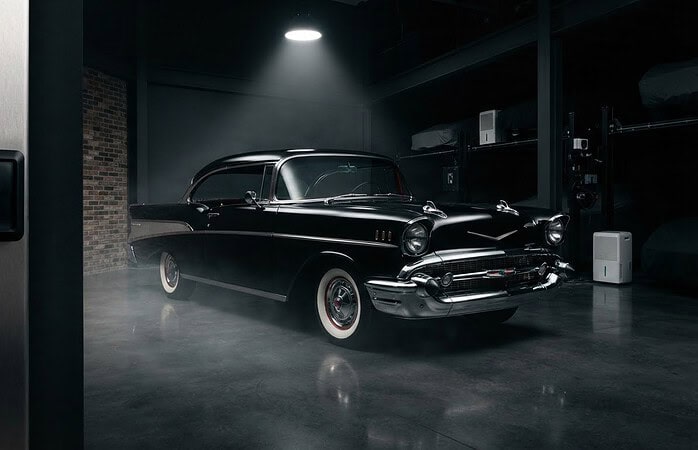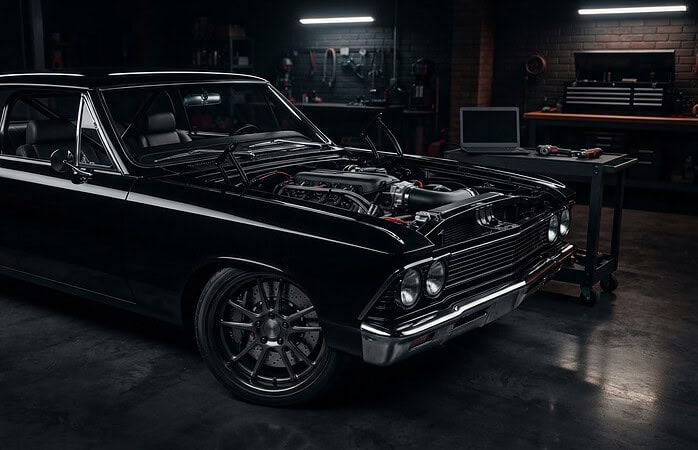

A classic can look immaculate, start on the first turn, and still have a paperwork problem that changes the purchase. Title issues with classic cars can involve missing documents, a VIN that doesn’t match the records, or a seller whose name isn’t on the title. Resolve the uncertainty before the car changes hands.
It’s understandable to be cautious when a decades-old vehicle has gaps in its ownership history. Older cars may have moved across state lines, and title rules vary, so advice that applies in one state may not apply in another. A bill of sale can document a transaction, but it generally isn’t a substitute for a title.
This guide covers common warning signs, including open titles, unresolved liens, and branded titles. You’ll learn what to compare across the car, its paperwork, and available history records, and why a physical VIN inspection and a vehicle history report serve different purposes. A careful review helps you identify questions to resolve before payment and make your next move with clearer expectations.
Key Takeaways
- Title issues with classic cars can affect more than paperwork. Resolve ownership questions before purchase.
- Recognize warning signs such as missing titles, seller-name differences, VIN inconsistencies, liens, and title brands without assuming they prove fraud.
- Compare the title, vehicle identifiers, bill of sale, and available ownership records. Note discrepancies that need an explanation.
- If a problem appears, pause, gather the records, and identify the applicable state process rather than relying on a one-size-fits-all remedy.
- Elite’s AIM Quality Assurance Methodology assesses mechanical and presentation areas, while title and ownership documents require separate review. All Restomods include a 1 year extended service contract provided through Classic Vehicle Protection.
Why Title Issues with Classic Cars Deserve Attention Before You Buy
The paint may be flawless, the engine note unmistakable, and the car a rare piece of automotive history. Before you picture it in your garage, ask a practical question: can the seller transfer ownership of this specific vehicle? Title issues with classic cars deserve attention early because a beautiful car and clear authority to sell are separate parts of a sound purchase.
That distinction is central to pre-purchase due diligence. A title concern isn’t automatically evidence of wrongdoing, but unresolved uncertainty can complicate what happens after the sale. Give the paperwork the same deliberate attention you give the bodywork and mechanical details.
What a title establishes, and what it does not
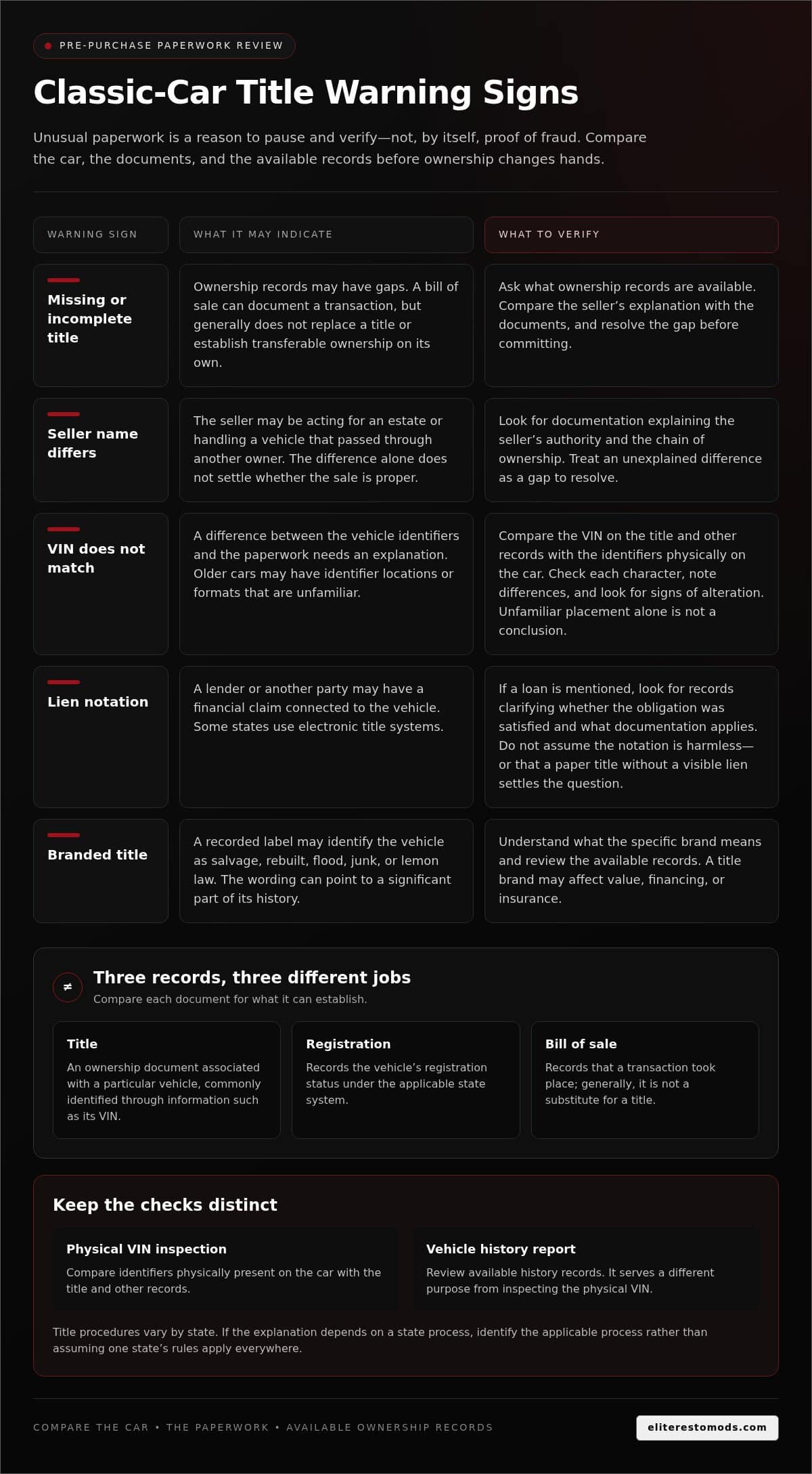
A vehicle title is an ownership document associated with a particular vehicle, commonly identified through information such as its VIN. The Vehicle Title overview offers foundational context on the document and its role. Registration serves a different purpose: it records the vehicle’s registration status under the applicable state system. A bill of sale records that a transaction took place, but generally isn’t a substitute for a title or proof on its own that the seller can transfer ownership.
Each record answers a different question. Does the title information correspond to the car? Does the seller’s identity align with the ownership documents? Does the bill of sale accurately describe the proposed transaction? A mismatch isn’t a verdict, but it is a reason to pause and understand the discrepancy before committing.
A title also says nothing definitive about how the car runs or the quality of its restoration. It can’t establish that suspension components perform as intended, that electrical work is sound, or that cosmetic finishes reflect careful craftsmanship. Paperwork review and mechanical inspection are complementary, not interchangeable, forms of due diligence.
Why classic-car paperwork can feel unfamiliar
Classic cars often carry long histories. A vehicle may have changed hands more than once, moved between states, or spent years off the road. That history can leave a buyer looking at older documents, incomplete records, or a title format that differs from what they’re used to. The paperwork may require closer comparison, but unfamiliarity alone doesn’t establish that it’s invalid.
Title formats and procedures vary by state, so a document that looks unusual may reflect a different process or recordkeeping style. Treat appearance as a prompt to verify, not as a conclusion. Note what seems inconsistent, then compare the vehicle identifiers, seller details, and available ownership records. If the explanation depends on a particular state’s process, seek guidance that applies to that state instead of assuming advice from elsewhere fits.
Title clarity belongs in pre-purchase due diligence because confirming the car’s story before payment is simpler than discovering an ownership-document problem after the keys change hands. A measured review helps you understand what the documents do and don’t establish before you commit.
Common Classic Car Title Issues: Missing Papers, VIN Mismatches, and More
A classic’s paperwork can tell a complicated story. The goal is to identify what needs explaining before you commit, not to treat every unusual detail as evidence of fraud. Missing documents, name differences, VIN inconsistencies, lien entries, and title brands are signals to investigate. Each has its own context, and the next step depends on the records and state process involved.
Missing, incomplete, or unexpectedly named ownership documents
If the title is missing, ask what ownership records are available and compare the seller’s explanation with those documents. A bill of sale can support a record of the transaction, but generally does not establish transferable title on its own. A verbal promise to resolve the paperwork later doesn’t remove the uncertainty.
A seller whose name differs from the name shown on the title may be acting for an estate or handling a vehicle that has passed through another owner. That circumstance isn’t automatically improper, but it calls for documentation that explains the seller’s authority and the chain of ownership. Treat an incomplete record as a gap to resolve, not a verdict about the car.
VIN differences, liens, and branded-title language
Compare the VIN shown on the title and other records with the identifiers physically present on the vehicle. Older cars may display identifiers in locations or formats buyers aren’t accustomed to, so don’t infer a problem from unfamiliar placement alone. Check each character carefully, note any differences, and look for signs that an identifier may have been altered. The Florida Department of Highway Safety and Motor Vehicles offers practical context in its Title Fraud Prevention guidance.
A lien notation indicates a lender or other party may have a financial claim connected to the vehicle. If a loan is mentioned, look for records that clarify whether the obligation has been satisfied and what documentation applies. Don’t assume a notation is harmless or that a paper title without a visible lien settles the question. Some states use electronic title systems.
A branded title carries a recorded label such as salvage, rebuilt, flood, junk, or lemon law vehicle. The wording can point to a significant part of the car’s history and may affect its value, financing, or insurance. Understand what the specific brand means in the relevant state before deciding how it changes your purchase assessment.
A paperwork discrepancy is a question to resolve, not proof of a confirmed ownership defect. Keep the review factual and focused. If you’re considering a classic, you can also browse Elite’s current Restomod inventory, while keeping title review separate from mechanical evaluation.
How to Review Classic-Car Title Paperwork Before a Purchase
A focused document review turns a stack of old records into a clearer ownership picture. Keep the car and its paperwork together, compare details one by one, and write down anything that doesn’t align. Separate what you can observe from what requires state-specific interpretation. A discrepancy is a reason to investigate, not a legal conclusion by itself.
Compare the title, vehicle identifiers, and seller information
Start with the title’s identifying details and status, then compare its VIN with the identifiers visible on the vehicle. Check each character carefully. If the numbers differ, record where each appears and exactly how it differs. Don’t rely on memory or a quick glance. Older vehicles may have identifiers in unfamiliar locations, so a difference in placement alone doesn’t establish whether the records correspond.
Next, compare the seller’s identity with the owner named on the title. If they don’t match, note what documents explain the seller’s authority to transfer the car. Keep the seller’s explanation, the paperwork, and any unresolved question distinct. That record makes it easier to seek guidance that fits the state and circumstances.
| Document or detail | What to compare | What an unexplained mismatch means |
|---|---|---|
| Title name and status | Named owner, vehicle description, VIN, and any visible status or notation. | The seller’s connection to the vehicle or the title’s meaning needs clarification. The mismatch alone doesn’t establish the legal outcome. |
| Vehicle VIN identifiers | Characters on the title against the physical identifiers on the car and other records. | Record the exact differences and locations. Don’t assume a mismatch is harmless or proof of alteration before it’s properly interpreted. |
| Bill of sale | Seller and buyer details, vehicle description, VIN, and transaction terms against the title and the proposed sale. | Conflicting information may leave the transaction record unclear. A bill of sale documents a transaction but does not automatically establish transferable ownership. |
| Available ownership records | Names, dates, vehicle identifiers, and the sequence shown across prior records. | A gap or inconsistency may call for more context or state-specific guidance. Supporting records don’t independently guarantee clear ownership. |
Use supporting documents to understand the ownership story
Prior registrations, earlier bills of sale, service records, and restoration receipts can add context when available. For instance, a receipt may connect work to the car through a VIN or description, while a prior registration may help explain a change in the named owner. These records can strengthen the vehicle’s documented history, but they don’t automatically replace a title or resolve every ownership question.
For title issues with classic cars, keep a simple discrepancy log: identify the document, copy the detail that differs, and note what evidence might explain it. Then distinguish that observable fact from the legal question of what the state will accept. Evaluate the broader purchase too: paperwork review belongs alongside the vehicle’s condition, history, and suitability for the way you plan to drive it.
What to Do When a Classic Car Title Problem Appears
A title discrepancy can feel frustrating, especially when the car itself seems like the right fit. Slow the transaction down. Title issues with classic cars call for a measured response: establish exactly what doesn’t match, collect the relevant records, and learn which state process applies before deciding whether it’s safe to proceed.
- Pause the transaction. Don’t let urgency or a seller’s verbal assurance substitute for resolving a material ownership or lien question.
- Describe the discrepancy precisely. Note which document or identifier differs, what it says, and what you expected to see. For example, record the exact difference between a title VIN and the vehicle’s visible VIN rather than writing only “VIN problem.”
- Gather the records. Keep copies of the title, proposed bill of sale, available ownership records, and any documents related to the mismatch or a lien.
- Determine the applicable state process. Requirements vary, so consult the motor-vehicle authority for the state relevant to the vehicle and transaction. Don’t assume a remedy used elsewhere will apply.
Document the issue and seek the applicable state guidance
Keep your notes factual and your copies organized. If the seller explains that a name difference relates to an estate or prior transfer, record that explanation and identify which documents support it. Then ask the appropriate state motor-vehicle authority what requirements apply to that specific situation. There isn’t one universal route for missing, incomplete, or inconsistent classic-car paperwork. A process that fits one vehicle or state may not fit another.
This step separates an observable fact from a legal conclusion. You can verify that two VINs differ or that the seller’s name isn’t the one printed on a title. Whether the records establish authority to transfer the car depends on the relevant state process and circumstances. Clear, jurisdiction-specific guidance is more useful than a shortcut or an online answer written for a different case.
Decide whether the transaction is ready to proceed
Before funds change hands, make sure material ownership or lien questions have a clear, documented path forward. If the discrepancy remains unexplained, pause rather than relying on a promise that the paperwork will be sorted out later. Put agreed transaction details in writing, including the vehicle identification and any relevant conditions, and keep copies with your records.
Stay precise about the scope of each check. Resolving a title concern doesn’t establish the car’s mechanical condition, and a successful mechanical inspection doesn’t settle who can transfer ownership. Treat them as separate parts of the purchase decision. One helps you understand the vehicle’s paperwork; the other helps assess the car itself.
Once the ownership questions are addressed, you can weigh the rest of the purchase with greater clarity. Explore Elite’s Restomod inventory as you consider your next classic. All Restomods include a 1 year extended service contract provided through Classic Vehicle Protection.
Choose a Classic Car Purchase with Clear Expectations and Confidence
A beautifully prepared classic deserves a purchase decision grounded in more than first impressions. Mechanical condition, presentation, ownership documents, and the seller’s explanation each matter, but they answer different questions. Reviewing the paperwork can help you understand the vehicle’s history and the transaction. It doesn’t replace a mechanical assessment, and an inspection of the car doesn’t establish who can transfer its title.
Understand what an inspection can, and cannot, tell you
Elite’s AIM Quality Assurance Methodology covers drivability, suspension, brakes, fuel, electric, exhaust, exterior, and interior. These areas address how the vehicle functions and presents, from its road manners and braking systems to its finish and cabin. Review the AIM quality assurance process to understand the stated inspection scope.
That scope is not a title-verification claim. AIM QA does not establish ownership or confirm that title paperwork can be transferred. Review the documents separately: examine the available records, identify questions, and use the guidance applicable to the vehicle’s state and circumstances. Likewise, paperwork clarity doesn’t certify mechanical condition or guarantee how a car will perform in the future. Consider each part of the purchase on its own terms.
This distinction matters with any classic, including a meticulously restored or upgraded vehicle. The title speaks to ownership documentation; inspection findings speak to the areas assessed. Neither should be treated as a substitute for the other. A candid review of what the documents show, paired with a clear understanding of what an inspection covers, helps set realistic expectations before you commit.
Explore investment-grade restomods with a clear next step
For buyers drawn to classic design with modern drivability, Elite offers investment-grade, fully sorted restomods intended to be confidently driven. Every Elite Restomod includes a 1 year extended service contract through Classic Vehicle Protection. These details can inform your comparison, while your review of title and ownership documents remains a distinct part of purchase due diligence.
Consider the kind of driving experience you want, then weigh a candidate’s documented condition and ownership paperwork against that goal. Look beyond appearance alone: understand what inspection areas are covered, review available documents, and keep unresolved title questions separate from mechanical findings. That measured approach helps preserve the excitement of finding the right classic without letting enthusiasm obscure practical questions.
Ready to consider a fully sorted classic? Explore Elite’s current Restomod inventory and see which vehicles speak to your vision.
Make Your Next Classic-Car Decision with Confidence
The right classic should inspire more than a moment of recognition. It should fit the way you want to drive, the care you’re prepared to give it, and the confidence you want in the purchase. Treat title issues with classic cars as one part of a broader decision: seek clarity about ownership while also considering how the vehicle has been assessed and whether it suits your plans.
That balance lets you move forward with enthusiasm and clear expectations. A well-prepared restomod can bring iconic design into a driving experience shaped for today, while thoughtful due diligence helps you choose with intention. The goal isn’t to let paperwork overshadow the pleasure of the car. It’s to make room for that pleasure by approaching the purchase with care.
Ready to explore a classic built for the road? Explore Elite Restomods and find a vehicle that speaks to your vision. Your next chapter behind the wheel can begin with confidence.
Frequently Asked Questions
Can I buy a classic car if the title is missing?
Possibly, but it depends on the vehicle’s records and the applicable state requirements. Before agreeing to buy, identify what’s missing: the original title, a transfer record, or documentation connecting the seller to the vehicle. A bill of sale may support the transaction record, but don’t assume it resolves title issues with classic cars everywhere. Review the relevant state process and clarify the gap before completing the purchase.
Is a bill of sale enough to prove ownership of a classic car?
Not universally. A bill of sale records transaction details, while the title and applicable transfer requirements address ownership documentation. For example, a bill of sale may show that a seller agreed to sell a particular vehicle, but it doesn’t necessarily establish that the seller can transfer it. Its role depends on the situation and state, so understand what the title record shows rather than treating one document as a substitute in every case.
What happens if the VIN on a classic car title does not match the vehicle?
Investigate the mismatch before purchase, but don’t assume it proves fraud. Compare every available identifier on the vehicle with the title and other records, noting the exact characters and locations involved. Older cars may have identifier formats or placements unfamiliar to buyers accustomed to modern vehicles. A mismatch could require context or state-specific guidance. The appropriate interpretation and next step depend on the vehicle’s records and applicable process.
Can a classic car title show a previous owner’s name?
Yes, but a previous owner’s name means you should understand the documented ownership chain and how the seller is authorized to transfer the vehicle. For example, a seller may explain that they’re handling a car connected to an estate or an earlier owner. The relevant supporting documents depend on those circumstances and the state. Resolve the difference before payment, and don’t treat a verbal explanation alone as documentation.
What does a lien on a classic car title mean for a buyer?
A lien notation signals a recorded claim or interest that needs clarification before the transaction proceeds. It doesn’t, by itself, tell you from a brief review whether the claim remains active or has been resolved. Note the notation, gather related records, and establish what documentation addresses it. Then follow the process applicable to the vehicle and state before completing the purchase, rather than relying on an assumption about the notation.
Are classic car title requirements the same in every state?
No. Title formats, transfer procedures, and registration rules can differ by state and by a vehicle’s circumstances, such as its age or ownership history. A general guide can help you recognize questions to investigate, but it can’t determine the exact requirements for every transaction. Identify which state’s process applies, then use that state motor-vehicle authority’s current guidance for the specific paperwork and transfer steps.
Does a mechanical inspection confirm that a classic car has a clear title?
No. A mechanical inspection assesses only the areas within its stated scope; it doesn’t establish ownership or resolve title records. Elite Restomods’ AIM Quality Assurance Methodology covers drivability, suspension, brakes, fuel, electric, exhaust, exterior, and interior. A favorable assessment in those areas can inform your view of the car’s condition, but title paperwork requires a separate review before you complete the purchase.