

A state line doesn’t automatically put your dream car beyond reach. Financing a car that is out of state is possible, provided the lender is willing to finance the purchase and approves the loan. Getting preapproved before you shop can help the sales process go more smoothly.
It’s reasonable to wonder whether a lender will work with a seller in another state, especially when the car you want is far from home. The answer depends on the lender and the transaction. Arranging financing early can help you understand your options before committing to a vehicle.
This guide explains how lender reach affects out-of-state purchases, what prequalification tells you compared with preapproval, and how to compare loan options before buying.
Key Takeaways
- Find out whether a lender serves both your state and the state where the car is being sold before you commit.
- Compare the full out-of-state cost, including home-state taxes, registration, transport, and any added paperwork.
- Understand how prequalification differs from preapproval so you know what each can tell you before choosing a car.
- For a classic car purchase, explore how Elite Certified Restomods can help connect your financing decision with the vehicle you want to own.
Out-of-state vehicle purchases and lender eligibility
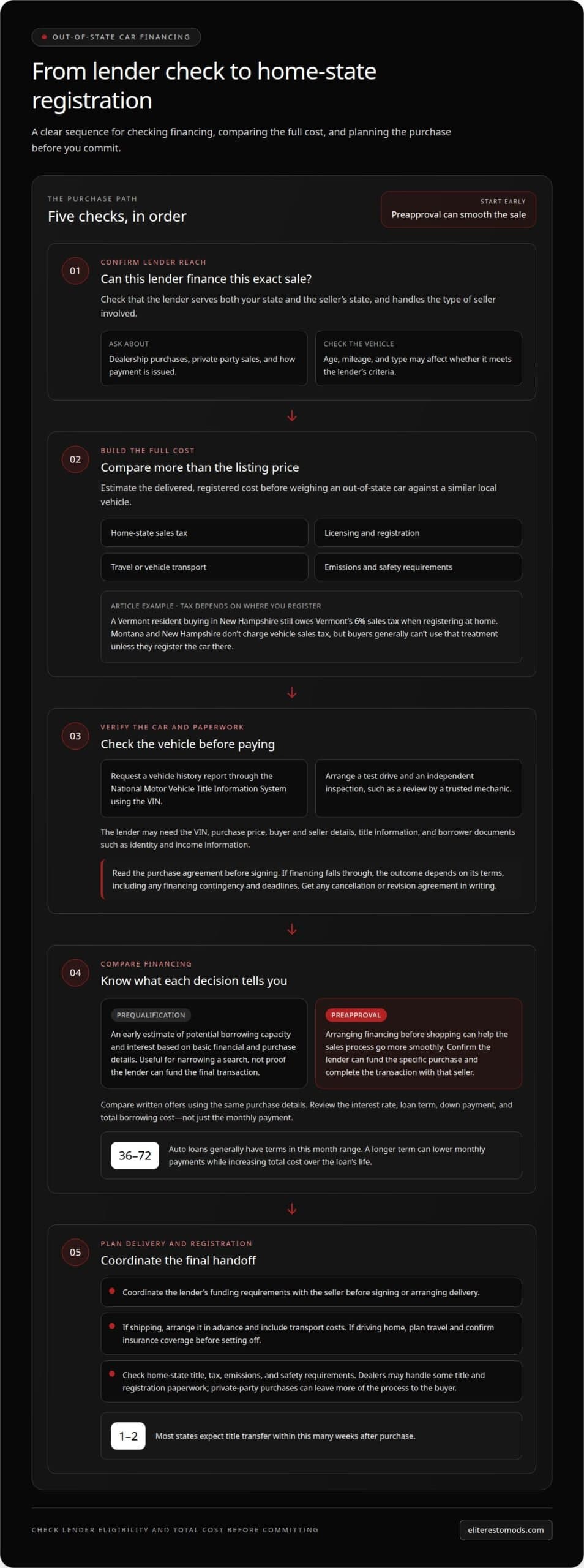
You can finance a car purchased across state lines, but the lender must serve the states involved and accept the vehicle and transaction. Before buying, confirm that the lender can fund a sale involving the seller’s state and your state of residence. A quoted interest rate is useful only if the lender can finance that specific purchase.
For the lender’s paperwork, expect to provide the vehicle identification number (VIN), purchase price, buyer and seller details, and title information. The lender uses these details to prepare funding instructions for an approved loan. It may also request borrower documents, such as identity and income information, to assess your application.
If financing falls through, don’t assume the sale automatically ends. The outcome depends on the signed purchase agreement, including any financing contingency and its deadlines. Read those terms before signing, and get any agreement to cancel or revise the sale in writing.
A nationwide search can turn up rare models that local listings miss. Before committing to a vehicle several states away, request a vehicle history report through the National Motor Vehicle Title Information System using its VIN. Arrange a test drive and an independent inspection, such as a review by a trusted mechanic, before paying.
Review the title and sale documents carefully. An out-of-state car must be registered in your home state, and state requirements can affect taxes, emissions, and safety inspections. A dealer may handle some title and registration paperwork and provide temporary registration. Private-party purchases can leave more of that process to the buyer. Most states expect title transfer within 1 to 2 weeks after purchase.
Plan delivery before finalizing the sale if you won’t drive the vehicle home. Arrange shipping in advance and include transport or travel costs in your budget. If you drive, confirm your insurance coverage before setting off.
Benefits and drawbacks of buying across state lines
A wider search can uncover a model, trim, or classic vehicle unavailable nearby. That matters when originality, condition, or specific equipment shapes your decision. A vehicle from an out-of-state dealership may also be worth comparing with local listings, but the advertised price is only one part of the total cost.
Build a complete estimate before comparing offers. Include your home-state sales tax, licensing, registration, travel, and transportation. A buyer may owe sales tax at home even after purchasing in another state, and tax is often collected during local registration. For example, a Vermont resident buying in New Hampshire still owes Vermont’s 6% sales tax when registering at home. Montana and New Hampshire don’t charge vehicle sales tax, but buyers generally can’t use that treatment unless they register the car there.
State requirements can affect whether an appealing vehicle is practical to own. A car that meets emissions standards where it was sold may not satisfy your home state’s rules. Some states follow strict California Air Resources Board (CARB) standards. Confirm the vehicle’s eligibility before traveling or signing, especially if it has modifications or an older emissions system. A failed inspection can mean extra work and delays to registration.
Distance brings practical trade-offs. Driving home means planning the route, travel, and insurance coverage. Shipping avoids a long drive but adds transportation costs and coordination. Include either option in your comparison rather than treating it as an afterthought.
Buying across state lines can make sense when a vehicle’s condition, specifications, or availability justify the extra planning. Compare the full delivered cost with that of a similar local vehicle, then weigh any savings against emissions requirements, taxes, and logistics. A lower listing price may not mean a lower overall cost.
Lenders with nationwide or state-limited availability
A lender’s geographic reach is only the first filter. A bank may serve customers nationwide but still have a specific process for financing a vehicle sold in another state. A local credit union may limit auto loans to eligible members or its service area. Before applying, identify your state of residence, the seller’s state, and whether the lender handles that combination.
Ask about the transaction, not just whether the lender offers auto loans. Confirm whether it finances purchases from dealerships, private sellers, or both, and what documents it needs to issue payment. A dealer may use its own finance process, while an outside lender may require signed purchase documents and title details before releasing funds. These requirements affect timing and how smoothly the sale can proceed.
Geography doesn’t replace underwriting. The lender assesses your credit and financial profile, then considers the vehicle and requested loan. Before applying, ask whether the vehicle’s age, mileage, and type meet its lending criteria. A classic car, for example, may be assessed differently from a newer daily driver. Don’t assume approval for one vehicle applies to another.
Compare written offers from several lenders using the same purchase details. Review the interest rate, loan term, down payment, and total borrowing cost, rather than focusing only on the monthly payment. Auto loans generally have terms ranging from 36 to 72 months. A longer term can reduce monthly payments while increasing the total cost over the loan’s life.
For an out-of-state purchase, prequalification can help you compare potential options, but it doesn’t establish that the lender can fund the final transaction. Ask whether the lender serves both states and can complete the sale with that seller. Then coordinate its funding requirements with the dealership before signing or arranging delivery.
Prequalification and preapproval
Prequalification provides an early estimate of potential borrowing capacity and interest based on basic financial and purchase details. For a car listed in another state, use the estimate to narrow your search, not as a final loan arrangement. It can help you compare potential loan amounts before choosing a vehicle.
Preapproval involves a more detailed review by the lender and gives you a clearer basis for planning. The lender assesses your application and proposed borrowing amount. Its terms can help you discuss the transaction with a seller, but the vehicle and final paperwork still matter. Ask what conditions apply and how long the approval remains valid.
The distinction is practical: prequalification helps with early budgeting, while preapproval is generally more useful as you prepare to buy. Neither replaces reviewing the final loan agreement. Compare the interest rate, repayment term, down payment, and total amount financed. The monthly payment alone won’t show the full cost of borrowing.
Your credit score is one part of a lender’s assessment, alongside your application details and requested loan. Before applying, gather consistent information about your income, debts, planned down payment, and target vehicle. Using the same purchase assumptions with each lender makes offers easier to compare.
Start the financing conversation before traveling or committing to an out-of-state sale. Tell the lender where the vehicle is located and whether you’re buying from a dealership or private seller. Ask how it will issue funds and what documents it needs to complete the transaction. These details help distinguish a useful preapproval from an estimate that doesn’t fit the purchase.
Once you choose a vehicle, revisit the financing terms using its final price and details. Compare updated offers before signing, and make sure the agreement reflects the amount you intend to borrow. This final review connects your early estimate to the actual purchase.
Elite Restomods: Elite Certified Restomods
Elite Restomods offers Elite Certified Restomods for buyers seeking a distinctive classic-car ownership experience. Once you’ve considered lender reach, loan terms, and out-of-state logistics, exploring a specific vehicle can help focus your financing decision. Match your budget and loan plans to the vehicle you want, rather than choosing financing without a clear purchase in mind.
If you own a classic car, the Consignment Program offers a way to sell it, while Custom Build Services suit buyers planning a tailored build. Climate-Controlled Storage serves owners looking for dedicated vehicle storage. These offerings support different stages of classic-car ownership, from finding a finished restomod to planning a custom project or caring for a car you already own.
To explore Elite Certified Restomods or discuss which option suits your plans, contact Elite Restomods or visit eliterestomods.com.
Move Toward the Right Classic Car
As you plan financing a car that is out of state, keep the vehicle itself at the center of your decision. Choose the classic that suits how you want to drive and enjoy it, then shape your financing around that goal. Knowing what car you want can make the next conversation more focused.
For buyers considering a classic, Elite Restomods offers Classic Car Financing as part of its automotive services. It may be a relevant next step when you’re ready to explore a classic vehicle and want financing included in the ownership discussion. Keep your priorities in view: the right car, a manageable plan, and an experience you’ll value long after the purchase.
Contact Elite Restomods today to discuss your classic-car plans. Your next chapter on the road can start with a thoughtful choice.
Frequently Asked Questions
Can You Finance a Car Out of State?
Yes, you can finance a vehicle bought in another state if a lender approves you and the transaction. The key is matching the lender’s requirements to the seller, vehicle, and purchase arrangement. For example, a lender may process a dealer sale differently from a private-party sale. Clarify how funding works before committing, so the seller’s expectations and the lender’s process align.
Where can you get a car loan?
You can seek an auto loan from a bank, credit union, online lender, or dealership. Compare written offers based on the same vehicle and borrowing amount, and look beyond the monthly payment. A fixed-rate loan keeps its interest rate and payment steady, while the total cost also depends on the term and any products or services financed with it.
Can I finance a car purchased from an out-of-state dealer?
Yes, you can finance a dealer purchase if your lender accepts the vehicle and can fund a transaction involving the dealer’s state. Before signing, align the lender’s funding procedure with the dealership’s paperwork and sale timeline. Ask how payment will be issued and what must be completed before the dealer releases the vehicle. This coordination can help prevent a gap between approval and delivery.
What lenders finance out-of-state car purchases?
Banks, credit unions, online lenders, and dealership-arranged financing may be options, depending on their geographic reach and transaction rules. Rather than relying on general advertising, ask whether a lender handles your state and the seller’s state, and whether it finances that type of vehicle. Compare written interest rates and repayment terms, along with the funding process, before choosing.
Can I use an auto loan to buy a car from a private seller in another state?
Yes, if the lender allows private-party purchases and approves you and the specific vehicle. Private sales can require extra coordination because the lender, buyer, and seller must agree on payment and title documents. Ask the lender how it sends funds and what proof it needs from the seller. Confirm the seller can meet those requirements before finalizing the agreement.
How do I arrange financing before buying a car out of state?
Start by setting a borrowing range, then compare loan offers before choosing a vehicle. Once you identify a car, give the lender its details, the seller type, and the purchase amount so its review reflects the actual transaction. Ask what conditions must be met before funds are released, and coordinate those requirements with the seller. Keep the final signed loan terms for your records.