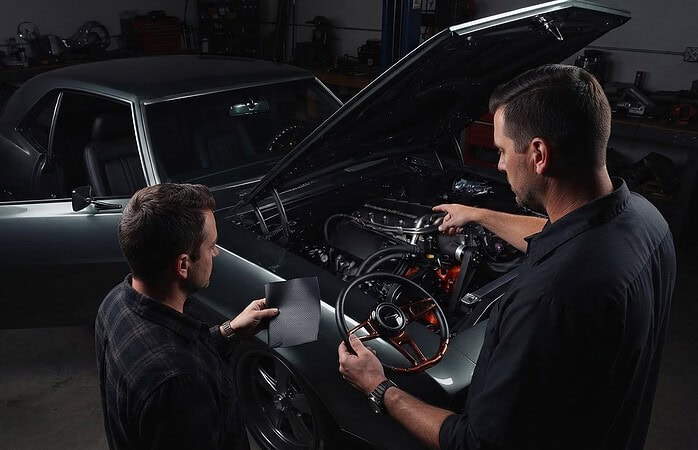

A complete wiring harness isn’t always necessary, but it can be worthwhile when age, damage, or past modifications have made the electrical system unreliable throughout the car. Classic car rewiring cost depends on the harness’s condition, the labor required to remove and install it, and any customization.
It’s reasonable to weigh full replacement against repairing only the visible fault. A focused repair may suit an isolated problem, while widespread deterioration or recurring electrical issues can call for a broader restoration.
This guide explains what affects rewiring scope and cost, which warning signs deserve attention, and when replacing the entire harness may make sense. It also covers how to balance the car’s original character with dependable modern use, so you can better understand the work involved.
Key Takeaways
- Match the scope of electrical work to the condition of the wiring, from a targeted repair to full harness replacement.
- Learn which signs of deterioration can point to broader wiring problems and why they deserve attention.
- Understand how the car’s condition, harness complexity, and desired modifications shape the work involved.
- See how classic car financing from Elite Restomods may fit into planning a broader ownership or build decision.
Is it Worth Replacing the Entire Wiring Harness?
Replacement makes the most sense when faults are widespread or repairs keep uncovering damaged wiring. The right scope depends on the harness’s condition, not the car’s age alone.
Repair and Rewiring Cost Ranges
These ranges distinguish troubleshooting and localized repairs from work involving multiple circuits or the complete system.
Diagnostics can identify the actual fault before the scope of work expands. Treat the figure as an individual example, not a universal shop rate. Ask for an estimate that separates diagnosis, parts, removal, installation, and testing.
Harness Repair Versus Replacement
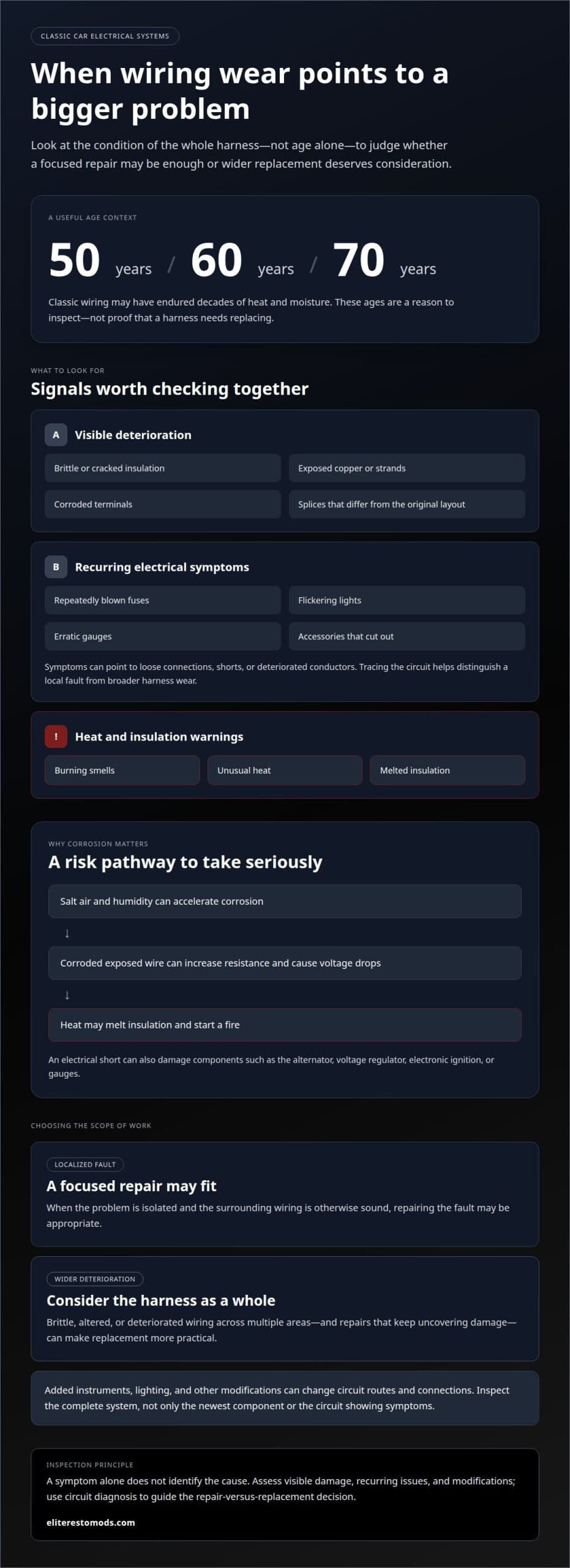
A localized fault in otherwise sound wiring may call for a focused repair. If the harness is brittle, altered, or deteriorated across multiple areas, replacement may be more practical because one repair can reveal other weak points. Base the decision on the wiring’s overall condition and whether past modifications make circuits harder to trace.
Harness costs vary by make, model, and the harness selected. There’s no dependable price that applies to every Camaro, Corvette, or other classic: vehicle configuration and customization affect parts and installation labor. Compare the harness specifications and labor scope, not just the parts figure.
Choosing a Rewiring Shop
A useful estimate explains how the shop will diagnose the fault, define the repair scope, and test the completed circuits. Ask what’s included, how modifications affect the work, and how newly discovered problems will be handled before work begins. Clear answers make repair and replacement plans easier to compare.
Classic car insurance coverage depends on the policy and the cause of the damage. Age-related deterioration and wiring damaged in a covered incident may be treated differently, so review the policy terms for your situation.
Warning signs that wiring needs replacement
Age alone doesn’t prove a harness needs replacing, but classic wiring may have endured 50, 60, or even 70 years of heat and moisture. Look for brittle or cracked insulation, exposed copper, corroded terminals, and splices that don’t match the original layout. These clues matter more when several circuits show damage rather than one isolated connection. A visual inspection can reveal where further electrical diagnosis should focus.
Electrical symptoms can reveal faults hidden beneath the dashboard or behind trim. Repeatedly blown fuses, flickering lights, erratic gauges, or accessories that cut out can point to loose connections, shorts, or deteriorated conductors. A symptom alone won’t identify the cause: tracing the circuit helps distinguish a local fault from wider harness deterioration. For example, a flickering headlight and an unreliable gauge may involve separate circuits.
- Inspect visible wiring for cracked insulation, exposed strands, and corrosion.
- Note recurring fuse failures, intermittent lights, or unreliable gauges.
- Pay attention to burning smells, unusual heat, or melted insulation.
Coastal conditions deserve particular attention because salt air and humidity can accelerate corrosion in wiring systems. Corroded exposed wire can increase resistance, cause voltage drops, and generate heat. That heat may melt insulation and start a fire. An electrical short can also damage components such as an alternator, voltage regulator, electronic ignition, or gauges.
Custom hot rod and street rod wiring requires another inspection consideration: modifications can change how circuits are routed and connected. Added instruments, lighting, or other equipment may leave splices and altered connections that complicate troubleshooting. Inspect the complete system, not just the newest component or the circuit showing symptoms.
For a custom build, wiring should be considered alongside the vehicle’s intended equipment and layout. Custom Build Services can be a relevant next step when electrical planning is part of a broader vehicle build. Assessing visible damage, recurring symptoms, and modifications helps determine whether focused repairs remain practical or wider replacement deserves consideration.
Factors affecting rewiring costs
An estimate covers more than the harness itself. Labor depends on access, existing modifications, circuit complexity, and how much surrounding equipment must be removed. A clear scope separates wiring work from related restoration tasks, explaining why two cars of the same model can require different labor. The vehicle’s layout and the condition of its connections also affect how easily circuits can be traced.
Location can influence labor rates, too. Shop rates vary between regions, while the project’s scope determines the hours required. Compare estimates by looking at both the hourly rate and planned labor, rather than assuming one national rate applies to every classic. The estimate should explain how access, configuration, and modifications affect the time needed.
A full restoration may include several distinct tasks, each contributing to the final estimate:
These are separate stages, not interchangeable line items. Limited access behind a dashboard can add labor to removal and installation, while custom equipment may require additional circuit planning. Ask the estimate to identify which stages apply to the vehicle and how modifications affect the scope. That makes it easier to understand what the quoted work includes.
Harness selection matters, too. A vehicle-specific kit and a universal kit can require different fitting and routing work. Added gauges, lighting, ignition components, or accessories may need more connections and testing than a factory-style setup. Include each change in the wiring plan from the start.
The car’s condition also affects preparation. Corrosion, previous splices, and undocumented alterations can make circuits harder to trace before installation. A detailed inspection helps distinguish harness work from repairs to damaged connections or related components, clarifying what the estimate covers.
Classic car rewiring
A complete rewire is a system-level restoration, not simply a new bundle of wires. Full rewiring typically takes 3-6 weeks, with the schedule shaped by access, the vehicle’s configuration, and the electrical changes planned. According to Lectric Limited, automotive wiring was originally designed to last only 10-20 years, making condition and previous modifications central to the assessment.
First decide whether to preserve the factory electrical layout or adapt it for modern use. A classic car can be rewired to factory original-equipment-manufacturer specifications, retaining its original operating character. A modified build may need circuits planned around its equipment, so settle on the direction before installation begins.
Voltage is another defining choice. Some classic cars use 6-volt systems, while modern conveniences require 12 volts to operate. A conversion from 6 to 12 volts changes more than the battery: the system’s components and connections must suit the selected voltage. The 6-volt system is described as inefficient, but originality may matter more for a preservation-focused car.
A disciplined process starts by mapping existing circuits and identifying modifications. The old harness is then removed, and the replacement is routed to suit the vehicle and its intended equipment. Keep connections, fuse-box layout, and circuit labels clear and accessible. Finally, test each circuit to confirm it operates as intended and that the completed system matches the build plan.
For a driver-focused restomod, the best approach balances heritage with practical use. Decide whether factory specifications, a voltage conversion, or added modern conveniences matter most. That choice should guide the harness and installation plan, rather than letting equipment changes accumulate during the work.
Planning a broader restoration alongside electrical decisions? Explore the build process to see how project choices fit together.
Elite Restomods: Classic Car Financing
Elite Restomods offers Classic Car Financing for buyers considering the broader investment in a classic vehicle. A rewiring estimate defines the electrical work; financing is a separate consideration when planning a vehicle purchase. For a car that needs a more complete transformation, Custom Build Services can shape a project around its condition and intended use. Buyers seeking a finished, road-ready restomod can explore Elite Certified Restomods, while owners considering a sale can use the Consignment Program.
These options suit different stages of classic-car ownership, from choosing a completed build to planning a custom direction. Consider the wiring scope and vehicle decision separately as you decide what fits your goals. Contact Elite Restomods to discuss your classic-car plans.
Make the Next Move With Confidence
Before committing to electrical work, decide what you want the car to be: a faithful expression of its original character, a dependable driver, or a tailored restomod. That gives the wiring plan a clear purpose and helps keep later changes aligned with the build. Classic car rewiring cost is most useful to consider alongside that purpose, not as an isolated figure.
Write down the features that matter, the original details you want to preserve, and any changes you expect the car to support. A focused brief can make the next conversation more productive and connect electrical decisions with the vehicle’s broader direction.
If you’re ready to discuss your plans, contact Elite Restomods. The right next step can turn a cherished classic into a car you’re excited to enjoy.
Frequently Asked Questions
Final Answer: Is Wiring Restoration Worth it?
Wiring restoration is worthwhile when it supports the car’s intended use and addresses electrical problems across the system. For example, a driver with recurring faults may benefit from a complete restoration, while a preserved show car may call for factory-style wiring. The decision depends on overall condition, safety concerns, and whether the planned electrical setup suits the vehicle’s future role.
How Long Does It Take to Rewire a Classic Car?
Full rewiring typically takes 3-6 weeks. The calendar depends on access to wiring behind the dashboard, the car’s configuration, and whether the work includes a voltage conversion or added equipment. A project coordinated with paint, interior, or mechanical restoration may also follow those tasks’ sequence. Agreeing on the intended electrical layout before work begins helps keep the installation plan clear.
How Much Does Classic Car Wiring Restoration Cost?
Classic car rewiring cost depends on whether the work involves a basic repair, partial restoration, or complete harness replacement. Customization and vehicle condition affect the final scope, so check which tasks the estimate includes.
How much does it cost to rewire a classic car in the United States?
In the United States, classic car rewiring cost for a full rewire or harness replacement typically falls between $5,900 and $9,000, with a median of about $7,800. This market range is a broad reference, not a quote for a specific vehicle. The estimate varies with harness choice, configuration, modifications, access, and the testing included.
What is the average labor cost to rewire a classic car?
There’s no labor total that fits every classic, because project hours vary with access, circuit layout, and modifications. Compare the hourly rate with the estimated labor hours, and separate labor from harness parts, diagnostics, and testing.
What factors affect the cost of classic car rewiring?
The main variables are vehicle configuration, harness selection, wiring access, existing alterations, and added electrical equipment. A factory-style installation requires different planning from a custom layout for added gauges or accessories. An estimate that separates parts, labor, diagnostics, and testing shows how each project choice affects the total and where the work scope may expand.