
What if the color that looks perfect on a paint chip feels completely different across your classic’s long hood and sculpted fenders? Choosing a color for a classic car repaint can feel like a permanent decision because it changes how every line, detail, and memory of the car comes together. A small sample rarely tells the whole story: sunlight, shade, finish, and body proportions all affect how paint looks at full scale.
The right choice does not have to be a strict return to factory originality or a bold custom departure. It should suit the car’s era and character while reflecting how you want to drive and enjoy it. This guide shows you how to narrow your options, compare original, period-inspired, and custom colors, and assess samples in conditions that reveal their depth and undertones. You’ll also learn how color, finish, and the broader build vision work together. A considered choice can honor the past and still make the car unmistakably yours.
Key Takeaways
- Start with the car’s era, body shape, and your priorities to narrow color choices before comparing shades.
- Choosing a color for a classic car repaint gets easier when you weigh original, period-inspired, and custom directions against how you plan to enjoy the car.
- View physical paint samples in different lighting and consider how the finish changes the color’s appearance across the vehicle.
- Record what you like and dislike about each option so your final decision reflects more than a passing first impression.
- For a larger transformation, connect the paint choice to the full build vision. Elite Restomods’ custom build services include paint and bodywork.
Start With the Car: What Should a Classic Car Repaint Color Preserve?
Repainting a familiar classic can feel like changing part of its identity. The color may be tied to years of ownership, family history, or the first time you saw the car. That makes the decision about more than taste. Start with four considerations: the car’s character, your priorities, the finish you want, and how you plan to use it. Together, they help you choose deliberately instead of chasing a shade that looks appealing on its own.
First, decide what you want the finished car to communicate. An original or historically sympathetic color can reinforce the model’s era and preserve its familiar visual language. A period-inspired shade can retain that sense of heritage while allowing flexibility. A distinctly personal color makes a clearer statement: this is your interpretation of the car. None of these directions is automatically superior. The aim of choosing a color for a classic car repaint is to create a result that feels right for this vehicle and the experience you want from it.
Decide whether originality or personal expression leads
Ask yourself whether you want the car to look historically sympathetic or intentionally reimagined. If originality matters, an existing paint code is a useful reference, but it does not have to settle the decision by itself. The car may have been repainted before, so its current appearance may not reflect that code. Treat records and paint history as evidence, then weigh them against your own vision.
Define how the classic will be enjoyed
Think about the car’s role in your life. If you plan to drive it frequently, choose a color you’ll enjoy seeing in everyday settings. A car mainly displayed or taken to occasional events might invite a more deliberate visual statement. You may prefer quiet period character or want a custom presence that stands apart. Your plans help clarify your preferences, but they do not dictate one correct color.
Consider finish from the start, not as a final detail. Gloss, metallic, and other paint effects can make a color feel traditional, vivid, or contemporary. Because finish involves both appearance and material choices, it helps to understand the basics of automotive paint before settling on a direction. Ask whether the proposed finish supports the character you want the car to express.
Write down your priorities before building a shortlist. Note whether period character, personal expression, or a balance of both matters most, and whether the car will be driven regularly or primarily displayed. If your priorities conflict, rank them instead of trying to satisfy every preference equally. This brief gives each candidate color a purpose and makes the next decisions about shade and finish more specific.
How Do Body Shape, Light, and Finish Change a Repaint Color?
A paint color does not appear in isolation. Its appearance on a finished vehicle is shaped by the car’s surfaces, surrounding details, lighting, and viewing angle. A small swatch can suggest a promising shade, but it cannot fully predict how that color will read across a long hood, curved fender, or complete body.
Read the car’s lines before selecting a shade
Start with the body. Broad, uninterrupted panels can make a color feel expansive and calm, while sculpted forms and sharp creases create changing highlights and shadows. A deep shade might emphasize a crisp shoulder line; a lighter one may make the same contour appear softer. Neither effect is inherently better. The question is whether it suits the design.
Look beyond the paint, too. The grille, glass, brightwork, wheels, and interior all contribute to the car’s overall palette. A warm body color may feel at home beside traditional bright trim, while a cool shade can create a different relationship with dark glass or wheel finishes. When choosing a color for a classic car repaint, judge shortlisted colors against the actual vehicle’s proportions and details, not only against a flat chip.
Compare paint samples under more than one light
Take physical samples outdoors and indoors, then view them in direct light and shade. Move around the samples: a color can look lighter from one angle and deeper from another, especially on curved surfaces. Place each sample near the car’s trim and interior colors to see how the combination works as a whole. A sample that looks balanced on its own may feel too warm, cool, or vivid beside those fixed elements.
Keep color and finish distinct in your evaluation. Gloss affects reflections and the sense of depth; metallic and other effect finishes can shift in character as light and viewing angle change. Compare the shade itself first, then assess the finish separately. That way, a dramatic reflection does not distract from whether the underlying color suits the car. The American Coatings Association’s discussion of Automotive Coatings Innovations offers broader context on developments in automotive coatings, including manufacturing and environmental considerations.
For a practical comparison, view each sample from the front, side, and rear, then step back to take in the full silhouette. Make brief notes about what changes in sun, shade, and indoor light. You are looking for a color and finish that work across the car, not just at one photogenic angle. This is more reliable than relying on memory or a quick glance.
If you are developing the paint choice as part of a broader transformation, explore Elite Restomods’ custom build services, which include paint and bodywork.
Original, Period-Inspired, or Custom: Which Color Direction Fits?
Once you know what you want the car to preserve, compare three clear directions: return to a documented original shade, choose a color that feels right for the car’s era, or create a distinctly personal finish. Each offers a different balance of heritage and expression. None is automatically more authentic or guarantees a stronger resale outcome. The best fit depends on your priorities and how the color supports the complete build.
| Direction | Historical character | Personal expression | Decision consideration |
|---|---|---|---|
| Documented original | Strong connection to the car’s recorded specification | More restrained, guided by the model’s history | Consider whether the documented shade suits your vision and the exterior details. |
| Period-inspired | Era-conscious without claiming an exact factory match | Room to select a related tone or finish | Decide how closely you want the result to echo the period. |
| Custom | May depart from the original visual identity | Broad scope for a personal statement | Assess how the color fits the wider design direction. |
When an original or period-inspired color feels right
A documented original shade can reinforce the visual identity associated with a particular car, especially when its lines and details feel rooted in their era. But a paint code is a reference, not an obligation. A period-inspired choice offers another path: it can retain an era-conscious character without presenting itself as an exact factory match. In either case, consider how the body color works with the whole exterior combination rather than judging it alone.
Ask what you want the finished car to say. Is your aim to evoke how this model might have looked when new, or to capture the broader mood of its design period? That distinction can help you separate a historically specific choice from a sympathetic interpretation. It also keeps the decision grounded in intent instead of relying on a vague sense that a shade simply “looks classic.”
When a custom color better reflects the build
A custom shade can give a car a more individual personality and align its appearance with a contemporary restomod direction. You might choose a restrained exterior that preserves the familiar silhouette, or a bolder color that makes the car’s redesigned character more apparent. The shade becomes one part of the overall composition, not a promise of market performance. Its success rests on how convincingly it belongs with the vehicle and your vision.
If paint is part of a larger transformation, consider how the color relates to the car’s other design decisions before settling on a direction. A coherent plan can balance classic character with modern identity instead of treating the finish as an isolated upgrade. For a broader framework on planning that kind of project, read this guide to choosing a custom restomod builder.
Choosing a color for a classic car repaint comes down to the balance you want between historical connection and personal expression. Write down what each direction preserves, what it changes, and why that trade-off suits your car. A clear brief makes the choice deliberate and gives the finished vehicle a point of view.
A Practical Checklist for Narrowing Classic Car Repaint Colors
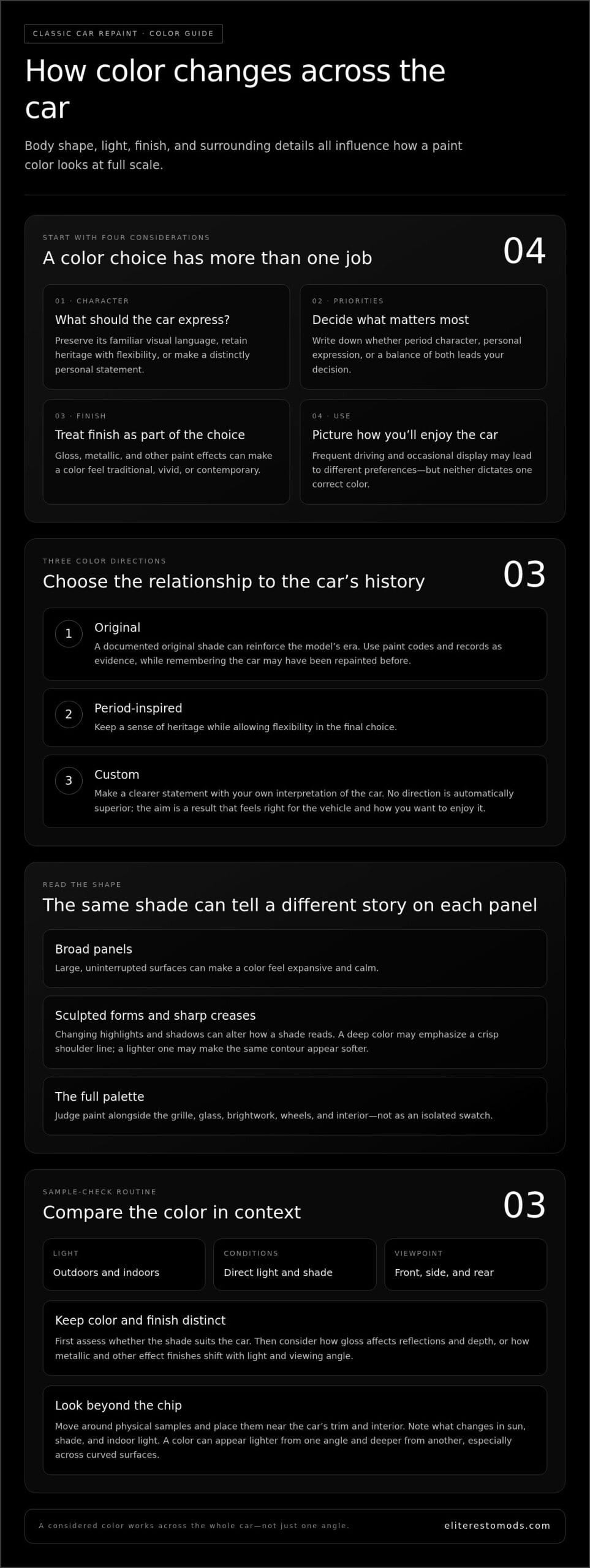
A disciplined process turns a collection of appealing shades into a confident decision. Set your criteria first, then compare each option against the vehicle and your plans for it. A sound color choice considers the car’s shape, intended use, finish, and your priorities together.
Build a shortlist with clear criteria
Before you gather samples, decide how strongly you value originality, individuality, and visual impact. These priorities do not have to be equal. A brief note about what matters most can keep an attractive but unsuitable shade from dominating the decision simply because it caught your eye.
- Set priorities. Write down whether heritage, personal expression, or a balance of both leads. Add how you expect to enjoy the car, so the choice reflects more than appearance alone.
- Shortlist shades. Select a manageable range of candidates that fit your priorities. Compare each one with the car’s body lines, exterior trim, wheels, and interior palette. Remove colors that work on a sample but conflict with the overall character you want.
- Compare physical samples. Place samples on or beside the vehicle, and review them in more than one setting. A screen image can help you explore ideas, but it cannot show how a physical shade responds to the car’s surfaces and surrounding colors.
- Assess finishes separately. Once a shade makes the shortlist, consider how gloss, metallic, or another effect changes its visual character. Record whether the finish supports the look you want instead of letting its sheen distract from the underlying color.
- Make the final choice. Review your notes, revisit the strongest candidates, and choose the option that best meets your priorities across the whole vehicle. Settle the color direction before related paint and bodywork planning advances, so those decisions can be considered as part of one coherent vision.
Make the final comparison on the actual vehicle
Look at the samples at different times of day, in direct light and shade, and indoors. Hold them near the trim and interior materials, then step back to judge the complete combination. If a shade seems appealing only under one kind of light, record that rather than relying on your first impression.
A sample viewed on the car is more useful than a screen image because it shows how the color relates to the vehicle’s actual shape, trim, and surroundings. Keep a simple comparison record for each finalist: what you like, what you do not, and how it looks in each setting. Clear notes make differences easier to recall and help prevent a fleeting impression from deciding a lasting change.
If your repaint is part of a larger transformation, explore Elite Restomods’ custom build services, which include paint and bodywork.
Bring the Color Vision Into a Custom Classic-Car Build
A repaint can be a standalone refresh or one element in a larger transformation. If the project also involves bodywork or other changes, color should support the complete vision: classic character paired with modern usability. A historically minded shade may complement familiar lines, while a more contemporary choice can express a restomod’s individual identity. Aim for cohesion, not simply a color that is striking on its own.
Coordinate color with the wider build vision
Consider the exterior as part of the whole vehicle. Ask how the shade relates to the car’s design, visible details, and the driving experience you want. A restrained palette might preserve a composed, period-conscious feel; a more vivid direction could suit a build intended to make a stronger visual statement. Paint works best when it is considered alongside the rest of the project rather than added as an isolated trend choice.
The strongest custom color brief connects the car’s heritage with the owner’s intended experience. This gives the decision a clear purpose: the finish can honor the silhouette and history of a classic while belonging to a vehicle built for modern ownership.
For a broader project, the custom build process provides a framework for developing the vehicle’s overall direction, with appearance considered alongside the intended transformation. Elite Restomods’ custom build services include paint and bodywork, so color planning can be part of the wider build conversation.
Turn the decision into a project conversation
Before discussing the project, gather the material that makes your color direction easy to understand. A concise brief can include:
- Your preferred physical samples, including shades you like and those you have ruled out.
- The historical direction you have in mind, such as documented original, period-inspired, or custom.
- How you intend to use the car, whether for regular driving, display, or a mix of both.
- Notes on the finish and how the color looks beside the vehicle’s trim and interior.
This preparation turns a personal preference into a practical starting point. It also keeps decisions connected: the chosen shade, the bodywork, and the finished car’s character can be considered as parts of one vision. Choosing a color for a classic car repaint is more confident when you can explain not only which sample appeals to you, but why it suits the project.
Gather your preferred samples and project notes, then discuss a custom build with Elite Restomods.
Turn Your Color Direction Into the Next Chapter
A classic’s next chapter starts with a clear point of view. Before the project moves forward, turn your preferred direction into a concise brief: what the color should preserve, what it should express, and how you want the finished car to feel on the road. That gives the decision a purpose beyond choosing a color for a classic car repaint. It becomes part of shaping a vehicle that feels connected to its past and distinctly yours.
You do not need every detail solved before taking the next step. Start with the samples that resonate, the qualities you want the car to convey, and the way you intend to enjoy it. From there, the color vision can become part of a considered custom-build conversation.
Explore a custom build for your classic car and bring your color vision into focus. The right direction is the one that makes you eager to turn the key and enjoy what comes next.
Frequently Asked Questions
Is it better to repaint a classic car its original color?
An original shade can support a car’s historical character, but a different color may better suit a personal build vision. Neither choice automatically makes the car more authentic or improves its resale value. Before deciding, consider the vehicle’s history, how important originality is to you, and what you want the finished car to communicate. If the car has been repainted before, weigh its documented history alongside your own priorities.
Can I choose a modern color for a classic car repaint?
Yes. A modern shade can be a considered custom choice if it supports the look you want. A deliberately contemporary color makes a different statement from a period-inspired shade chosen to echo the car’s era. To judge whether the modern direction feels balanced, view physical samples beside the car’s trim and on its body. A shade that appeals on its own may feel different against the vehicle’s lines and details.
How do I know what color a classic car was originally?
Start with reliable vehicle documentation and original paint information, if available. An existing paint code can offer a useful lead, but it does not by itself prove that the current finish is original or that the car has not been repainted. Treat the code as one piece of evidence alongside the car’s records and history. This context can help you decide whether to return to the documented shade or choose another direction.
Does a darker paint color make a classic car look smaller?
Not in every case. Perceived size depends on the specific shade, the car’s body shape, lighting, and contrast with details such as trim or a roof. A universal yes-or-no answer would oversimplify how color reads across different designs. Compare samples on the actual vehicle and look at the panels from several angles. This helps you judge the impression on your car instead of relying on a general rule about dark paint.
Should I choose a solid or metallic color for a classic car?
Choose based on the character you want, since solid and metallic finishes create different visual impressions. Metallic effects can appear to change as light and viewing angle shift, so assess them under varied conditions rather than judging a single glance. Compare physical samples on or beside the car, including near its trim. Then consider how each option works with the vehicle’s lines and the overall look you are aiming for.
Can I change my mind after choosing a paint color?
You can revise your preference, but changing direction becomes more involved as project planning and paintwork progress. To reduce uncertainty, settle the color brief before work advances and document the preferred shade and finish clearly. If the repaint is part of a larger custom build, include that decision in the project vision so it can be considered with the rest of the vehicle’s direction.
How should I compare paint samples before repainting a classic car?
Use physical samples rather than relying only on screen images, which may not show a shade as it appears in person. View samples outdoors and indoors, in direct light and shade, and compare them with the car’s trim and interior. Whenever possible, hold or position each sample against the vehicle’s body. The real shape and surrounding materials give a more useful impression than a sample viewed by itself.