

What if your deployment lasts longer than expected, and your classic spends every day exposed to the wrong conditions? A cherished car deserves more than a place to sit. Classic car storage for military deployment is a care plan that accounts for changing timelines, battery health, tires, fluids, and who may need to access the vehicle while you’re away.
It’s natural to worry about leaving a piece of automotive history unattended, especially when you can’t oversee its upkeep from a distance. The right arrangement depends on the car, the storage environment, and the support you can organize. Climate-controlled storage, paired with basic maintenance checks and battery tending, can simplify the plan.
This guide compares home, trusted-person, and professional storage options; explains how to prepare and document your vehicle; and covers access and upkeep if your plans change. You’ll also learn how to make your return easier with a careful inspection before the first drive. A little preparation now can help protect the car’s condition and make it easier to enjoy again.
Key Takeaways
- Plan classic car storage for military deployment around the vehicle’s needs, the expected absence, and the support available while you’re away.
- Use the owner’s manual or qualified automotive advice to guide storage preparation, then document the car’s condition before departure.
- Compare home, trusted-person, and professional storage by environment, access, oversight, and the effort each option requires from you.
- Set clear written instructions for access, permitted checks, and who can authorize work if plans change.
- Consider how climate-controlled storage, basic maintenance checks, and battery tending can support your storage plan.
Classic car storage for military deployment: why a parking spot is not enough
Leaving a prized classic behind is hard enough without wondering whether it will be ready when you return. A dependable plan does more than reserve a parking spot. Classic car storage for military deployment should account for where the vehicle will sit, how it will be prepared, who can oversee it, and what needs to happen before you drive it again.
Deployment-ready storage is a coordinated care plan, not simply a place to leave a vehicle. The right arrangement depends on the likely length and flexibility of your absence, the car’s condition, the storage environment, and the trusted help available if plans change.
What changes when a classic car will sit unattended?
Without regular access, it’s harder to spot a new fluid leak, a battery concern, or another change early. A short, defined absence may need less oversight than an open-ended deployment, when the return date could shift. There’s no universal plan: the car’s condition, its environment, and clear care instructions all matter.
A recently maintained driver and a vehicle with known mechanical needs won’t necessarily require the same preparation or oversight. The same is true of a car kept in a dry, protected garage compared with one exposed to changing conditions. Match the plan to the car, not just the calendar.
Which decisions should you make before choosing storage?
Start with what you know about the absence, while allowing for uncertainty. Consider whether the return date could change and how that would affect access, ongoing care, or pickup. Then take stock of the vehicle: its running condition, value, modifications, known maintenance needs, and relevant instructions in the owner’s manual.
Next, decide who can act on your behalf. A trusted person may be able to check on the car or coordinate an agreed task, but responsibilities should be clear rather than assumed. Specify who can access the vehicle, which checks are permitted, and who can authorize work if an unexpected issue arises.
These decisions turn storage into stewardship. A location alone doesn’t provide instructions, oversight, or a return plan. Make those details part of the arrangement before you leave.
How to prepare a classic car for military deployment storage
A careful handoff starts with a clear record of the car’s current condition, followed by preparation suited to its design and storage environment. Classic car storage for military deployment is easier to manage when the person responsible has accurate information, written instructions, and a way to distinguish existing issues from new ones.
Document the car and its needs before handing it over
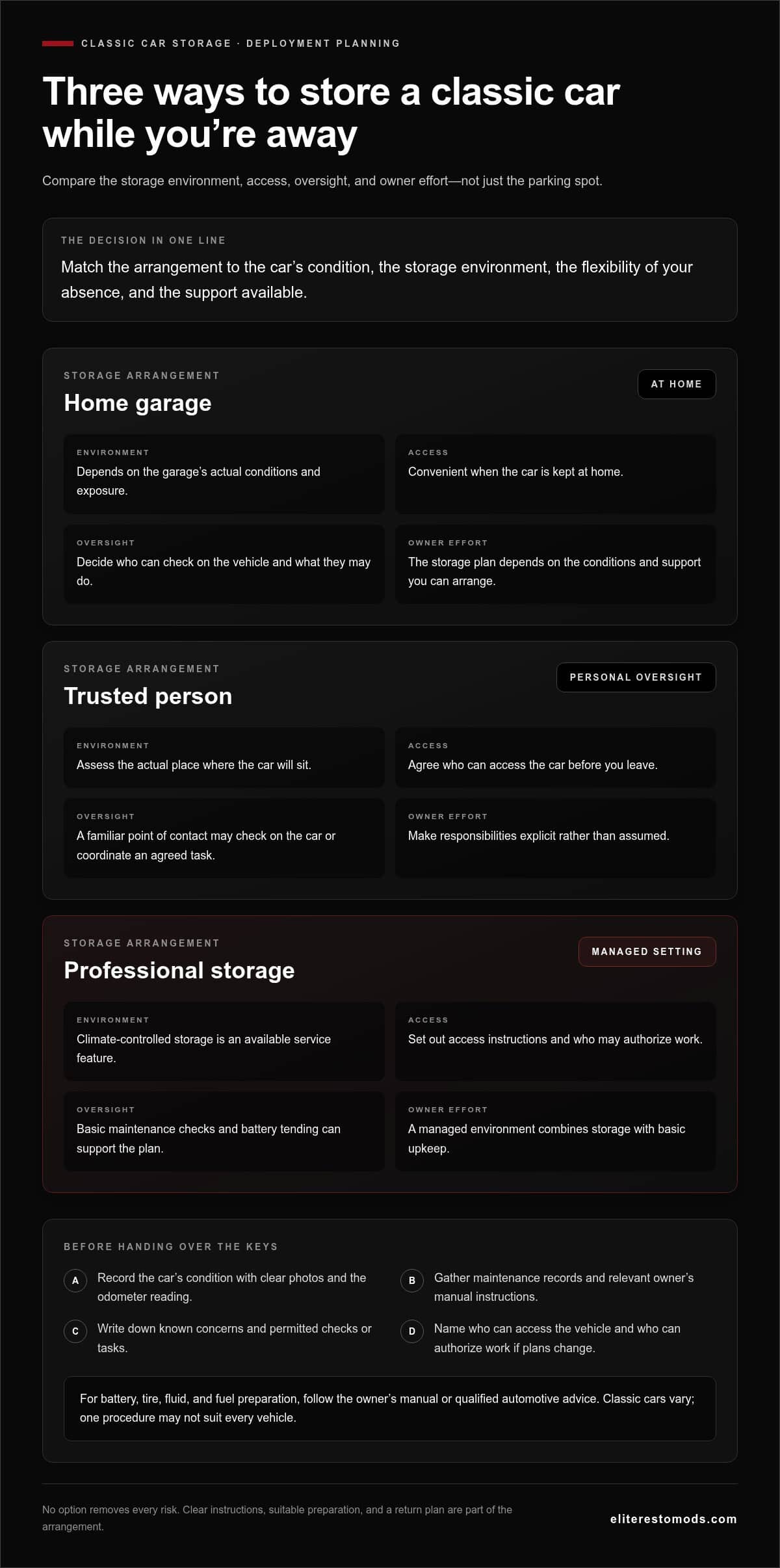
Make a dated record before the vehicle goes into storage. Photograph the exterior, interior, and under-hood area in clear light, including existing damage and details you may not remember later. Record the odometer reading, gather maintenance records, and note relevant instructions from the owner’s manual.
Keep this information with the keys and the contact details for the person overseeing the vehicle. Record known concerns, such as an existing leak or a starting issue, and put authorized actions in writing. Specify what the responsible person may check or arrange and what requires your approval. This gives everyone a useful reference if the car’s condition or your return timing changes.
Prepare battery, tires, fluids, and fuel responsibly
Use the vehicle’s manual or qualified automotive advice for technical preparation. Classic cars vary: battery systems, tire requirements, fuel systems, and fluid specifications depend on the model, age, modifications, and storage conditions. A procedure that suits one car may not suit another.
- Battery: Choose an approach that suits the vehicle’s electrical system. Battery tending can support readiness during storage, but the setup and connection method should be appropriate for the specific car.
- Tires: Inspect their condition and check pressure against the vehicle’s guidance. Don’t guess at pressure targets or use a long-term storage method without confirming that it suits the car.
- Fluids and fuel: Follow vehicle-specific advice for fluid checks or changes and fuel preparation. Don’t assume every classic should be handled the same way.
- Interior and exterior: Clean the car and remove personal valuables before storage. A clean, documented vehicle makes it easier to spot changes later.
Document the car, follow model-specific guidance, prepare its systems, and leave clear instructions for the person overseeing it.
For professional storage, Elite Restomods’ vehicle storage service includes climate-controlled storage, basic maintenance checks, and battery tending. These services can support your preparation plan without replacing guidance specific to your vehicle.
Compare home, trusted-person, and professional classic car storage
The best arrangement balances the car’s needs with the oversight you can organize while away. A home garage can be convenient, a trusted person can provide a familiar point of contact, and professional storage combines a managed environment with basic upkeep. Compare access and care arrangements as well as where the car will sit. No option removes every risk.
| Arrangement | Environment | Access | Oversight | Owner effort and continuity of care |
|---|---|---|---|---|
| Home garage | Depends on the garage’s actual conditions, including exposure to moisture and temperature changes. | Convenient for people with authorized access to the property. | Relies on your support plan and anyone you designate. | You arrange checks and coordinate any response to changing needs. |
| Trusted person | Depends on the space where the vehicle is kept. | Can be direct if access and permissions are clearly agreed. | Provided informally by the person you designate, within agreed boundaries. | Requires clear instructions and coordination; care continuity depends on their availability and agreed responsibilities. |
| Professional storage | Climate-controlled storage. | Managed through the storage arrangement. | Includes basic maintenance checks and battery tending. | Can reduce the owner’s direct oversight tasks by combining storage with basic upkeep. |
When can home or trusted-person storage make sense?
A private space can work if its environment suits the vehicle and someone dependable can handle agreed responsibilities. A garage alone doesn’t guarantee a particular preservation outcome, so consider the space’s conditions and whether someone can check on the car if your absence extends or a concern arises.
Informal help works best with defined boundaries. Put access permissions, permitted checks, contact details, and approval for any work in writing. Clear instructions help a family member or friend follow the plan without guessing what you’d want.
What can professional climate-controlled storage add?
Climate control helps manage the storage environment, while basic maintenance checks and battery tending add practical oversight. These features support a deployment plan but don’t guarantee against every risk or replace vehicle-specific instructions. Elite Restomods offers climate-controlled vehicle storage with basic maintenance checks and battery tending.
For classic car storage for military deployment, choose the arrangement that fits the vehicle, the space, and the care you can reliably coordinate. A well-defined plan matters as much as the storage location.
A deployment car-storage checklist for access, oversight, and changing plans
A dependable storage arrangement needs a clear handoff and a way to adapt if your deployment or return schedule changes. Use this checklist to gather the essentials before you leave. For classic car storage for military deployment, clear permissions matter: the person overseeing your vehicle should know what they can do, what requires your approval, and how to reach you.
Set up access and communication before departure
- Authorized contact: Name the person responsible for access and record how they can reach you, along with an alternate contact if appropriate.
- Keys and records: Organize keys, vehicle documentation, maintenance records, owner’s manual instructions, and your pre-storage condition photos for the designated contact.
- Written permissions: Define permitted checks and routine actions. State who may authorize additional work and how approval should be requested.
- Updates and decisions: Agree how the contact will report an unexpected concern and how you’ll respond if reachable. Set a backup decision process for times when you can’t be reached.
- Changing plans: Decide how you’ll communicate a delayed return, revised pickup timing, or a change in who is authorized to collect the car.
- Insurance and paperwork: Review the applicable policy and keep relevant documents organized for the person coordinating the vehicle.
Keep the plan somewhere the designated contact can access easily, rather than only in a message thread that may be hard to find. A concise written record reduces guesswork and helps everyone follow the same instructions if circumstances change.
Plan for vehicle return and recommissioning
Before you travel back, ask the designated contact for a current report on the car’s condition and any concerns noticed during storage. Arrange access or pickup around your actual return plans, especially if the date has shifted. Don’t assume the vehicle is ready to drive simply because it was stored.
On your return, inspect the vehicle before starting or driving it. Follow the owner’s manual and take account of its known condition and time out of use. If you notice a leak, unusual smell, damaged tire, or another concern, pause and arrange a qualified assessment rather than pressing ahead. Make the first drive a considered step, not a rushed reunion.
If professional support is part of your plan, review the vehicle storage service overview to see how climate-controlled storage, basic maintenance checks, and battery tending can fit into your arrangements.
Choose a storage plan that protects your classic car while you serve
A considered plan connects the vehicle’s needs with the storage environment, the oversight you can arrange, and the steps required when you return. A classic that already needs attention may call for a different level of support than a well-maintained driver. If your return date is uncertain, clear responsibilities and flexible arrangements become especially important.
For classic car storage for military deployment, think beyond where the car will sit. Consider who can access it, what checks or care are included, how changes will be communicated, and how you’ll approach the first inspection after your absence. No storage arrangement removes every risk, but planning these details can reduce uncertainty while you’re away.
How Elite Restomods supports classic-car storage
Elite Restomods offers climate-controlled storage for classic and collector vehicles, with basic maintenance checks and battery tending included in the storage service. These features combine a managed storage environment with basic upkeep. They don’t replace the owner’s manual, vehicle-specific preparation guidance, or a return inspection.
Explore the storage and ownership services for an overview, or review the service process overview to understand the broader approach.
What to have ready when arranging your storage plan
Gather a practical snapshot of the car and your plans before arranging storage. This makes it easier to discuss the vehicle’s needs and how its care should be coordinated.
- Vehicle details: Note its current condition, known maintenance needs, modifications, and any concerns that may affect storage or return.
- Useful records: Organize maintenance documents, owner’s manual guidance, condition photos, and mileage information.
- Absence and return: Share the expected absence while allowing for a possible change in timing, then consider how pickup and the first inspection will work.
- Contact and permissions: Identify the designated contact and explain who may access the car, what checks are permitted, and who can authorize work.
The aim is to protect the character and condition of a car you intend to enjoy again, then return to it with a clear path toward careful recommissioning.
Leave with a plan, return to the drive
The right storage arrangement fits your classic’s condition, its environment, and the oversight you can arrange while you’re away. Prepare the car using vehicle-specific guidance, document its condition, and give your designated contact clear instructions for access, updates, and authorization. These steps make classic car storage for military deployment a coordinated ownership plan, not just a place to park.
For added support, Elite Restomods offers climate-controlled vehicle storage with basic maintenance checks and battery tending. Enclosed vehicle transport is also available as a separate service and may help coordinate the vehicle’s movement as part of your plans.
Make your next step a deliberate one. Explore Elite Restomods’ vehicle storage services and plan for a careful inspection when you return to your classic.
Frequently Asked Questions
How should I store my classic car during military deployment?
Choose storage based on the car’s condition, the environment, the expected absence, and the oversight you can arrange. A suitable home garage or trusted person may work if responsibilities and access are clearly agreed. Professional storage provides a climate-controlled environment with basic upkeep. Before departure, document the vehicle’s condition, follow model-specific preparation guidance, and make a written plan for updates and return.
Is climate-controlled storage worth considering for a classic car during deployment?
Yes, it’s worth considering if you want to manage the vehicle’s storage environment during an extended absence. Climate-controlled storage is one part of a broader plan, alongside preparation, oversight, and a return inspection. It doesn’t eliminate every risk or replace vehicle-specific care. Elite Restomods offers climate-controlled vehicle storage with basic maintenance checks and battery tending to support a deployment storage plan.
Can someone maintain my classic car while I am deployed?
Yes, but agree in advance on what “maintenance” means and who can authorize additional work. A trusted person can follow written instructions for permitted checks, while professional storage includes basic maintenance checks and battery tending. Elite Restomods includes those basic services in its storage offering. Don’t assume this covers every repair or vehicle-specific procedure; record known issues and relevant owner’s manual guidance before handing over responsibility.
How do I prepare a classic car for long-term storage?
Start by documenting the car’s condition with dated photos, mileage, existing damage, and maintenance records. Clean the vehicle, remove personal valuables, and organize the keys and owner’s manual instructions for the designated contact. Then review battery, tire, fuel, and fluid preparation for your specific vehicle and storage conditions. Technical steps vary, so follow the owner’s manual or qualified automotive advice rather than applying a universal storage recipe.
Should I disconnect the battery before storing my classic car?
Not automatically. Whether to disconnect the battery or use a battery tender depends on the vehicle’s electrical system, modifications, and storage conditions. Check the owner’s manual or get qualified automotive advice before choosing a method, since an unsuitable setup could create problems. If someone will oversee the car, write down the agreed battery plan and who is responsible for it. Battery tending is included with Elite Restomods’ storage service.
What should I do before driving my classic car after deployment?
Inspect the vehicle before starting or driving it, and follow the owner’s manual for checks appropriate to its design. Review its condition, including any concerns reported during storage, and don’t treat the car as road-ready simply because it was stored. If you notice a leak, damaged tire, unusual smell, or another issue, pause and arrange a qualified assessment. Take a cautious approach before returning to normal use.
Can I arrange classic car storage if my deployment return date changes?
Build flexibility into the plan from the start, since deployment and return timing can change. Agree how the designated contact will share updates, how you’ll communicate a revised pickup plan, and who can make decisions if you’re temporarily unreachable. Keep access permissions and instructions current, and review the storage arrangements as your plans shift. Clear communication helps prevent assumptions about who can access or move the vehicle.