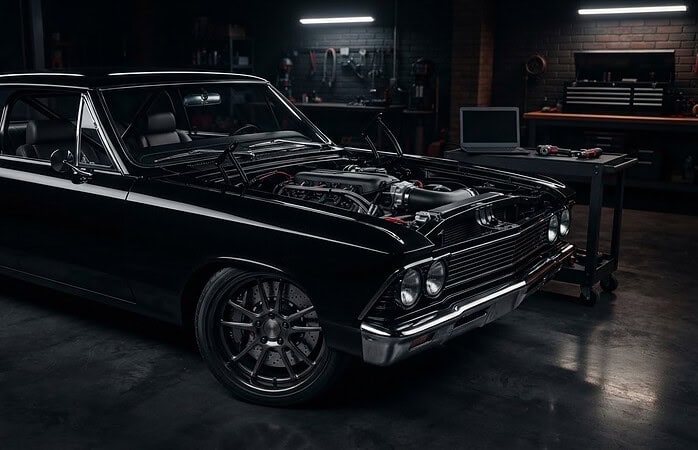

A garage door is not a shield; it is merely a partition. For a six-figure restomod or a meticulous collector piece, treating the off-season as a period of passive parking is a recipe for mechanical heartbreak. With the global vintage car market projected to reach $52.8 billion by 2034, protecting your automotive investment requires more than a simple dust cover. In various challenging climates, securing professional winter car storage is the only way to prevent moisture from silently corroding electrical systems or fuel from gumming up a high-performance engine.
You’ve invested significant capital into achieving a flawless build, and you deserve the peace of mind that comes with expert preservation. We understand the anxiety caused by potential rodent damage to hand-stitched interiors or the frustration of a dead battery when the first warm Saturday arrives. This article outlines the essential protocols for maintaining your vehicle’s fully sorted status through the coldest months. You’ll discover how an active maintenance strategy ensures turn-key reliability and protects the long-term value of your bespoke machine. We will explore the technical details of fluid stabilization, battery maintenance, and the environmental standards required to keep your classic in showroom condition.
Key Takeaways
- Identify the hidden risks of traditional home garages where humidity fluctuations lead to microscopic oxidation on bespoke finishes and high-performance components.
- Understand the technical requirements for winter car storage dallas including the precise climate standards needed to protect both modern electronics and vintage interior materials.
- Transition from a passive parking mindset to an active hibernation protocol by utilizing intelligent battery tenders and systematic fuel management.
- Follow a professional pre-storage checklist that prioritizes a meticulous detail to ensure environmental contaminants do not compromise your vehicle’s iconic luster.
- Learn how the Elite Restomods standard provides a white-glove preservation model that keeps your high-performance investment in turn-key, ready-to-drive condition.
The Hidden Costs of Improper Off-Season Vehicle Storage
A standard residential garage is designed for the utilitarian protection of a daily driver. It is a shelter, but not a sanctuary. For owners of high-performance restomods, relying on The Hidden Costs of Improper Storage can lead to a slow, expensive degradation of both aesthetics and mechanics. Unlike a climate-controlled facility, a home garage is subject to the volatile temperature swings of a Texas winter, which can compromise the integrity of a vehicle’s finish and its internal systems. This is particularly dangerous for investment-grade assets that have been meticulously engineered for performance and style.
To better understand the common pitfalls of seasonal parking, watch this helpful overview:
Mechanical stagnation is a silent enemy. When a high-horsepower beast sits idle on a cold concrete floor, fluids settle and chemical compositions begin to shift. Seals that rely on regular lubrication become brittle, gaskets dry out, and the fully sorted status you worked so hard to achieve begins to slip away. This is why professional winter car storage dallas is a necessity rather than a luxury. It transforms a period of neglect into a period of strategic preservation, ensuring that your Coyote engine or LS3 crate motor remains in peak condition while the roads are salted and the air is biting.
Humidity and Aesthetic Degradation
Microscopic oxidation begins the moment the dew point is reached inside a non-stabilized environment. This moisture settles on chrome, polished aluminum, and custom paint, initiating a cycle of corrosion that is often invisible until it is too late. In the humid pockets of North Texas, hand-stitched leather and Alcantara interiors are also at risk for mold and mildew growth if the air remains stagnant. Hydrophilic brake fluid naturally absorbs moisture from the air in humid environments, which can lead to internal system corrosion and reduced stopping power when you finally engage your Wilwood brakes in the spring.
The Mechanical Toll of Hibernation
High-performance rubber compounds are susceptible to tire flat-spotting when left under static pressure for months. This permanent deformation ruins the ride quality of an otherwise flawless build. Fuel systems also face significant threats; modern ethanol-blended fuels oxidize much faster than vintage gasoline, creating a gummy residue in EFI systems and carburetors alike. Maintaining your investment’s turn-key reliability requires a proactive approach that addresses these chemical and physical realities. Beyond the mechanical risks, bespoke interiors are prime targets for rodents, who see hand-crafted cabins as ideal nesting grounds, often causing thousands of dollars in electrical and upholstery damage in a matter of weeks.
Defining the Gold Standard: Climate-Controlled Preservation
True preservation is an active science. It requires more than a roof; it demands a regulated atmosphere that treats your vehicle as a bespoke piece of functional art. In the context of winter car storage dallas, the primary goal is to eliminate the environmental variables that degrade high-value machinery. This means maintaining a steady temperature range, typically between 65 and 72 degrees Fahrenheit. At this range, synthetic oils remain stable, and vintage gaskets don’t become brittle or lose their seal. It’s about creating a sanctuary where the external Texas weather cannot touch the internal precision of your build.
The Science of Temperature Stability
Rapid thermal cycles are the enemy of precision engineering. When temperatures fluctuate, composite body panels and aluminum frames expand and contract at different rates. This movement can stress custom paint finishes or compromise the tight tolerances of a high-end restoration. Digital dash components and complex ECU mapping are also sensitive to extreme cold, which can cause delicate soldering joints to fail over time. Understanding the climate controlled car storage requirements for your specific restomod is essential for maintaining its long-term reliability and performance.
Humidity Control as a Preservation Tool
Humidity is a silent corrosive that works even when a car is stationary. While residential garages often trap moisture against the floor, professional Climate-Controlled Preservation utilizes industrial-grade dehumidification to keep relative humidity levels between 40% and 50%. This specific range is critical. Anything higher encourages oxidation on the chassis and suspension components, while anything lower can cause hand-stitched leather interiors to shrink and crack. It prevents the “sweating” phenomenon where condensation forms on cold metal surfaces, leading to rust in deep, inaccessible crevices.
Air quality completes the preservation trifecta. High-efficiency filtration systems remove the grit and airborne particulates that act as micro-abrasives on a flawless clear coat. This level of environmental perfection ensures your engine’s roar is ready the moment the first warm Saturday of spring arrives. If you are looking to add a new beast to your collection before the season shifts, consider browsing our current inventory of elite certified vehicles. Professional winter car storage dallas isn’t just about parking; it’s about ensuring your investment remains in turn-key, showroom condition year-round.

Active Hibernation: Maintenance Protocols for Collector Cars
Passive parking is a myth that devalues high-performance machinery. To maintain the fully sorted status of a bespoke build, you must adopt a protocol of active hibernation. Professional winter car storage dallas provides the infrastructure for this level of care, ensuring that every system remains primed for the road. When a vehicle sits, it doesn’t just rest; it stagnates. Seals dry. Fluids settle. Batteries drain. Avoiding these pitfalls requires a systematic approach to mechanical health that goes far beyond simply turning off the ignition and walking away. It’s about preserving the integrity of the build so that the first drive of spring feels just as exhilarating as the last drive of autumn.
Battery Tending and Electrical Health
Modern restomods have significantly higher parasitic draws than stock classics because their advanced engine management systems and high-fidelity audio components remain in a low-power standby state to preserve user settings and sensor calibration. A standard trickle charger is no longer sufficient for these complex electrical architectures. You need an intelligent battery tender that monitors voltage levels in real-time. This technology prevents the deep discharge cycles that kill expensive AGM batteries while preserving the intricate memory settings of your custom EFI mapping. Maintaining a consistent charge ensures that sensitive digital components don’t suffer from low-voltage spikes when you finally fire up the engine.
Fluid and Fuel Stabilization
Fresh oil is a prerequisite for long-term storage. Used oil contains microscopic contaminants and acidic combustion byproducts that, if left to sit, can etch delicate bearing surfaces and degrade internal engine seals. Changing the oil immediately before storage removes these harmful elements. Fuel management is equally critical in the age of ethanol-blended gasoline. Ethanol is notoriously unstable; it attracts moisture and can separate over time, leading to corrosion in fuel lines and injectors. Adding a high-quality stabilizer and running it through the system ensures your LS3 or Coyote engine stays protected. We detail our commitment to these technical standards in our meticulous build process, where every detail is engineered for longevity.
Static pressure is the final enemy of a stationary vehicle. Even in a controlled environment, high-performance rubber can develop flat spots if left in one position for months. Increasing tire pressure slightly or utilizing specialized storage ramps can mitigate this risk. Monitoring coolant levels and testing pH balance is also vital to prevent internal engine corrosion during the off-season. These steps ensure that when you choose professional winter car storage dallas, you aren’t just renting a space; you’re investing in a comprehensive preservation strategy that keeps your beast ready to roar at a moment’s notice.
Your Pre-Storage Checklist for Maximum Protection
Preparation is the final act of a successful driving season. It is the bridge between a period of rest and a period of regret. For owners seeking winter car storage dallas, the work begins long before the vehicle enters our climate-controlled sanctuary. A meticulous approach to the intake process ensures that your automotive investment remains in a state of stasis rather than decay. This isn’t just about parking; it’s about documenting the as-is state of a bespoke build and ensuring every modern upgrade is primed for hibernation. A thorough final inspection allows you to identify any maintenance needs that should be addressed before the spring thaw, keeping your turn-key reliability intact.
The fuel tank strategy is a critical point of debate among collectors. In a professional, stabilized environment, we recommend a full tank of high-quality fuel. Minimizing the air volume inside the reservoir reduces the surface area where condensation can form, while a high-end stabilizer prevents the chemical breakdown of ethanol-blended fuels. This simple step protects the precision injectors in your Coyote engine or the delicate jets of a vintage carburetor from the corrosive effects of fuel oxidation.
Aesthetic Preparation
Aesthetic preservation starts with the Clean In, Clean Out rule. Detailing is not merely for the concours lawn; it’s a vital step in preservation. Road salts, bird droppings, and industrial fallout can pit ceramic coatings or custom paint if left to sit for months. You must remove every trace of environmental grit before the car is tucked away. Conditioning hand-stitched leather and vinyl interiors is equally important to prevent the drying and cracking that can occur even in stable environments. When utilizing a breathable car cover, ensure it is specifically designed for indoor use to allow any residual moisture to escape while shielding the flawless finish from dust.
Mechanical Prep
Mechanical readiness involves more than just an oil change. Over-inflating tires to storage specifications, often 10 to 15 psi above standard road pressure, helps maintain the structural integrity of high-performance rubber and mitigates flat-spotting. Pest prevention is another simple but critical step. Plugging intakes and exhaust tips with specialized bungs or steel wool prevents rodents from viewing your hand-crafted cabin as a nesting site. Finally, verify that all modern performance upgrades, such as your Wilwood brakes and suspension bushings, are clean and lightly lubricated. If you want to ensure your vehicle receives this level of professional care, explore our climate-controlled storage services to secure your spot for the upcoming season.
The Elite Restomods Standard for Vehicle Preservation
Choosing a sanctuary for your vehicle is a statement of respect for the craftsmanship it represents. At Elite Restomods, we don’t just provide a square footage allocation; we offer a vault. Our facility is designed to marry high-performance passion with white-glove service, ensuring that every vintage silhouette and modern powerplant is treated as a bespoke piece of functional art. For those seeking winter car storage dallas, the difference lies in our professional oversight. While generic facilities leave your investment to sit in silence, our master builders provide the technical eyes necessary to monitor your vehicle’s health throughout the off-season. We understand that a restomod is a complex marriage of old and new, and it requires a curator who speaks both languages.
Security and preservation begin at your doorstep. One of the most significant risks to a flawless finish is the journey to the facility itself. Road salt and winter grime can begin the oxidation process in minutes. To eliminate this threat, we provide enclosed vehicle transport, moving your investment from your driveway to our climate-controlled environment without ever exposing it to the elements. This seamless transition is a core part of our commitment to excellence, ensuring that the meticulous detail work performed during the driving season remains uncompromised by the harsh reality of North Texas winter roads.
Bespoke Storage Solutions
Our comprehensive vehicle storage subscription model goes far beyond the industry standard. We focus exclusively on investment-grade vehicles, providing a level of care that generic units cannot match. This includes consistent battery tending, periodic fluid level monitoring, and systematic tire pressure adjustments to prevent flat-spotting. We treat your vehicle as if it were one of our own builds, applying the same perfectionism found in our restoration shop to our storage protocols. You can find a full breakdown of our white-glove care on our services page, which outlines how we maintain the fully sorted status of your automotive asset.
The Turn-Key Spring Experience
The true value of professional preservation is realized the moment the temperature rises. We prepare your car for its first spring roar by conducting a systematic check of all vital systems, from fuel pressure to electrical health. Having a professional team identify potential issues during the winter prevents small leaks or electrical gremlins from becoming major problems in the spring. This proactive approach ensures turn-key reliability the moment you are ready to hit the pavement. Don’t leave your pride and joy to chance in a standard garage. Secure your vehicle place in our premier storage facility today and experience the peace of mind that comes with the Elite Restomods standard of excellence. Your beast deserves a world-class winter car storage dallas experience that keeps it ready for the road.
Preserve Your Performance Legacy
Your investment deserves more than a standard parking spot. We’ve explored how industrial humidity control stops oxidation and why active maintenance is the only way to ensure turn-key reliability. By choosing professional winter car storage dallas, you transition from simple parking to a sophisticated preservation strategy. This approach protects the long-term value of your bespoke machine while ensuring it remains a functional piece of art. It’s about maintaining that iconic roar for the years to come.
Elite Restomods provides the gold standard for your high-performance collection. Every vehicle in our care benefits from master-builder oversight, ensuring that potential mechanical issues are identified before they escalate. We offer enclosed vehicle transport available nationwide to move your investment safely from your driveway to our vault. Our specialized maintenance protocols are specifically designed for modern powerplants, including detailed care for LS and Coyote engine swaps. Inquire About Our Secure Climate-Controlled Storage to safeguard your build. The road is waiting; make sure your beast is ready when the season turns.
Frequently Asked Questions
Is climate-controlled storage really necessary for a restomod?
Climate-controlled storage is essential for protecting the complex intersection of vintage steel and modern technology. Temperature stability prevents the rapid expansion and contraction of composite body panels and custom paint finishes that occurs during a Texas cold front. This regulated environment also shields sensitive digital components, such as custom ECU mapping and high-end audio units, from the soldering failures often caused by extreme thermal cycling.
What is the ideal temperature for storing a classic car over winter?
The optimal temperature range for automotive preservation is between 50 and 70 degrees Fahrenheit. Maintaining this specific window ensures that synthetic lubricants remain stable and prevents rubber gaskets from becoming brittle or losing their seal. This thermal consistency is a hallmark of professional winter car storage dallas, providing a sanctuary where internal engine components and bespoke interior materials are shielded from the degrading effects of the cold.
Should I start my car periodically while it is in winter storage?
You should avoid starting your engine for short periods during hibernation. Idling for 10 or 20 minutes is insufficient to bring engine oil up to full operating temperature, which causes moisture to condense inside the crankcase and exhaust system. This moisture leads to internal acid formation and corrosion. It’s far better to leave the vehicle in a state of stable, active hibernation until you can commit to a full driving cycle.
How do I prevent flat spots on my tires during the off-season?
Preventing flat spots on high-performance rubber requires over-inflating your tires by 10 to 15 psi above their manufacturer storage specification. This extra pressure helps the tire carcass maintain its structural integrity under the static weight of the vehicle. For maximum protection, we recommend using contoured tire cradles or having a professional team move the vehicle 6 to 12 inches every few weeks to redistribute the load on the contact patch.
Does professional storage help maintain the resale value of my car?
Professional storage is a strategic investment that preserves the fully sorted status of your vehicle. Documented care under the oversight of master builders serves as proof to future buyers that the car was treated as a high-value asset rather than a hobby project. With the vintage car market projected to reach $52.8 billion by 2034, maintaining a flawless, turn-key history is the most effective way to ensure your restomod appreciates in value.
Can I store a car with a full tank of gas?
Storing your vehicle with a full tank of fuel is the preferred method for preventing fuel system contamination. A full tank minimizes the volume of air in the reservoir, which significantly reduces the surface area where moisture can condense and settle into the fuel. When paired with a high-quality stabilizer, this strategy prevents ethanol separation and ensures your fuel injectors or carburetors remain clean and ready for the first spring roar.
What is the difference between a car cover and a professional storage environment?
A car cover is merely a physical barrier against dust, whereas professional winter car storage dallas is a comprehensive environmental management system. While a cover protects your clear coat from airborne grit, it cannot stop the humidity that causes microscopic oxidation or the temperature swings that affect modern electronics. True preservation requires industrial-grade dehumidification and thermal stability that a piece of fabric simply cannot provide.