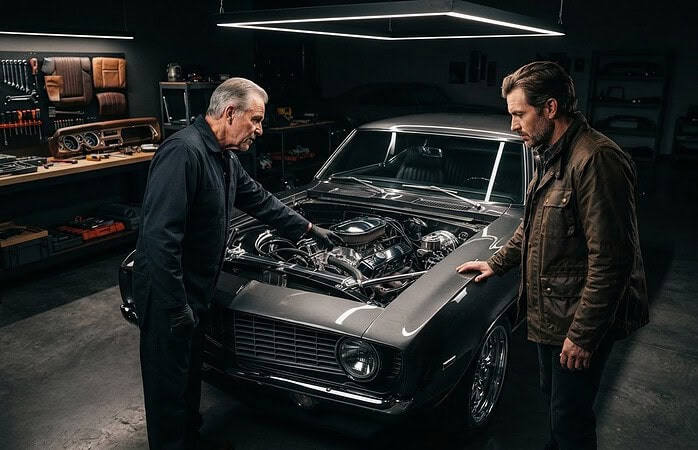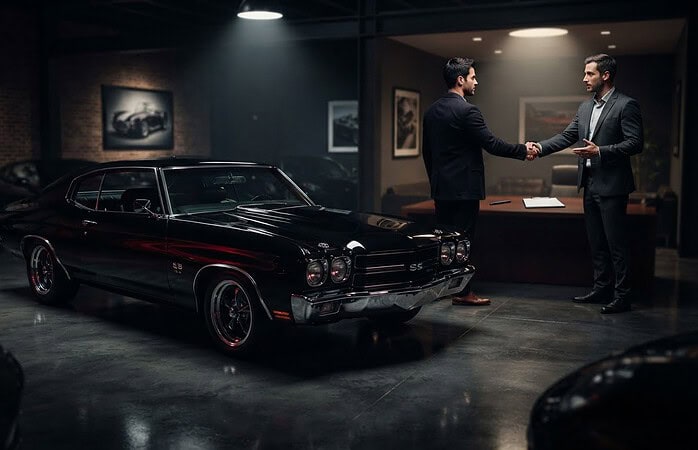

The lowest commission fee often results in the lowest net return for an elite restomod. In the 2026 market, where a flight to quality defines every major auction, the DIY approach frequently leaves significant capital on the table. Deciding between consignment vs private sale classic car routes isn’t just about avoiding an administrative headache; it’s about protecting the value of your mechanical art.
It’s frustrating to watch unqualified tire-kickers critique a build they don’t understand. You’ve invested in precision engineering and artisanal finishes, yet private buyers often fail to see past the vintage shell to the modern soul beneath. We understand that your property shouldn’t be a showroom for strangers. This article demonstrates how professional representation transforms a stressful transaction into a secure, hands-off exit strategy that yields a higher net profit. We’ll explore the technical marketing required for bespoke builds and how to navigate a market that currently rewards verified excellence over unrestored rarity.
Key Takeaways
- Identify the financial advantages of success-based commissions over the rigid fee structures and hidden labor costs found on digital auction platforms.
- Analyze the trade-offs of a consignment vs private sale classic car to determine which path offers the most secure and hands-off transaction for your bespoke build.
- Guard against the risks of fraudulent payments and unqualified tire-kickers by utilizing a professional vetting process designed for high-value assets.
- Establish a realistic timeline for your sale by understanding standard exclusivity periods and the necessity of specialized insurance coverage during the marketing phase.
- Learn how professional curation and a meticulous quality assurance process can elevate a restomod from a machine to an investment-grade asset that attracts premium collectors.
Understanding the Structure of Classic Car Consignment Fees
Consignment is a strategic alliance between a collector and a specialist. It’s a professional partnership designed to elevate a vehicle from a simple machine to a high-value asset. A formal consignment arrangement creates a legal and commercial bridge, allowing your vehicle to benefit from a global network of qualified buyers. Unlike the scattered nature of a private listing, this relationship leverages technical expertise to articulate the soul of a restomod. It’s about more than just a sale; it’s about curated representation.
High-value restomods demand a specific type of marketing. These aren’t standard production cars. They are bespoke pieces of functional art that require a deep understanding of modern performance hardware and vintage aesthetics. Professional representation acts as a critical firewall. It filters out the unqualified tire-kickers and dreamers who lack the liquidity for such a specific investment. When weighng the choice of a consignment vs private sale classic car, this buffer is often the difference between a secure transaction and a wasted month of property viewings.
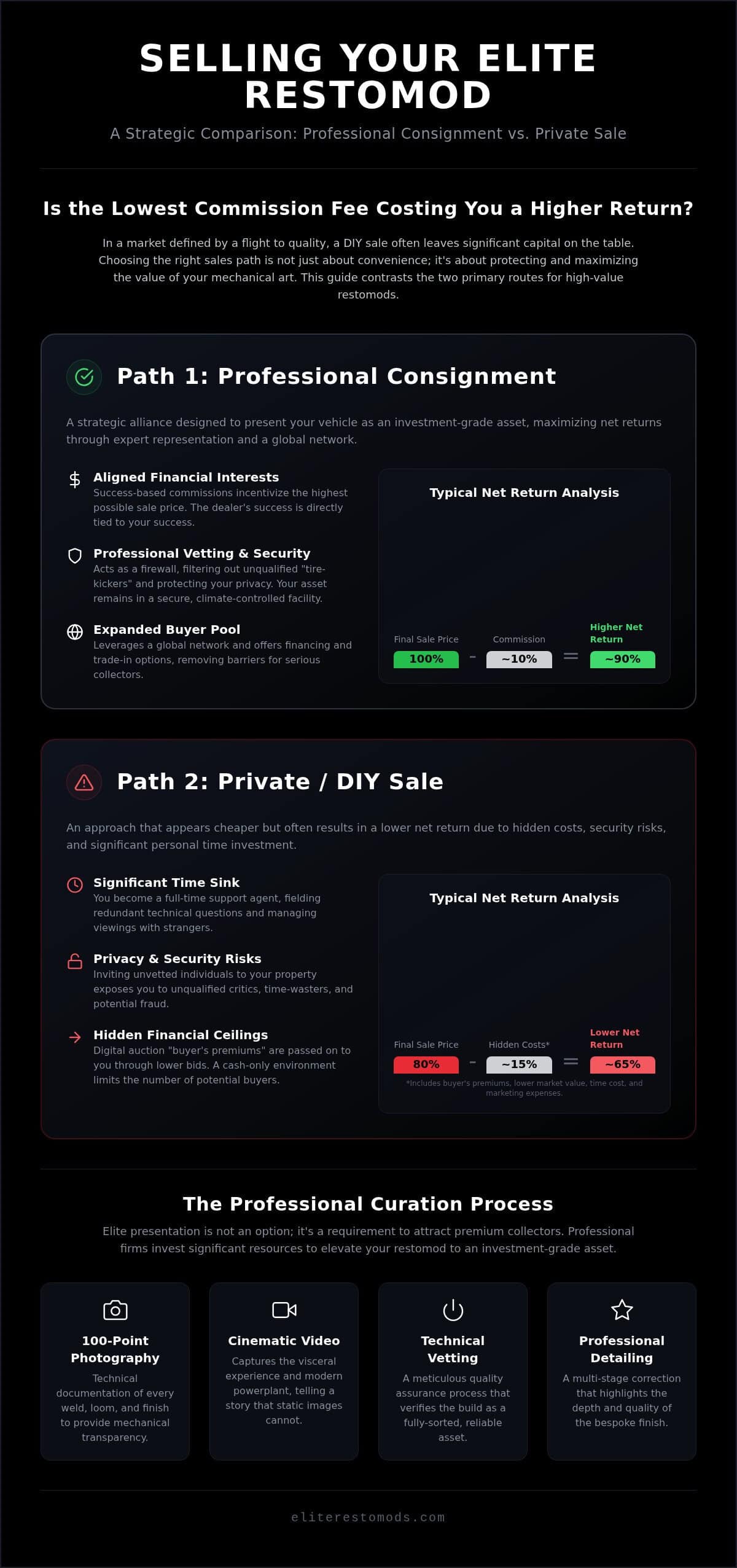
The distinction between upfront costs and success-based rewards is central to this model. Professional firms invest significant resources into your vehicle before it ever reaches the market. This includes professional photography, cinematic video narratives, and technical vetting. These services ensure the vehicle is presented as a fully sorted, investment-grade asset, which is essential for capturing the attention of the elite tier of collectors.
The Percentage-Based Commission Model
The commission model is designed to align the interests of the seller and the representative. When the dealer’s reward is tied to the final sale price, they are incentivized to pursue every possible dollar. This creates a shared mission. In the current market, where quality is the primary driver of value, having a motivated expert negotiating on your behalf is invaluable. For seven-figure automotive assets, tiered structures are common to ensure the marketing effort matches the vehicle’s status. It’s a systematic approach to value realization.
Flat Fees and Minimum Success Requirements
Some specialized inventory may utilize flat fee structures or minimum success requirements. This approach provides a predictable cost for the seller while ensuring the dealer can cover the extensive labor involved in marketing a one-of-one build. When considering a consignment vs private sale classic car path, fixed fees often reflect the premium nature of the consignment program. These fees support the high-end infrastructure, such as climate-controlled storage and enclosed transport, that protects the vehicle’s condition while it awaits the right buyer. It ensures the dealer maintains a high standard of service regardless of market fluctuations.
Professional Representation vs DIY Auction Fees
Digital auctions often lure sellers with low listing fees. The true cost, however, is buried in the buyer’s premium. This premium effectively lowers the ceiling of your final net return; when a buyer pays a 5% premium on top of the hammer price, they adjust their bidding threshold accordingly. In the choice of a consignment vs private sale classic car, professional representation provides a controlled environment where the focus remains on the asset’s intrinsic value, not the platform’s tax.
Selling a high-performance machine yourself requires you to act as a full-time technical support agent. You’ll spend hours answering redundant inquiries about gear ratios or fuel maps. Professional curation offloads this burden entirely. It also safeguards your privacy. Instead of inviting strangers to your private property, your vehicle stays in a secure, professional facility. Before moving forward, reviewing the terms of a consignment agreement helps ensure your liability and insurance needs are met.
The ROI of Professional Market Preparation
Elite presentation is a requirement, not an option. A professional detail is a multi-stage correction that highlights the depth of a bespoke finish. High-definition video captures the visceral roar of a modern powerplant. We utilize 100-point photography sets to document every weld and wiring loom. This technical narrative speaks to sophisticated collectors who value mechanical transparency. You can see how this level of detail elevates an asset by exploring our curated inventory.
Financing and Trade-ins: Expanding the Buyer Pool
Auction sites and private listings are typically cash-only environments. This limits your audience to a narrow slice of the market. Professional dealers provide access to specialized classic car financing, allowing buyers to leverage their capital for high-value acquisitions. We also have the capacity to accept trade-ins. This flexibility removes the primary friction point for many collectors: the need to liquidate an existing asset before purchasing a new one. By leveraging a national network, we reach buyers who aren’t browsing public ads. If you are looking for a seamless transition, our consignment program offers the most comprehensive solution for your exit strategy.
The Hidden Risks of Selling High-Value Vehicles Privately
High-value assets invite high-level risks. A private sale exposes your financial security to sophisticated fraudulent wire transfers and non-secure payment schemes. In the current 2026 climate, where the global collector car market saw a 6% dip earlier this year, every transaction must be airtight. Relying on personal intuition during a private negotiation often leads to vulnerability. It’s a gamble that few collectors should take with a bespoke investment. The stakes are simply too high for a DIY approach.
Inviting strangers to your private garage is a security breach. Private test drives carry massive liability risks that your standard collector insurance might not fully cover. While professional representation is safer, sellers should still be aware of the risks of vehicle consignment fraud from disreputable, fly-by-night operations. Choosing a world-class curator ensures your asset is protected in a professional environment. It removes the anxiety of managing unqualified inquiries on your own time. This protection allows you to focus on your next acquisition rather than the logistics of the current sale.
Global Marketing Reach vs Local Listings
Local marketplaces are designed for driver-quality cars, not six-figure restomods. A bespoke build requires a platform that reaches international collectors who value modern engineering. When comparing consignment vs private sale classic car options, the dealership’s reputation acts as a seal of approval. It builds immediate trust that a private seller simply cannot replicate. Our curated inventory attracts buyers who prioritize verified mechanical excellence over unrestored rarity. This global reach is essential in a market that currently rewards quality over quantity.
The Burden of Technical Transparency
Restomods are complex machines. Explaining a custom fuel-injection system or bespoke suspension geometry to a non-technical buyer is exhausting. Out-of-state buyers will demand rigorous pre-purchase inspections. A professional dealer manages these technical dialogues, providing a buffer for negotiations. They understand the meticulous nature of the build process and can defend the price point based on mechanical excellence. This eliminates the emotional friction of technical disputes. In the choice between consignment vs private sale classic car, having an expert who speaks the language of high-performance components is a decisive advantage.
What to Look for in a High-End Consignment Agreement
A high-end agreement is the blueprint for a successful exit. It defines the boundaries of the partnership and protects the integrity of your asset. For a bespoke restomod, the marketing cycle is more complex than a standard production car. A typical exclusivity period of 90 to 120 days is standard; this provides the necessary window for professional photography, cinematic narratives, and vetting global buyers. When evaluating a consignment vs private sale classic car approach, the clarity of this contract is your primary safeguard. It ensures that both parties are aligned on the vehicle’s worth and the strategy to realize it.
Transparency in negotiation is paramount. You should remain the final authority on the sale price. A reputable curator provides data-driven advice but respects your position as the owner. Insurance is another critical pillar. While you maintain your primary policy, the dealer should provide garage-keeper’s insurance to cover the vehicle while it’s in their custody. Termination clauses should be straightforward. If the vehicle doesn’t sell within the agreed timeframe, the protocol for its return must be clearly defined without hidden penalties or administrative friction. This level of detail distinguishes a professional firm from a simple retail lot.
Logistics and Enclosed Vehicle Transport
Preserving the condition of a six-figure build during transit is non-negotiable. The agreement should specify who coordinates the move and the standards of care required. We utilize enclosed vehicle transport to shield your asset from road debris and environmental hazards. This logistics coordination is a core value of our consignment program. It ensures the vehicle arrives in showroom condition, ready for the lens and the scrutiny of elite collectors.
Storage and Maintenance Standards
A restomod is a functional masterpiece that requires active care. Your agreement should mandate climate-controlled storage to prevent seal degradation and protect artisanal interiors from humidity. We implement strict battery tending and mechanical exercise protocols; this keeps the modern powerplant and electronics in peak operational condition. Clarify who bears the cost of minor maintenance, such as oil changes or detailing refreshes, during the representation period. In the consignment vs private sale classic car debate, these professional standards maintain the vehicle’s fully sorted status, ensuring it’s always ready for an immediate inspection.
Elite Restomods: Maximizing Net Returns for Investment-Grade Assets
Restomods are more than machines. They are the realization of a vision. When you position a vehicle as a bespoke piece of functional art, the sales strategy must match the meticulous craftsmanship of the build. Volume-based auction platforms often overlook the mechanical intricacies that define a world-class restomod. We focus on the developmental narrative; we treat every asset as a transformative journey that deserves a specific tier of buyer. This approach is essential in 2026, a year characterized by a market of two halves where elite, investment-grade vehicles continue to achieve record results despite broader economic shifts.
Our curated approach ensures that heritage design never compromises modern operational reliability. This duality is what sophisticated collectors crave. In the evaluation of a consignment vs private sale classic car, the private route often fails to articulate the value of high-performance components. A dealer who understands the soul of a vintage asset can justify a premium price point through technical authority. We don’t just list cars. We curate a portfolio of functional excellence that attracts buyers looking for the marriage of brute force and refined comfort.
The Elite Certified Advantage
The Elite Certified process is our signature quality assurance protocol. We ensure every vehicle is fully sorted before it enters our inventory. This isn’t a superficial inspection. It’s a systematic breakdown of the technical work, providing the transparency that reduces buyer hesitation. By marketing the vehicle as a reliable daily driver rather than a project, we attract investors who want to utilize their assets immediately. This certification transforms a simple listing into a verified investment-grade opportunity. You can learn more about our meticulous build process to see how we maintain these standards.
A Seamless Exit for the Sophisticated Collector
We manage the entire lifecycle of the transaction. From initial sourcing to the final enclosed transport, the process is designed to be hands-off for the owner. Our national reach ensures that your vehicle is seen by the right eyes, not just the most eyes. We bridge the gap between a long-held dream and a tangible reality for the buyer through our specialized classic car financing referral service. This ability to provide liquidity and security often closes deals that would stall in a private environment. When you weigh the benefits of a consignment vs private sale classic car, the professional path offers a seamless exit strategy that protects your net return.
Inquire about our premier classic car consignment services to begin your vehicle’s next chapter.
Secure Your Legacy and Maximize Your Return
The final value of your automotive asset depends entirely on how its story is told. A professional exit strategy ensures that every mechanical detail and aesthetic finish is articulated to the right collector. By utilizing the Elite Restomods quality assurance process, you transform a machine into a verified, investment-grade asset. This systematic approach eliminates the uncertainty and friction inherent in unvetted transactions. It allows you to move forward with the confidence that your craft is being represented by experts who understand its soul.
When you weigh the benefits of a consignment vs private sale classic car, the choice becomes a matter of security and net profit. Private listings often fail to capture the premium required for bespoke builds. Professional representation offers global marketing reach and the protection of climate-controlled storage. We manage the technical narratives and professional detailing, allowing you to enjoy a hands-off transition. It’s time to elevate your sales experience and protect the equity you’ve built in your vehicle.
Partner with Elite Restomods to sell your vehicle and experience the gold standard in automotive curation. Your next great drive is waiting.
Frequently Asked Questions
What is the average consignment fee for a high-end classic car?
Fees for professional representation are typically structured as a percentage of the final sale price or a flat success fee. This ensures that the dealer’s interests are perfectly aligned with your own. When comparing a consignment vs private sale classic car, this performance-based model motivates the curator to pursue the highest possible value. These fees cover the extensive labor involved in technical marketing and vetting global buyers for your bespoke automotive investment.
Are there upfront costs when consigning a restomod?
Upfront costs for a high-end restomod often include specialized fees for professional marketing and detailing. These initial investments ensure your vehicle meets the Elite Certified Restomods standard before it reaches the global market. While a private sale might seem cheaper initially, the lack of professional preparation often leads to a lower net return. These costs support the high-definition photography and technical narratives required to attract sophisticated collectors who value mechanical transparency.
How is the final listing price of my vehicle determined?
The final listing price is determined through a systematic evaluation of market data and the vehicle’s specific build history. We focus on the value of fully sorted, investment-grade restomods, which often command a premium over standard vintage models. This collaborative process involves analyzing recent auction results and the current demand for modern performance hardware. It ensures your vehicle is positioned correctly to attract serious buyers without leaving capital on the table.
Does the consignment fee include professional photography and detailing?
Our consignment program includes comprehensive professional detailing and high-definition photography as standard services. These aren’t just aesthetic touches; they are essential tools for documenting the mechanical excellence of a bespoke build. We produce cinematic video narratives and 100-point photography sets that speak directly to the technical requirements of elite collectors. This level of preparation is a primary reason why professional representation often outperforms a standard private listing in the final sale price.
What happens if my car does not sell within the agreed term?
If a vehicle does not sell within the agreed exclusivity period, the protocol for its return is clearly outlined in the termination clause. Most agreements for high-end restomods span between 90 and 120 days to allow for a thorough global marketing campaign. After this term, you may choose to extend the representation or have the vehicle returned via enclosed transport. This structure provides a secure and predictable timeline for your exit strategy without hidden administrative penalties.
Is my vehicle insured by the dealership while on consignment?
Your vehicle is covered by our specialized garage-keeper’s insurance while it remains in our professional custody. This provides comprehensive protection against unforeseen events while the asset is in our climate-controlled storage facility. However, owners are typically required to maintain their own primary insurance policy throughout the duration of the consignment agreement. This dual-layer of coverage ensures that your investment-grade asset is protected from every possible angle during the sales process.
Can I still drive my car while it is listed for consignment?
Vehicles on consignment are typically kept in climate-controlled storage to maintain their showroom condition and fully sorted status. This means they are not available for personal use during the listing period. Keeping the car on-site is a critical component of the consignment vs private sale classic car choice, as it allows for immediate inspections by qualified buyers. It also ensures that the vehicle remains in the exact condition documented in the professional photography.
Who handles the title transfer and legal paperwork after the sale?
We manage the entire lifecycle of the sales transaction, including the title transfer and all required legal paperwork. This hands-off approach is a significant advantage for sophisticated collectors who want a secure and efficient exit. Our team coordinates with state agencies and financial institutions to ensure the transfer of ownership is seamless and legally airtight. This eliminates the administrative burden and potential security risks associated with managing high-value title transfers in a private setting.