
The most breathtaking vintage cockpit is merely a static sculpture if the reality of driving it involves numbing seat foam and the deafening roar of wind noise. You shouldn’t have to choose between the soul of a 1960s icon and the refined serenity of a modern grand tourer. We understand that the fear of devaluing a masterpiece often prevents owners from making necessary upgrades. However, modernizing a classic car interior is not about erasing history; it’s about perfecting the experience.
In this 2026 guide, you’ll discover how to seamlessly integrate cutting-edge climate control and invisible sound systems without disturbing the period-correct aesthetic. We’ll walk through the meticulous process of ergonomic seat sculpting and the application of aerospace-grade thermal insulation. From bespoke leather finishes to integrated smartphone connectivity, you’ll learn how to bridge the gap between heritage design and contemporary performance. It’s time to turn your vintage cabin into a functional piece of art that’s built for the open road.
Key Takeaways
- Master the delicate art of balancing iconic heritage with modern ergonomics to create a cabin that is both a visual masterpiece and a high-performance workspace.
- Discover the transformative power of modernizing a classic car interior through the use of bespoke foam structures and world-class materials like Nappa leather and Alcantara.
- Learn how to integrate invisible technology, from high-fidelity stealth audio to modern connectivity, while preserving the original character of your vintage dashboard.
- Identify the technical secrets to achieving a vault-like atmosphere using advanced acoustic management and thermal insulation for ultimate cabin serenity.
- Explore the systematic approach to commissioning an Elite Certified Restomod, ensuring every detail of your custom build meets the highest standards of luxury and reliability.
The Philosophy of Modernizing a Classic Car Interior
Modernizing a classic car interior requires a vision that transcends simple repair. It is a deliberate marriage of vintage aesthetics and modern ergonomics. True luxury isn’t found in a museum piece that’s painful to drive; it’s found in a cabin that honors its 20th-century roots while providing 21st-century support. This evolution in automotive culture, often referred to as The Philosophy of Resto-Modification, prioritizes the driver’s experience without erasing the vehicle’s history. We treat every project as a functional art piece where heritage meets capability.
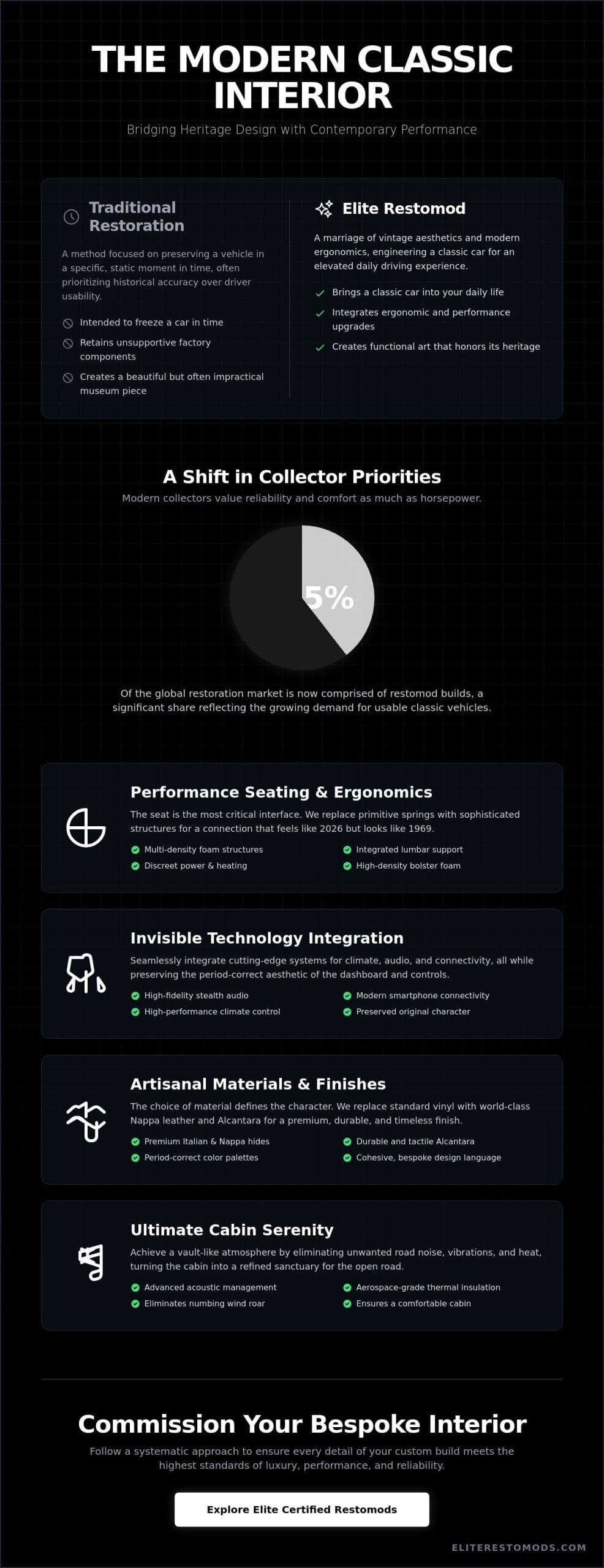
The distinction between a standard restoration and a modern build is significant. While a restoration seeks to freeze a car in time, modernizing a classic car interior seeks to bring that car into your daily life. This means replacing flat, unsupportive seat springs with multi-density foam and integrating climate systems that actually work. According to industry data from 2026, restomod builds now command a 39.5 percent share of the global restoration market. This shift reflects a growing desire for vehicles that are meant to be utilized, not just displayed.
To see how a thoughtful approach can outshine even the most expensive modern cabins, watch this perspective on vintage design:
Heritage-Forward Design Principles
An elite build begins with the original silhouette. We maintain the iconic lines of the dashboard and door panels to ensure the car’s soul remains intact. Color palettes are curated to honor the production era, using period-correct textures that offer contemporary durability. High-quality materials like Nappa leather and Alcantara serve as the foundation. These choices ensure that the interior feels premium to the touch while resisting the wear of modern use. A cohesive design language prevents the cabin from feeling like a collection of aftermarket parts.
Balancing Investment Value and Utility
Professional modernization increases the marketability of classic car restomods for sale by transforming them into “fully sorted” assets. Today’s collectors value reliability and comfort as much as horsepower. By following a systematic build process, owners can avoid “over-modding” that dates an interior to a specific decade. The goal is a timeless finish that feels like a bespoke luxury lounge. Investment-grade interiors require this balance: they must be functional enough for a cross-country tour yet refined enough for a premier concours event.
Performance Seating and Artisanal Upholstery
The sensation of settling into a classic car should be one of immediate connection, yet the reality often involves sagging springs and a total lack of lateral support. Original bench seats were designed for the relaxed cruising of a different era; they don’t provide the stability required for modern performance. When modernizing a classic car interior, the seat is the most critical interface between the driver and the machine. We replace the primitive spring-and-burlap construction with sophisticated, multi-density foam structures that offer true ergonomic support without altering the iconic silhouette of the cabin.
Ergonomics: Beyond the Original Springs
Modernizing a classic car interior begins with a complete teardown of the seat frames to their bare skeletons. We meticulously reshape these frames to accommodate high-density bolster foam, providing the grip needed for spirited driving. Long-distance touring demands integrated lumbar support, a feature entirely absent from 20th-century factory designs. Our master builders discreetly integrate power-adjustability motors and heating elements within the original frames. This technical precision ensures the seats look like 1969 but perform like 2026. As documented by Forbes in their review of modern reliability upgrades, these functional enhancements are essential for collectors who intend to actually drive their high-value assets rather than just display them.
Material Selection: Texture and Durability
The choice of hide defines the character of the build. While traditional vinyl served its purpose, a bespoke restomod demands the visceral luxury of premium Italian leathers or Nappa hides. We often utilize Alcantara for headliners and pillar trim to reduce dashboard glare and provide superior acoustic dampening. This material selection is about more than just aesthetics; it’s about the sensory experience of touch and smell. Our artisans utilize specific stitching techniques to add depth and sophistication:
- French Seams: Double-stitched edges that provide a clean, high-end European finish.
- Contrast Piping: A subtle way to highlight the architectural lines of the seat.
- Diamond Quilting: Custom patterns that evoke a sense of exclusivity and heritage.
To truly bring a vintage cabin into the modern era, we incorporate climate-controlled seating. Integrated ventilation systems draw heat away from the driver, ensuring comfort even on the warmest summer days. These invisible upgrades transform a classic into a viable daily driver. If you’re ready to reimagine your vehicle’s cabin, our custom build services provide the artisanal craftsmanship necessary to execute such a complex transformation. Every stitch and every bolster is a testament to our commitment to perfection.
Technology Integration: Invisible Sophistication
The dashboard of a vintage machine is a sanctuary of analog design. Introducing a glowing plastic touchscreen into a hand-stitched leather dash often shatters that atmosphere. True sophistication lies in invisible technology. When modernizing a classic car interior, we prioritize systems that offer contemporary performance while remaining completely hidden from view. This approach preserves the tactile joy of original switchgear while delivering the connectivity we expect today. It’s about the marriage of heritage and capability.
Stealth audio is the cornerstone of this philosophy. High-fidelity sound shouldn’t require hacking into original door panels or kick plates. We utilize hidden amplifiers and high-output speakers tucked behind factory-style grilles. Digital signal processors are tuned specifically for the unique acoustics of a vintage cabin, compensating for the lack of modern soundproofing. Climate control is another essential upgrade. Systems like Vintage Air provide modern reliability and ice-cold performance, utilizing original slider controls or bespoke knobs that mirror the factory aesthetic. This ensures the cabin remains a bespoke piece of functional art.
Stealth Infotainment Solutions
The goal is a clean, uncluttered cockpit. We often convert original radio units to act as Bluetooth receivers, allowing the factory knobs to control volume and track selection. For those requiring navigation, retractable screens can be hidden within the dash or glovebox-mounted head units can keep the interface out of sight. Many clients prefer smartphone integration as the primary hub. A discreetly placed inductive charging pad allows your phone to serve as the brain of the car without a single visible wire. Our custom build services focus on these meticulous details to ensure the technology never compromises the design.
Precision Instrumentation and Gauges
The erratic needle bounce of a mechanical speedometer is a nostalgic quirk that loses its charm on a long journey. We replace antiquated mechanical cables with high-precision electronic sensors. These sensors provide rock-steady accuracy for speed and engine vitals. Custom gauge faces are designed to mimic original fonts and color schemes, yet they often hide tiny, integrated OLED readouts. These displays remain dark until needed, surfacing critical data like oil pressure or fuel-to-air ratios only when a threshold is crossed. This maintains the traditional look while offering the peace of mind found in modern engineering.
The Sensory Details: Sound, Light, and Touch
The true measure of a world-class build is often found in the details that remain invisible to the eye. While the visual impact of a restored cabin is immediate, the lasting satisfaction comes from the sensory environment. Modernizing a classic car interior requires a total overhaul of the acoustic, thermal, and tactile properties of the vehicle. We aim to eliminate the common distractions of vintage ownership, such as excessive road vibration, intrusive engine heat, and the lingering musty scent of aged materials. By applying modern treatments and sealants, we replace that “old car smell” with the rich, clean aroma of premium leather and high-performance finishes.
Modern lighting also plays a critical role in this sensory transformation. We utilize warm-spectrum LEDs to illuminate the dashboard and cabin, providing superior visibility while maintaining the inviting glow of the original incandescent bulbs. This ensures that the gauges are legible at a glance without introducing the harsh, clinical blue light often associated with modern electronics. It’s about preserving the atmosphere while improving the utility.
Acoustic and Thermal Insulation
Creating a vault-like atmosphere in a fifty-year-old chassis is an exercise in meticulous engineering. We don’t simply apply a single layer of sound deadener; we employ a multi-layered strategy designed to isolate the cabin from the harshness of the road. Butyl-based vibration dampers are applied to the floor pans and doors to stop metal resonance. This is followed by closed-cell foam for acoustic decoupling and a final thermal barrier. These barriers are essential for sealing the firewall and floor, preventing the visceral heat of a high-performance engine from compromising your comfort. The result is a cabin that feels as serene as a modern luxury grand tourer, even when the machine beneath you is roaring at full throttle.
Bespoke Hardware and Controls
The tactile connection between the driver and the car is defined by the weight and resistance of the controls. We often replace plastic factory knobs with machined billet aluminum components, finished to mimic original chrome or matte textures. These parts offer a substantial, high-end feel that tight-tolerance shifters and weighted steering wheels further enhance. Every interaction should feel intentional and solid.
- Precision Regulators: Modern power window regulators and door latches ensure that every window rolls up smoothly and every door closes with a satisfying, airtight click.
- Haptic Feedback: Tightening the tolerances of every moving part removes the “slop” commonly found in vintage steering columns and linkages.
- Weighted Controls: Restoring and weighting the steering wheel provides a more substantial grip, reflecting the power and precision of the modern drivetrain.
These refinements transform the driving experience from a chore into a curated journey. If you’re seeking a vehicle that offers this level of sensory perfection, our Elite Certified Restomods represent the pinnacle of this artisanal approach. We ensure that every touchpoint reinforces the brand’s commitment to excellence and heritage.
Commissioning Your Bespoke Interior with Elite Restomods
The process of modernizing a classic car interior is a significant undertaking that requires more than just high-quality parts; it demands a master builder’s vision. At Elite Restomods, we treat every commission as a unique collaboration between our craftsmen and the client. Our approach centers on creating an environment that is both a high-performance workspace and a luxury lounge. We ensure that every detail, from the tension of the leather to the calibration of the digital sensors, meets investment-grade standards. This commitment to perfection is what distinguishes an elite build from a standard restoration.
Collaborating with master craftsmen allows you to realize a vision that off-the-shelf components simply cannot provide. We understand that the soul of a vintage machine is found in its history, yet its future depends on modern operational reliability. By trusting a professional team, you gain the peace of mind that comes with a fully sorted, turnkey interior. Every wire is loomed, every panel is insulated, and every stitch is placed with surgical precision. This is the bridge between a long-held dream and a tangible, high-performance reality.
The Design Consultation Process
Your journey begins with a comprehensive design consultation where we explore the textures and technologies that will define your cabin. We provide physical material sampling of premium hides and Alcantara alongside digital renderings to visualize the final result. This stage is critical for ensuring a cohesive design language across the dashboard, seating, and trim. Beyond aesthetics, we prioritize modern safety. Our custom build services include the integration of reinforced pillars and discreet three-point harnesses. These upgrades provide contemporary protection without disrupting the classic silhouette of the vehicle.
Turnkey Excellence
For those who prefer immediate gratification, we invite you to browse our inventory of Elite Certified Restomods. These vehicles feature already-perfected interiors that showcase our highest standards of craftsmanship. A professional build offers a level of refinement that a DIY interior renovation often struggles to achieve. While a hobbyist might focus on individual parts, we focus on the entire ecosystem of the cabin.
- Unified Architecture: We integrate all electrical components into a modern wiring harness to prevent parasitic draws and erratic gauge behavior.
- Quality Assurance: Every vehicle undergoes rigorous testing to ensure the acoustic management and climate systems perform flawlessly under real-world conditions.
- The First Sit: The final realization of the project is the sensory experience of the first sit, where the smell of fresh leather and the solid feel of the controls confirm the quality of the build.
Modernizing a classic car interior is ultimately about making the vehicle more usable and enjoyable in the modern world. Whether you are commissioning a bespoke project or selecting a finished masterpiece from our collection, you are investing in a vehicle that is meant to be driven. We handle the technical intricacies so you can focus on the raw, visceral excitement of the open road.
Redefining Your Vintage Drive for the Modern Era
The journey of modernizing a classic car interior is a transformative one. It bridges the gap between historical design and contemporary capability. You’ve seen that true luxury lies in the invisible integration of high-performance climate systems and ergonomic seating that respects the original silhouette. By focusing on sensory details like acoustic management and weighted controls, you turn a vintage machine into a daily-capable asset. It’s about ensuring your vehicle is built to be utilized, not just displayed.
At Elite Restomods, we specialize in this delicate balance. Our Elite Certified Quality Assurance ensures that every project meets the highest standards of reliability and refinement. Through bespoke artisanal craftsmanship, we realize your vision with surgical precision. Whether you’re starting a new build or looking for a turnkey masterpiece, we provide national enclosed vehicle transport to bring your dream directly to your door. Your legacy deserves the confidence of modern engineering.
Explore our inventory of meticulously modernized classic restomods and experience the pinnacle of bespoke luxury today.
Frequently Asked Questions
Will modernizing my classic car interior lower its resale value?
Professional modernization typically increases the marketability of a vehicle, especially when modernizing a classic car interior within the restomod segment. Restomods now represent 39.5 percent of the restoration market, and most modern collectors prioritize drivability and comfort over strict assembly-line accuracy. A well-executed, investment-grade cabin makes the car more desirable for those who intend to actually use the vehicle rather than keep it as a static museum piece.
What is the best way to add Bluetooth to a classic car without changing the radio?
The most sophisticated method is installing a hidden Bluetooth receiver that operates through the original radio knobs or a smartphone interface. This allows you to maintain the factory aesthetic while enjoying modern connectivity. We often convert original units to serve as control hubs, ensuring that no modern plastic clashes with your vintage dashboard’s soul. It’s a key part of the invisible technology trend that defines high-end builds.
How can I make my classic car seats more comfortable for long trips?
Replacing antiquated spring-based structures with modern multi-density foam is the most effective way to improve comfort. When modernizing a classic car interior, we focus on adding lateral bolsters and adjustable lumbar support to reduce driver fatigue. These upgrades provide the ergonomic foundation necessary for long-distance touring without sacrificing the seat’s period-correct appearance. You don’t have to suffer through flat, unsupportive cushions to maintain a vintage look.
What is the difference between sound deadening and sound absorbing materials?
Sound deadening materials use mass to stop metal panels from vibrating, while sound absorbing materials trap airborne noise within their porous structures. A truly silent cabin requires a multi-layered strategy using both butyl-based dampers and closed-cell foams. This technical combination creates the vault-like serenity expected in a bespoke luxury build. It effectively isolates the driver from road harshness and mechanical drone.
Can I install modern air conditioning in any classic car?
Modern air conditioning can be integrated into almost any classic vehicle using compact, high-efficiency evaporators and engine-driven compressors. Systems like Vintage Air are designed to fit behind the original dash, utilizing factory-style controls for a seamless look. This upgrade is essential for maintaining a climate-controlled environment during summer rallies. It transforms the cabin into a space you can enjoy regardless of the temperature outside.
How do I choose the right leather for a vintage car interior?
Choosing the right hide involves balancing the vehicle’s production era with your specific tactile preferences and durability needs. Nappa leather offers a smooth, modern luxury feel, while Alcantara provides superior grip and glare reduction for high-performance cockpits. We recommend selecting automotive-grade leathers that are specifically treated for UV resistance to ensure the interior remains vibrant for decades. It’s about finding the perfect marriage of heritage and longevity.
Are digital gauges better than original mechanical gauges?
Digital gauges offer superior accuracy and the ability to monitor critical engine vitals that original mechanical needles often miss. By replacing mechanical cables with electronic sensors, you eliminate needle bounce and gain real-time data on your engine’s health. Many modern gauges are designed with vintage fonts and analog faces to provide this precision without ruining the classic aesthetic. They offer the confidence of modern engineering with a traditional appearance.
How long does a full custom interior modernization typically take?
A full custom interior modernization typically requires between 80 and 200+ hours of specialist labor depending on the project’s complexity. This timeline accounts for the meticulous process of frame restoration, foam sculpting, and hand-stitching the final hides. Every bespoke project is a transformative journey that demands time to reach investment-grade standards. It’s a systematic process that ensures no detail is overlooked in the pursuit of excellence.