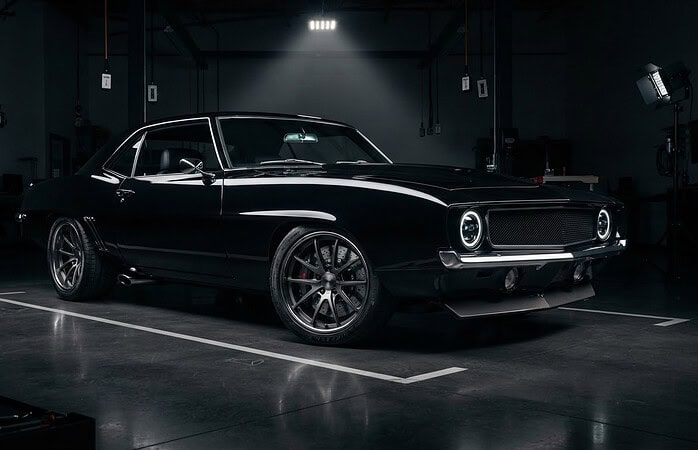

A traditional restoration returns a car to its original condition. A restomod preserves its classic character while adding modern performance, comfort, or reliability. If you’re considering one, what to look for when buying a restomod is how well its upgrades work together, how the car has been maintained, and whether its design suits your priorities.
The appeal is clear: familiar lines and old-school presence with a more usable drive. But a classic-inspired build isn’t automatically right for every commute or ownership routine. The engine, suspension, brakes, electrical system, and cabin features all shape how the car feels on the road and what it may require over time.
This guide explains how to weigh daily driving, upkeep, modern amenities, and your restoration goals before choosing a vehicle or commissioning a build. It also covers why the starting car and the quality of its engineering matter, helping you find the right balance of heritage and modern capability.
Key Takeaways
- Match the car’s engine, suspension, brakes, and comfort features to how you plan to drive it day to day.
- Assess the builder’s craftsmanship, engineering approach, and record of completed vehicles before choosing a custom build.
- Plan for ongoing maintenance, suitable storage, and insurance that reflects the vehicle’s build.
- Decide whether preserving originality or gaining modern usability matters more, then explore Elite Restomods’ certified vehicles or custom build services.
1. Can a restomod be used as a daily driver?
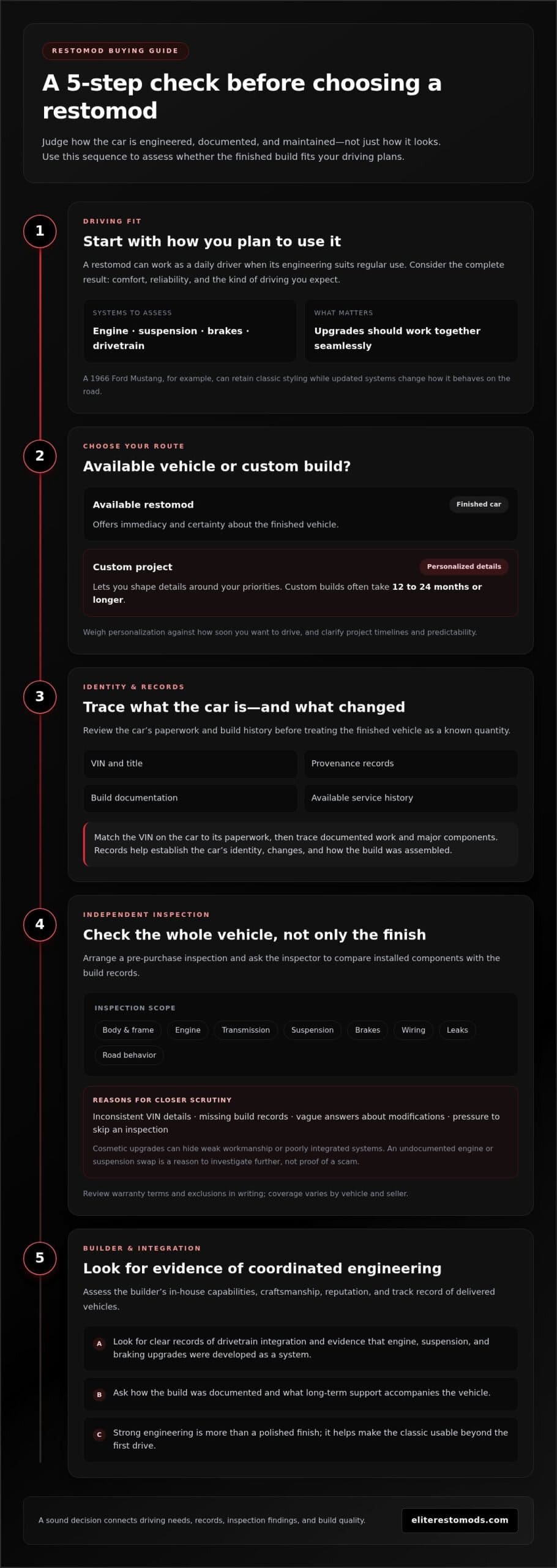
Yes, a restomod can serve as a daily driver when its engineering suits regular use. Modern engines, upgraded suspensions, and refined drivetrains should work together seamlessly, not merely look impressive. A 1966 Ford Mustang, for example, may preserve classic styling while its updated systems change how it behaves on the road. Judge the complete result, including comfort, reliability, and the kind of driving you expect.
Choose between an available vehicle and a custom build. An available restomod offers immediacy and certainty about the finished car; a custom project lets you shape details around your priorities. Custom builds often take 12 to 24 months or longer, so timelines and project predictability matter. A practical guide to what to look for when buying a restomod starts with deciding whether personalization or driving sooner matters more.
Before buying, review the VIN and title, provenance records, build documentation, and available service history. Match the VIN on the car to its paperwork, then trace the documented work and major components. These records help establish the car’s original identity, what changed, and how the finished build was assembled.
Red flags include inconsistent VIN details, missing build records, vague answers about modifications, or pressure to skip an inspection. Cosmetic upgrades can make a car look complete while hiding weak workmanship or poorly integrated systems. Treat an undocumented engine or suspension swap as a reason for closer scrutiny, not as proof of a scam.
Arrange a pre-purchase inspection covering the body and frame, engine, transmission, suspension, brakes, wiring, leaks, and road behavior. Ask the inspector to compare installed components with the build records and note issues that could affect daily use. Review warranty terms and exclusions in writing, since coverage varies by vehicle and seller.
Evaluate the builder’s in-house capabilities, craftsmanship, reputation, and track record of delivered vehicles. Look for clear records of drivetrain integration and evidence that engine, suspension, and braking upgrades were developed as a system. Ask how the build was documented and what long-term support accompanies the vehicle. Strong engineering is more than a polished finish. It’s what helps make the classic usable beyond the first drive.
2. Maintenance, warranty, service, storage, and insurance
Upkeep depends on a restomod’s parts, build quality, and driving routine. A vintage engine paired with modern fuel injection may require different service knowledge than an original setup. Keep the build sheet, component details, maintenance records, and instructions together. They help a technician understand how the engine, suspension, and other systems were installed.
Read the warranty before purchase, including its coverage, exclusions, duration, and approved repair process. Confirm which components are covered and whether labor is included. For example, engine coverage may not extend to a separate electrical fault. Written terms help distinguish covered repairs from routine maintenance and later refinements.
Post-delivery support matters because custom work may need adjustments after regular driving begins. Ask for a clear process to document concerns, identify responsible components, and arrange service. A restomod with nonstandard parts may need a technician familiar with its systems. Build records and service history provide useful context and help prevent guesswork.
Plan for maintenance, insurance, and storage. Insure the car based on its build cost and agreed value, rather than assumptions based on its vintage styling. Climate-controlled storage can help protect finishes and cabin materials when the car isn’t being driven. Include storage in your ownership plan, especially if the vehicle has features or trim that need careful preservation.
Custom projects can involve change orders, delays, and post-delivery repairs or refinements, all of which shape ownership. Before committing, clarify how requested changes affect the project plan and what support follows delivery. If you expect periods of limited use, climate-controlled vehicle storage can help you plan for preservation. Thoughtful preparation keeps comfort and craftsmanship in balance.
3. Modern amenities and safety features
Modern amenities can make a classic more comfortable, but every upgrade adds components that must work together. Common additions include air conditioning, updated audio, charging ports, modern lighting, and an engine with fuel injection. Assess the wiring, controls, and power demands behind each feature, not just its appearance. Reliable integration helps the equipment function as intended while driving.
Braking and suspension upgrades also affect daily usability. A restomod Mustang may combine a modern engine, updated braking systems, improved suspension, and revised electronics. Assess them as a system: engine output, braking response, and suspension behavior should feel coordinated. On a test drive, note whether the car responds smoothly and its upgraded features work consistently.
Electric restomods call for additional scrutiny. Examine battery integration, thermal management, and how the conversion affects weight balance and driving feel. These factors influence how the vehicle behaves, so assess the engineering and road manners together rather than treating the electric drivetrain as an isolated component.
Safety equipment deserves careful attention in any vintage vehicle. According to the National Highway Traffic Safety Administration, frontal air bags have been standard in all passenger vehicles only since the late 1990s. A restomod’s modern features don’t automatically make its safety equipment equivalent to a newer car. Review the installed systems and their integration, and consider what the original platform does and doesn’t provide.
In the United States, emissions, safety, title, and registration requirements can depend on the vehicle and its state. Before buying, establish which rules apply to the specific car and its modifications. Make sure the title and registration documents match the vehicle’s identity and status.
Finish with a function test: operate the air conditioning, lights, audio, and charging equipment, then observe the car on a drive. Review wiring and installation records for upgraded components. A cohesive build preserves classic character while making modern technology feel deliberate, dependable, and suited to your routine.
4. Restomod versus restoration goals and starting vehicles
Choose your destination before choosing the vehicle. A traditional restoration returns a car to its original condition, while a restomod pairs classic design with modern performance, comfort, and reliability. For collectors focused on factory-correct details, originality may matter more than upgraded driving manners. For regular road use, modern components may better fit the goal.
That distinction shapes every decision. A restoration might prioritize period-correct paint, trim, and interior materials; a restomod may replace the drivetrain or revise the suspension. Decide which features must remain authentic, which can change, and how you’ll use the car. Those priorities guide the build scope and help prevent expensive work that doesn’t serve your plans.
The car’s starting condition matters as much as its model. Before judging paint or cabin finish, inspect the body, frame, and underlying structure for corrosion, damage, and previous repairs. A polished exterior can’t compensate for a compromised foundation. Review the title, VIN, and available history, then compare documented work with visible modifications to understand the vehicle’s provenance.
Think of originality as a spectrum, not an all-or-nothing choice. Reversible modifications and retained original parts can limit the impact of upgrades on a car’s originality. For example, keeping removed components with the vehicle may preserve options for future owners. Record which changes are reversible, which require permanent alterations, and how each affects the car’s intended use.
Before comparing cars, write a short decision brief: desired driving character, essential modern features, acceptable interior changes, and the importance of collector originality. Assess each candidate against that brief, not just its styling. To compare completed vehicles with your priorities, explore available restomods and consider which balance of heritage and modern capability suits your plans.
Elite Restomods: Elite Certified Restomods
Elite Restomods offers Elite Certified Restomods for drivers who want a finished classic with modern capability rather than a project requiring a full build. If you have specific requirements for a model or its engineering, Custom Build Services can shape a vehicle around your goals. The Consignment Program also supports owners preparing to sell a restomod.
Ownership extends beyond the first drive. Elite Restomods’ Climate-Controlled Storage provides an option for protecting a vehicle when it isn’t in regular use. Consider which route fits your plans: a completed vehicle, a custom build, consignment, or storage for a cherished classic.
Contact Elite Restomods to discuss the option that best fits your ownership goals.
Make the Next Drive Yours
The right restomod should feel like your classic, shaped around how you want to use it. Before moving forward, decide what you want the car to mean in everyday life: a familiar ritual, an expressive weekend drive, or a personal build that reflects your taste. That clarity makes your next decision more deliberate than simply choosing the most striking vehicle.
Use what to look for when buying a restomod as a framework for matching your priorities to the right path. Elite Restomods offers Elite Certified Restomods for those seeking a completed car, Custom Build Services for a personalized vision, and a Consignment Program for owners ready to sell. Each path starts with understanding what matters most to you.
Give your idea room to become a considered plan. Contact Elite Restomods to discuss your build, and take the next step toward a classic made for the road ahead.
Frequently Asked Questions
What is the difference between a restomod and a restoration?
A restoration aims to return a car to a chosen original specification; a restomod deliberately updates it. That distinction affects choices about replacement parts, interior materials, the drivetrain, and future resale. A buyer seeking factory-correct details, for example, may prefer restored components, while someone prioritizing modern drivability may welcome visible or mechanical changes. Decide which compromises suit your goals before comparing vehicles.
Can a restomod be used as a daily driver?
Yes, if the build and condition suit your routine. Consider the difference between occasional weekend drives and repeated cold starts, stop-and-go traffic, and short trips. During an inspection, focus on how the vehicle behaves after warming up and whether its controls remain comfortable in ordinary driving. A backup transportation plan is sensible during repairs or scheduled maintenance.
Do restomods hold their value?
Resale value reflects a vehicle’s condition, provenance, workmanship, documentation, and buyer demand for its model and configuration. Well-organized build records give future buyers a clearer account of what changed and how the car has been maintained. Highly personal modifications may appeal to a narrower audience, while recognizable models and coherent engineering can support desirability. Treat value as a market outcome, not an automatic return.
How much should I expect to pay for a quality restomod?
There’s no single standard price for a quality restomod. The price depends on the vehicle or project. Key factors include the starting car, body condition, drivetrain, engineering, materials, and degree of customization. Compare the complete specification and documented work, not just the paint or equipment. For a custom project, define your priorities before requesting a quote.
Is it better to commission a build or buy an available restomod?
Buying an available restomod suits someone who wants to see the finished vehicle before committing. Commissioning a build suits buyers with specific requirements for model, driving character, or design. Write down your nonnegotiable features, then compare them with available vehicles. If a ready-made car meets your priorities, a custom project may add complexity without adding value for your use.
What is a restomod, and how does it differ from a restored classic car?
A restomod is a classic vehicle modified with selected modern components while retaining its vintage identity. A restored classic generally prioritizes returning the car to its original appearance or specification. The difference is the intended result: a restomod may use updated systems for contemporary use, while a restoration focuses more closely on historical authenticity. Build records help establish which approach shaped a specific car.