
The most valuable classic car in your garage isn’t the one hidden under a silk cover; it’s the one you actually feel confident driving through afternoon traffic. You’ve likely spent years admiring the iconic lines of a vintage masterpiece while simultaneously dreading the reality of its manual steering and fragile cooling system. It’s a common dilemma for the modern collector. The desire for historical purity often clashes with the visceral need for performance that doesn’t quit. This article settles the restomod vs restoration debate by examining how each path serves your driving ambitions. You’ll discover the critical differences between a factory-correct preservation and a bespoke build that integrates modern engineering into a heritage body. We’ll explore the technical requirements for a reliable daily driver, the impact of modifications on resale value, and the current market trends for investment-grade assets. Whether you seek a concours-level artifact or a high-performance piece of functional art, you’ll gain the clarity needed to choose your next acquisition with absolute confidence.
Key Takeaways
- Learn to distinguish between preserving a historical artifact and engineering a machine for modern, high-performance capability.
- Understand the technical requirements of a factory-correct restoration, where original components and period-correct aesthetics define the vehicle’s character.
- Discover why the restomod vs restoration decision rests on your desire for modern reliability, contemporary safety systems, and daily-drivable power.
- Evaluate the investment potential of each path by analyzing maintenance schedules, safety engineering, and current collector market trends.
- Gain a professional framework for selecting a master builder who can balance brute force with refined luxury to suit your lifestyle.
The Great Automotive Debate: Originality Versus Modern Evolution
The garage door opens. A silhouette from 1967 catches the light. It’s a sculptural masterpiece of steel and chrome; a moment frozen in time. Yet, as you reach for the door handle, the central conflict of modern ownership emerges. Do you preserve this machine as a historical artifact, or do you evolve it into a high-performance weapon? This tension defines the restomod vs restoration debate. It’s a choice between the car as a static piece of history and the car as a visceral, modern experience. Restomod vs restoration isn’t a matter of right or wrong; it’s a matter of intent. One path honors the past through preservation, while the other honors it through evolution.
The term restomod is a portmanteau of restoration and modernization. It represents a paradigm shift for the discerning collector. It’s the emotional hook of nostalgia paired with the confidence of contemporary engineering. This evolution allows for a narrative arc that transforms museum-grade artifacts into bespoke pieces of functional art. The meticulous nature of our process ensures that every build, regardless of the chosen path, meets the highest standards of craftsmanship and professional authority.
Defining the Traditional Restoration
A traditional restoration is an exercise in meticulous historical accuracy. The objective is absolute: return the vehicle to the exact state it occupied the day it left the factory. This process demands an obsessive search for original equipment manufacturer (OEM) parts and an unwavering commitment to matching numbers. The conservation and restoration of road vehicles in this category treats the machine as a primary source of history. The restorer acts as a curator and historian. They ensure every period-correct finish, from the specific texture of the undercoating to the mechanical chatter of a carbureted engine, remains untainted by modern influence. It’s about the smell of old vinyl and the raw, unassisted feedback of a bygone era.
Defining the Modern Restomod
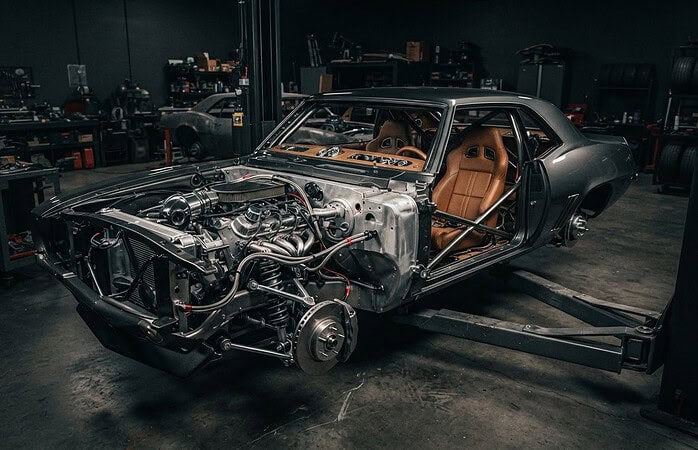
Modern restomodding takes the timeless aesthetics of the past and marries them to the brute force of today’s technology. While the vintage silhouette remains untouched, the mechanical soul is entirely reborn. This often involves the installation of a high-performance crate engine, advanced independent suspension, and heavy-duty braking systems. A specialized subset known as the pro-touring build pushes this even further. These machines are engineered to outperform modern sports cars on a track while maintaining a classic profile. Here, the builder is a visionary. They create a bespoke piece of functional art that offers the reliability of modern engineering without sacrificing nostalgic charm. It’s the ultimate marriage of heritage and capability.
Traditional Restoration: The Meticulous Art of Historical Preservation
The scent of aged vinyl and the rhythmic clatter of a mechanical fuel pump define the traditional restoration. This is an exercise in restraint and historical reverence. The restorer’s objective is to recreate the exact sensory environment of the showroom floor; often decades after the vehicle first rolled off the assembly line. Every component is scrutinized for authenticity. The pursuit of original equipment manufacturer (OEM) parts is often exhaustive, requiring the sourcing of “new old stock” or the meticulous refurbishment of period-correct hardware. For vehicles with significant provenance or extreme rarity, this path is often mandatory. Some machines are simply too important to modify. They serve as benchmarks for future generations.
While the aesthetic result is undeniable, the factory technology of the 1950s and 60s presents inherent limitations. Handling is often vague. Braking requires anticipation. Power is limited by the constraints of carburetion and early ignition systems. When deciding between restomod vs restoration, one must accept that a stock classic is a delicate instrument. It’s meant for the Sunday cruise, not the daily commute. Precision is the priority. Preservation is the goal.
The Concours d’Elegance Standard
At the highest levels of the hobby, the Concours d’Elegance sets a standard of absolute perfection. Judging at events like Pebble Beach or Amelia Island is brutal. A single non-original bolt or an incorrect shade of engine paint can diminish a vehicle’s status and market value. Documented history is the currency of this world. Meticulous record-keeping and a clear chain of ownership transform a car from a mere object into a historical asset. It’s about maintaining the integrity of a masterpiece.
The Reality of the Vintage Driving Experience
There is undeniable charm in manual steering and drum brakes. These systems provide a raw connection to the road that modern cars have long since filtered out. However, keeping these original systems operational requires significant maintenance intensity. Seals dry out. Points need gapping. Carburetors require seasonal tuning. While younger classic car owners are increasingly drawn to modernized performance, the purist finds satisfaction in the ritual of upkeep. Original components are sensitive to temperature and humidity, making climate-controlled storage a necessity rather than a luxury. If you seek a vehicle that honors this level of purity, you can explore our curated inventory of investment-grade classics.
The Modern Restomod: Engineering a High-Performance Renaissance
The modern restomod represents a high-performance renaissance. It is the definitive answer for the collector who demands the soul of a classic but refuses to accept the mechanical compromises of the past. While a traditional restoration preserves a moment in time, the restomod evolves the machine for the modern road. This approach transforms a vehicle from a fragile weekend-only artifact into a reliable daily driver. It’s about the marriage of brute force and refined comfort. When weighing the choice of restomod vs restoration, the decision often hinges on your desire for a vehicle that can keep pace with contemporary traffic without the constant anxiety of vintage failure points.
Modern metallurgy and precision engineering solve the inherent reliability issues of the 1960s. We replace brittle components with high-performance hardware. This artisanal transformation extends to the cabin, where custom interiors blend vintage aesthetics with luxury comfort. Think hand-stitched leather paired with hidden sound systems and modern climate control. The result is a bespoke piece of functional art that feels as premium as it looks. The meticulous nature of our process ensures that every technical hurdle is cleared with professional authority.
The Heart of the Build: Modern Drivetrains
The soul of a restomod is its modern heart. Swapping a tired, carbureted engine for a high-performance crate engine like a Chevrolet LS or a Ford Coyote changes everything. These modern powerplants offer visceral excitement and turnkey reliability. Electronic fuel injection replaces the temperamental nature of carburetors, ensuring your car starts every time, regardless of the temperature. You gain massive horsepower without sacrificing fuel efficiency. Integrating these modern electronics into a vintage chassis requires a sophisticated lexicon of wiring harnesses and CAN bus controllers to ensure seamless operation between the old and the new.
Chassis and Suspension: The Foundation of Performance
A classic body is only as good as the foundation beneath it. Modern torque levels would twist a factory frame from 1965. We utilize custom-fabricated frames and independent rear suspension (IRS) setups to transform handling from vague to surgical. Coilover systems allow for precision tuning of ride height and dampening. Safety is equally paramount. Massive disc brake upgrades are a necessity for navigating modern traffic, providing the stopping power that original drum brakes simply cannot match. This engineering depth ensures your vintage asset performs like a contemporary supercar while maintaining its iconic silhouette.
Comparative Analysis: Performance, Safety, and Long-Term Investment Value
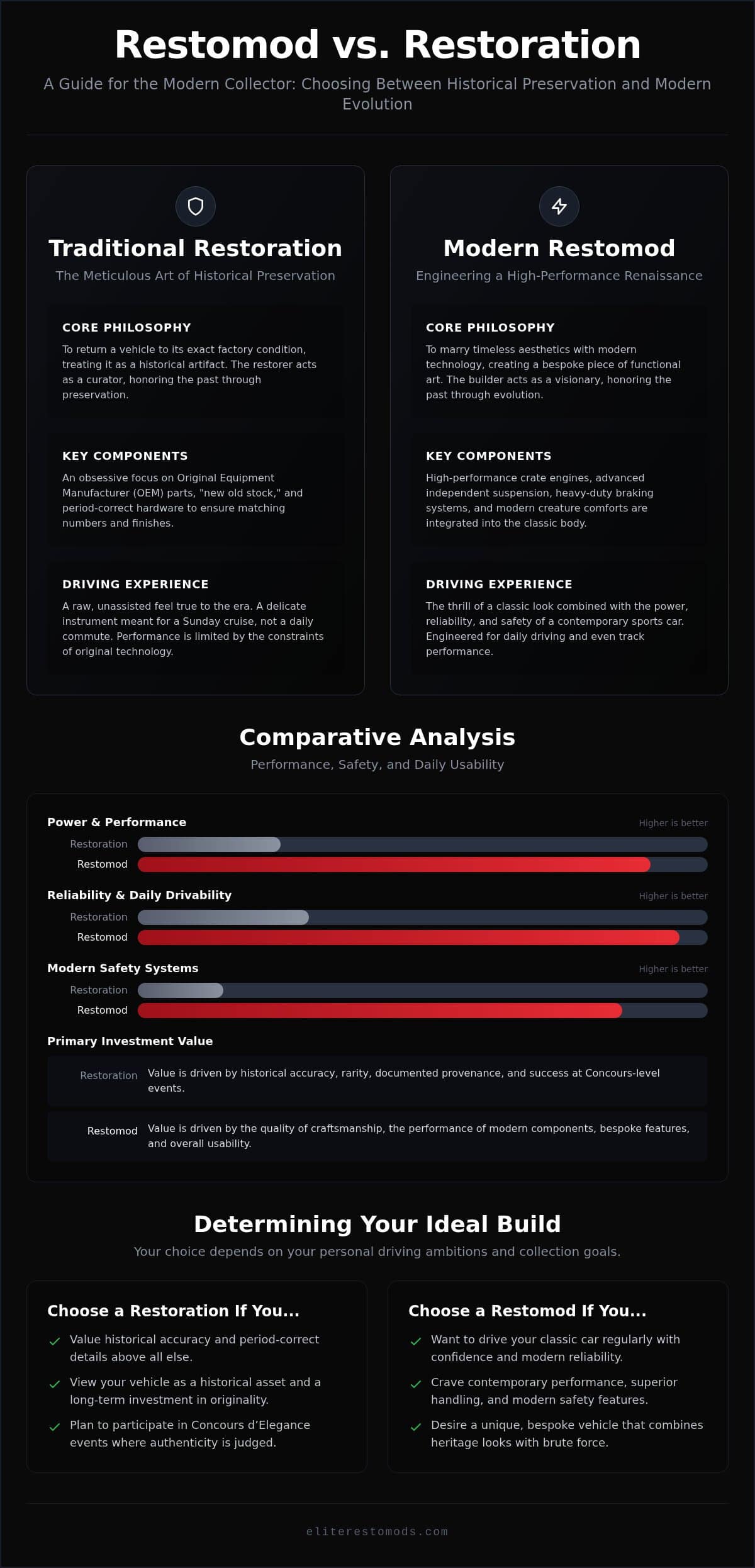
The choice between restomod vs restoration often determines how much time you spend on the shoulder of the road versus on the pavement. Safety is the primary differentiator. While a factory restoration maintains the original structural integrity, it lacks the preventative engineering of the 21st century. Modern restomods integrate reinforced chassis components and advanced lighting systems that ensure you’re seen and can see. Inside the cabin, the usability gap widens. A factory-correct interior is a time capsule of thin seats and high cabin noise. In contrast, a bespoke build utilizes modern sound insulation and ergonomic seating that makes a five-hour drive feel like a five-minute excursion. The experience shifts from mere transport to refined comfort.
Reliability follows a similar trajectory. A carbureted engine requires a delicate touch and regular mechanical intervention to stay synchronized. A modern crate engine, however, follows a maintenance schedule similar to a contemporary luxury SUV. You trade the ritual of constant tuning for the freedom of the open road. It’s the difference between owning an artifact and owning a high-performance reality.
Safety and Reliability on the Modern Road
Stopping power is the most critical metric for safety in today’s environment. Vintage drum brakes were designed for the sparse traffic of 1965, not the sudden stops of 2026. Upgrading to modern six-piston calipers and massive rotors drastically reduces stopping distances; often by more than half. Modern electrical systems and high-efficiency cooling packages provide the peace of mind needed for long-distance touring. You don’t have to watch the temperature gauge with a sense of impending doom when the sun hits the asphalt. These machines are built to be utilized and enjoyed, not just displayed.
The Investment Angle: Market Trends for 2026
The collector market has entered a highly selective phase. As of 2026, restomod builds command a 39.5% share of the specialty restoration market. This growth is fueled by Gen X and millennial buyers who prioritize drivability and modern performance. However, value retention depends entirely on the quality of the engineering. A “fully sorted” build from a master builder retains its value far better than a collection of mismatched modifications. Professional consignment services now evaluate these assets based on the pedigree of the components and the meticulous nature of the build documentation. If you’re ready to transition your classic asset, our consignment program ensures your vehicle is positioned for maximum market impact.
Determining Your Ideal Build: From Purist Dreams to Daily Realities
Choosing your path in the collector car world requires a candid assessment of your lifestyle and mechanical patience. If you find deep satisfaction in the mechanical ritual of tuning carburetors and the historical purity of a factory-correct machine, a traditional restoration will fulfill your purist dreams. However, if your ambition is to drive a vintage icon with the reliability and power of a modern supercar, the restomod path is your destination. The restomod vs restoration debate ultimately settles on one question: do you want to display a piece of history, or do you want to live it on the open road?
Success in this journey depends on selecting a master builder who understands the delicate balance of brute force and refined comfort. A custom build is a transformative journey, turning a long-held vision into a high-performance reality. It’s about more than just an engine swap; it’s about the meticulous engineering of a cohesive machine. For those who wish to bypass the build process and start driving immediately, we invite you to explore our curated inventory of vehicles that have already undergone this sophisticated evolution.
The Elite Certified Standard
The “fully sorted” concept is what separates a world-class build from an unreliable project car. Many enthusiasts discover too late that their new acquisition is plagued by electrical gremlins or cooling failures. Our Elite Certified quality assurance process eliminates this anxiety. We focus on the final 10% of the build, which is where the true character of the vehicle is defined. This meticulous attention to detail ensures that every component, from the modern wiring harness to the custom suspension geometry, functions in perfect harmony. You can learn more about our commitment to excellence by exploring the Elite Restomods process.
Taking the Next Step in Your Journey
Whether you choose to source a specific donor car for a bespoke commission or acquire a completed masterpiece, the road to ownership should be as refined as the vehicle itself. We provide professional vehicle sourcing and specialized classic car financing to ensure your acquisition is a seamless transition. For many collectors, the most efficient path to high-performance satisfaction is viewing the current Elite Restomods inventory. Seeing the standard of functional art in person often provides the final clarity needed to choose your path. Your long-held dream is ready to become a tangible reality.
Realizing Your Automotive Vision
The choice between restomod vs restoration is a defining moment for any collector. It’s a decision that balances the reverence for historical accuracy against the visceral thrill of modern performance. Whether you seek a museum-grade artifact or a piece of functional art that can tackle a cross-country tour, your path should align with your driving ambitions. Every project we curate represents a commitment to master craftsmanship and the relentless pursuit of excellence. Our Elite Certified Quality Assurance process ensures that every vehicle is fully sorted and ready for the road. With specialized restomod financing available, the transition from dreamer to owner is more accessible than ever.
We invite you to explore our current inventory of investment-grade restomods and find the machine that speaks to your soul. Your journey into the elite world of high-performance classics begins with a single, confident step toward a vehicle that truly matches your lifestyle. Embrace the marriage of heritage and capability as you take the keys to a machine built for the modern era.
Frequently Asked Questions
What is the main difference between a restomod and a restoration?
A traditional restoration returns a vehicle to factory-stock condition using period-correct OEM parts and finishes. A restomod retains the vintage aesthetic but integrates modern technology like high-performance crate engines and independent suspensions. The core of the restomod vs restoration debate is whether you value historical preservation or contemporary performance. One path creates a museum-grade time capsule; the other results in a high-performance evolution of a classic silhouette.
Is a restomod worth more than a factory-original car?
Market value depends on the quality of the build and the rarity of the donor car. A professionally built, investment-grade restomod can often command higher prices because it appeals to a broader audience seeking reliability and power. However, for extremely rare or historically significant models, a factory-original restoration usually retains the highest value. Quality and meticulous documentation are the ultimate drivers of long-term asset appreciation in the collector market.
Can I daily drive a restored classic car?
While possible, it’s often impractical due to the limitations of vintage technology. Original cooling systems, manual brakes, and carbureted engines struggle with modern traffic and extreme temperature fluctuations. A restored classic is a delicate instrument meant for curated experiences. For those seeking the ultimate daily-drivable classic, we suggest exploring a restomod. These machines offer the necessary reliability and safety systems to handle the rigors of contemporary commuting without constant mechanical anxiety.
What are the most common upgrades in a restomod build?
The most frequent enhancements include high-performance crate engines, electronic fuel injection, and massive disc brake conversions. Builders often install independent rear suspensions and modern steering racks to transform handling from vague to surgical. Inside the cabin, luxury comfort is prioritized with custom leather interiors, hidden sound systems, and high-efficiency climate control. These components work together to bridge the gap between vintage aesthetics and modern operational reliability, creating a bespoke piece of functional art.
Why do purists often dislike restomods?
Purists view classic cars as historical artifacts that should be preserved in their original state. They believe that modifying a vehicle with modern components destroys its soul and historical integrity. To a purist, the mechanical imperfections of a stock classic are part of its charm. They prioritize the car as a static piece of history. In contrast, restomodders view the machine as a canvas for functional art and performance, valuing the experience of the drive over strict historical accuracy.
How do I choose between restoring my car or restomodding it?
The restomod vs restoration decision should be based on your intended use and mechanical patience. If you plan to attend concours events and appreciate historical accuracy, choose restoration. If you want a vehicle that offers visceral excitement and modern reliability for regular use, the restomod path is superior. Consider the rarity of your donor car; highly rare assets are usually better suited for preservation, while common models are excellent candidates for high-performance modernization.
What does fully sorted mean in the context of a restomod?
A fully sorted vehicle has completed a rigorous quality assurance process where every mechanical and electrical system has been tested and refined. It’s the difference between a project car and a finished masterpiece. This stage involves hundreds of miles of test driving to eliminate rattles, tune suspension geometry, and ensure modern electronics communicate perfectly with the vintage chassis. It’s the final stage of the build that ensures long-term owner satisfaction and operational perfection.
Are restomods harder to insure than original classic cars?
Insuring these vehicles requires a specialized agreed-value policy rather than a standard auto insurance plan. Because the investment in a restomod often exceeds the original book value of the car, you must work with providers who understand the market for modified assets. Detailed documentation of the build process and a professional appraisal are essential. This ensures that your bespoke piece of functional art is protected at its true replacement cost, providing peace of mind for your investment.