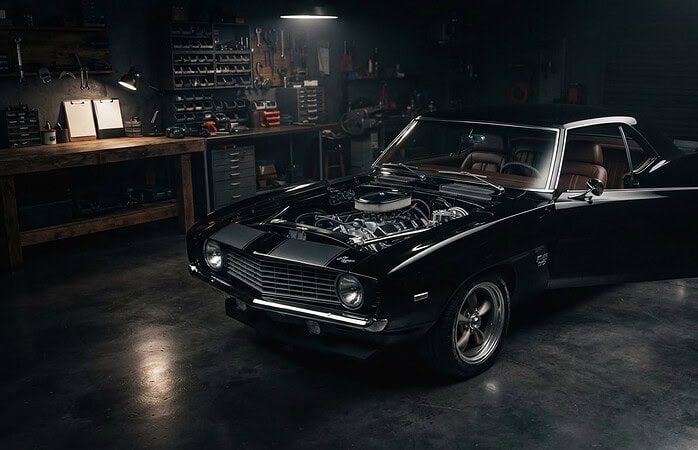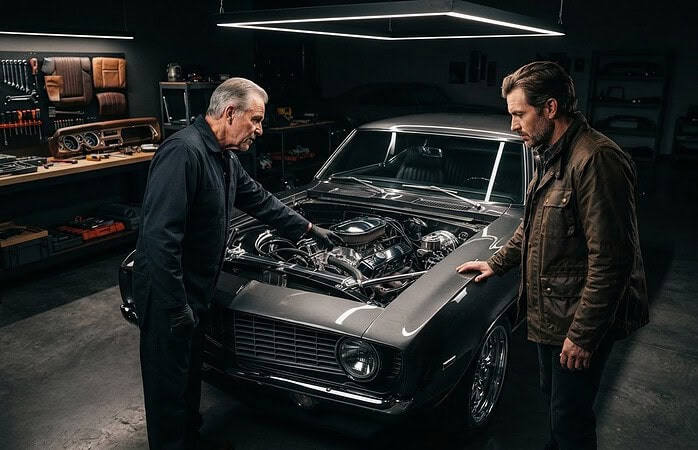

With the global restomod market reaching a staggering 7.9 billion dollars in 2026, the era of the trailer queen is officially over. Today’s elite collectors are trading dusty authenticity for the surgical precision of modern performance. You likely crave the visceral roar of a vintage V8 but dread the mechanical fragility that usually comes with it. It is a common tension for those seeking to merge passion with prudent financial placement. You deserve a vehicle that functions as a piece of bespoke kinetic art while maintaining the rigor of a high-yield alternative asset.
This guide explores why these builds are currently outperforming many traditional luxury investments and details exactly how to value a restomod by analyzing component pedigree and build documentation. Discover the technical benchmarks that separate a hobbyist garage build from an investment-grade masterpiece. We will provide a rigorous framework for identifying vehicles that balance heritage aesthetics with modern reliability, ensuring your next acquisition performs as beautifully on a balance sheet as it does on the open road. From digitally engineered chassis systems to artisanal interior finishes, you will gain the clarity needed to navigate this high-performance market with total confidence.
Key Takeaways
- Understand why the shift toward drivable classics among Gen X and Millennial investors has transformed restomods into premier blue-chip assets.
- Master the specific technical criteria of how to value a restomod by prioritizing component pedigree, donor shell integrity, and exhaustive build documentation.
- Compare the long-term ROI of modern reliability against the mounting maintenance costs and limited utility of traditional museum-grade restorations.
- Learn to identify investment-grade builds through professional inspection protocols that uncover hidden structural issues and amateur wiring shortcuts.
- Discover how to build a diversified automotive portfolio and protect your asset’s value using professional climate-controlled storage solutions.
The Evolution of the Collector Market: Why Restomods are the New Blue-Chip Assets
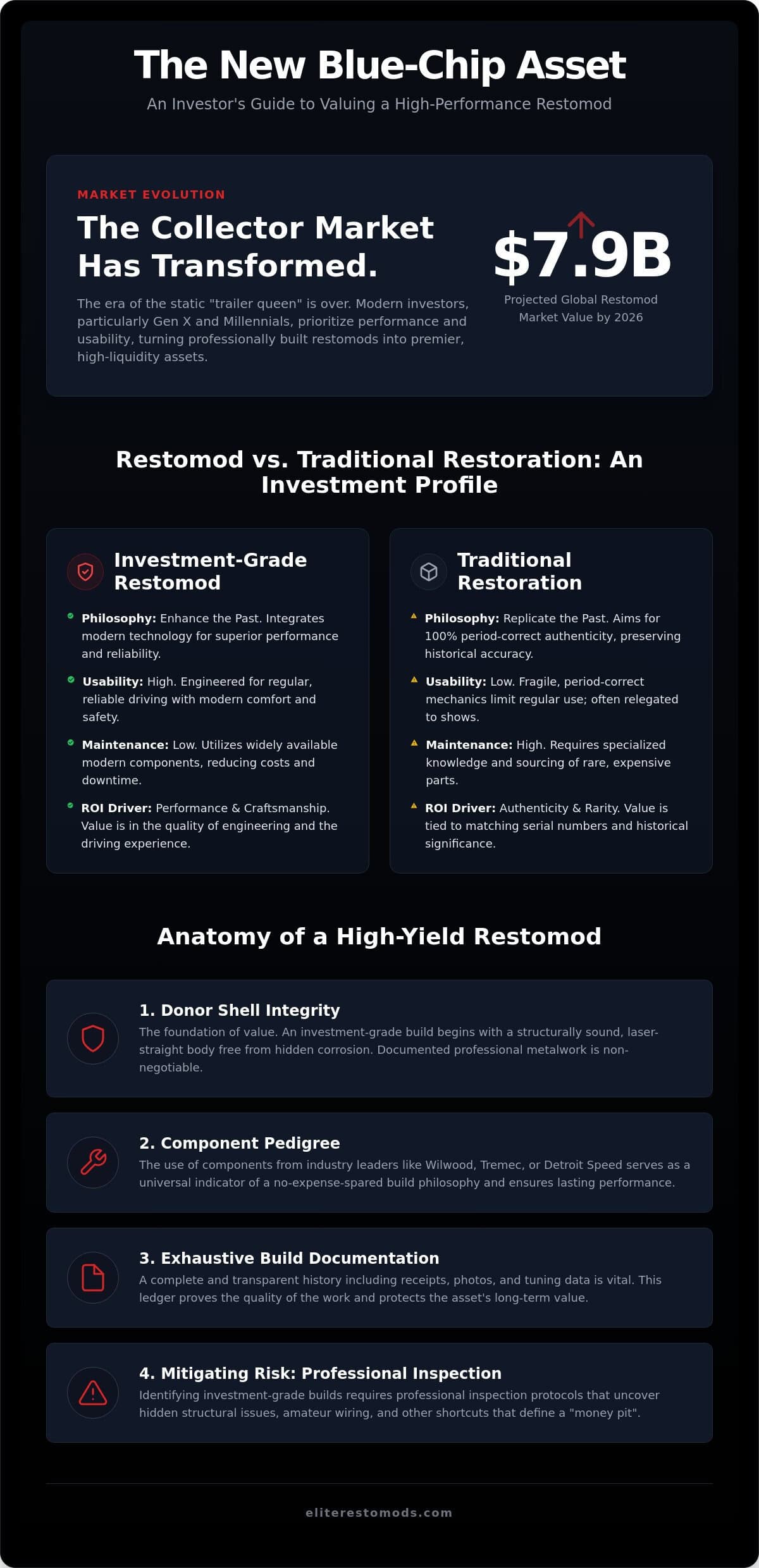
The market for elite collector vehicles has undergone a radical transformation. For decades, the trailer queen dominated the high-end space. These were static relics; they were perfect in their preservation but paralyzed by their own fragility. By 2026, the global classic car restoration and restomod market has surged to a projected 7.9 billion dollars. This growth reflects a fundamental shift in what collectors value. It’s no longer just about the serial number. It’s about the soul of the machine and its ability to perform on demand.
Understanding defining a restomod is essential for any modern investor. Unlike a standard restoration that seeks to replicate the past, a restomod enhances it. This evolution has created a new asset class where visceral nostalgia meets surgical engineering. When considering how to value a restomod, one must look past the chrome and evaluate the integration of 21st-century components. This synergy of heritage and capability is what defines a blue-chip automotive asset in the current era.
To see how these two philosophies compare in terms of market worth, watch this analysis:
The Departure from the Trailer Queen Era
Investors are increasingly prioritizing emotional ROI. A car that sits in a climate-controlled vault provides visual satisfaction, but a vehicle that offers a reliable, high-performance driving experience provides a different level of utility. This usability translates directly into liquidity. A drivable asset attracts a broader audience, including younger Gen X and Millennial buyers who have little interest in the maintenance headaches of 60-year-old technology. They want the silhouette. They demand the speed. They want the aesthetic of a 1969 Mustang with the braking power and cooling efficiency of a modern supercar. When an asset is usable, it stays relevant in a fast-moving marketplace.
Investment Trends for 2026
The 2026 Knight Frank Luxury Investment Index continues to highlight classic cars as a resilient alternative asset. However, the definition of investment-grade has narrowed. Professional builds now command a significant premium because they eliminate the risk of the project car pitfall. In this environment, the phrase fully sorted has become the gold standard for valuation. When determining how to value a restomod, collectors now look for a professional pedigree that mirrors the standards of modern luxury manufacturing. This is why professional build processes that guarantee quality assurance are vital. They represent a marriage of brute force and refined comfort that ensures long-term asset preservation and predictable appreciation.
The Anatomy of a High-Yield Restomod: Identifying Quality Standards
Identifying an investment-grade vehicle requires a shift in perspective. While rarity matters, the true method for how to value a restomod hinges on the caliber of its engineering. The foundation is the donor shell. It must be a structurally sound canvas, free from the hidden rot that plagues amateur projects. A high-yield asset begins with a laser-straight body and a documented history of metalwork. This structural integrity ensures the car can handle the increased torque and stress of a modern high-performance drivetrain without compromising the vehicle’s longevity.
Beyond the shell, name-brand performance components serve as a universal currency. When you analyze how to value a restomod, the presence of hardware from industry leaders like Wilwood, Tremec, or Detroit Speed provides immediate credibility. These parts aren’t just upgrades; they are indicators of a no-expense-spared build philosophy. According to SEMA market research, the professionalization of this sector has led to a standardized expectation for these high-performance systems. This transparency in the build sheet allows investors to verify the asset’s worth through the market value of its constituent parts and the reputation of the manufacturers involved.
Powertrain and Performance Benchmarks
The heart of the build must be contemporary. Modern crate engines, such as the GM LS series or Ford Coyote, offer a level of predictable value that rebuilt vintage blocks cannot match. They provide turn-key reliability, manageable maintenance, and immediate power. Pairing these with modern ECU systems and overdrive transmissions ensures the car is functional for long-distance touring. This mechanical integrity is a cornerstone for those seeking to build a curated automotive portfolio. A six-speed manual or a modern electronic automatic transmission adds significant appeal by making the car usable in modern traffic conditions, which directly bolsters its secondary market liquidity.
Fit, Finish, and Aesthetic Excellence
Visual impact is the first layer of appraisal. A show-quality finish requires hundreds of hours of block sanding and precision paint application. It’s the difference between a driver-level car and an elite asset. Subtle modernizations, like flush-mounted glass or high-output LED lighting, signal a sophisticated design eye. Inside, the transition to luxury is completed through bespoke upholstery and artisanal interiors. Using premium leathers and modern sound-deadening materials transforms a loud, vibrating cabin into a refined cockpit. These bespoke finishes serve as a critical luxury positioning lever. When a buyer sits in a cabin that feels as refined as a modern grand tourer, the perceived value of the entire build scales accordingly. This meticulous focus on every stitch and seam ensures the vehicle functions as a piece of functional art.
Restomod vs. Traditional Restoration: A Financial Comparison in 2026
The capital is moving. While purists still chase numbers-matching authenticity, the modern realist market has surpassed it in terms of sheer demand. In 2026, the financial delta between a museum-grade stock restoration and a high-spec restomod has widened. When you analyze how to value a restomod, the primary driver is no longer just historical rarity but the utility of the asset. A car that requires a specialized mechanic just to start on a cold morning has a much smaller buyer pool than one with turn-key modern fuel injection. This translates directly into resale velocity. High-quality builds move through the market faster because they appeal to a generation of investors who prioritize the driving experience over static display.
Maintenance costs tell a similar story. Vintage technology is a hidden expense. Keeping 60-year-old carburetors and points ignition systems in peak condition requires constant attention and specialized labor. By contrast, a professionally built restomod utilizes modern components designed for longevity and ease of service. This reliability is a form of capital protection. It ensures the vehicle spends more time on the road and less time on a lift, preserving its marketability. For those looking to secure their investment, seeking specialized insurance with an agreed-value policy is non-negotiable. It locks in the appraisal amount, protecting against the depreciation disputes common with standard automotive policies.
Debunking the Depreciation Myth
The old adage that non-original parts hurt value is dead. In 2026, the right modifications actually serve as a valuation multiplier. We see this reflected in the market value of high-end restomods, where builds featuring modern chassis and drivetrains frequently outpace their stock counterparts. For instance, a world-class K5 Blazer restomod fetched $495,000 in early 2026; a figure that would be nearly impossible for a stock restoration to achieve. This is especially true for vehicles with Elite Certified status. This certification acts as a valuation floor, providing a professional seal of approval on the build quality and mechanical integrity. It removes the guesswork from the appraisal process, giving both buyers and sellers a clear benchmark for the asset’s worth.
Targeting the Modern Collector
The new generation of collectors demands performance. They look for Pro-Touring suspension systems that allow a 1960s muscle car to corner like a modern sportscar. They also value safety. Features like integrated roll cages, three-point harnesses, and high-performance disc brakes expand the potential buyer base to include those who wouldn’t risk driving a stock vintage car in modern traffic. Understanding how to value a restomod involves recognizing these safety and performance benchmarks as essential value-adds. If you are ready to enter this market, exploring Classic Car Restomods for Sale is the first step toward acquiring a vehicle that balances nostalgic soul with 21st-century capability. This shift toward performance-minded investing ensures your asset remains desirable as driving standards continue to evolve.
Mitigating Risk: Avoiding the Automotive Money Pit
The classic car world is littered with cautionary tales of the money pit. Most of these horror stories originate from amateur garage builds that prioritize aesthetic flash over mechanical depth. To master how to value a restomod, you must look beneath the surface. Documentation is your primary shield against depreciation. A comprehensive build book containing wiring schematics, component specifications, and a detailed photo history of the metalwork transforms a vehicle from a mechanical mystery into a verifiable asset. Without this paper trail, even the most beautiful car is a financial liability.
Professional inspection is the only way to confirm structural and electrical integrity. Amateur builds often hide poor weld quality or tangled wiring harnesses behind expensive carpet and fresh paint. These hidden flaws don’t just affect safety; they destroy market value. Buying a fully sorted vehicle is almost always more cost-effective than commissioning a build from scratch. When you purchase a completed masterpiece, you bypass the unpredictable delays and cost overruns that often erode the ROI of a custom project. This allows you to deploy capital into an asset that is ready for immediate enjoyment and appreciation.
Strategic investors also utilize specialized classic car financing to maintain liquidity. In mid-2026, interest rates for these alternative assets have remained competitive, with some institutions offering rates as low as 3.99% APR for qualified collectors. Leveraging these financial tools allows you to build a diversified collection without tying up all your liquid capital in a single vehicle. This sophisticated approach to acquisition ensures your automotive portfolio remains agile and well-structured.
The Value of Elite Certification
A rigorous quality assurance process is what separates a hobbyist project from a blue-chip asset. Elite certification involves a multi-point inspection that covers everything from torque specifications to electronic fuel mapping. This level of scrutiny ensures that the vehicle performs with the reliability of a modern luxury car. By following Our Process, you ensure that every mechanical intricacy has been vetted by master builders. This documented history protects your investment during resale, providing the next owner with the confidence that the vehicle is truly investment-grade.
Strategic Sourcing and Consignment
Finding the right donor vehicle or a high-potential build requires an expert eye. Utilizing a Classic Car Sourcing Service allows you to tap into a curated network of vehicles that have already been screened for structural integrity. This proactive approach prevents you from starting with a compromised foundation. When it comes time to exit your position, professional consignment services ensure your vehicle is marketed to an exclusive audience of serious collectors. This lifecycle management is essential for maximizing your long-term returns. If you are ready to secure a vehicle that meets these elite standards, explore our current investment-grade services today.
Executing Your Investment Strategy with Elite Restomods
Executing an investment strategy in the high-performance classic market requires a transition from enthusiast to world-class curator. It is not enough to simply acquire a vehicle; you must manage it as a tangible asset. Building a diversified portfolio often involves balancing the raw power of 1960s muscle cars with the growing demand for vintage 4x4s like the Ford Bronco or Chevrolet K5 Blazer. This approach spreads risk across different collector demographics and use cases. As you master how to value a restomod, you will recognize that the most successful investors are those who treat their garage as a gallery of high-yield alternative assets.
Professional services are the backbone of a successful automotive investment. From professional vehicle sourcing to enclosed transport, every step of the lifecycle must be handled with precision. Leveraging an expert consignment program ensures that when you are ready to rotate your collection, your asset is presented to a global audience of high-net-worth individuals. This level of professional management simplifies the ownership experience, allowing you to focus on the visceral joy of the drive while experts handle the technical intricacies of asset preservation. Reliability and perfectionism are the hallmarks of this strategy.
Long-Term Asset Preservation
Environmental factors are the silent enemies of automotive value. Humidity, temperature fluctuations, and dust can degrade even the most meticulously built machine over time. For high-value investors, utilizing Climate Controlled Car Storage is a non-negotiable requirement. A secure, stable environment prevents the oxidation of metal components and the drying of artisanal leather interiors. Regular professional maintenance also plays a critical role. A car that is consistently exercised and serviced by master technicians will always command a premium at resale. It provides a documented record of care that reinforces the vehicle’s Elite Certified status and long-term asset value.
Your Next Steps in Automotive Investing
The journey toward a high-performance reality begins with a single strategic decision. You need a partner who understands both the soul of a vintage icon and the science of modern engineering. By consulting with experts who live at the intersection of brute force and refined comfort, you can ensure your next acquisition is truly investment-grade. This is the bridge between a long-held dream and a tangible, high-performance reality. Whether you are looking to acquire a vehicle from our current Elite Certified inventory or wish to commission a Custom Build Service tailored to your specific vision, the time to act is now. Secure your place in the next era of automotive history and experience the ultimate marriage of heritage and performance.
The Future of Functional Art: Securing Your Automotive Legacy
The era of the static museum piece has passed. In 2026, the most resilient automotive investments are those that balance iconic 1960s aesthetics with the surgical precision of 21st-century engineering. You now possess the framework for how to value a restomod by focusing on mechanical pedigree, donor integrity, and the exclusivity of Elite Certified standards. These builds represent more than just transportation; they are bespoke pieces of functional art that offer both visceral excitement and long-term financial stability.
Success in this market requires a partner who shares your obsession with perfection. Our Elite Certified Restomods are fully sorted for immediate reliability, ensuring you spend your time on the open road rather than in the shop. By leveraging specialized classic car financing and our professional consignment services, you can build and rotate a high-performance portfolio with total confidence. Your legacy deserves a vehicle that performs as beautifully on a balance sheet as it does at full throttle.
Secure your next investment-grade asset in our current inventory and transform your long-held dream into a high-performance reality. The road ahead has never looked more promising.
Frequently Asked Questions
Are restomod cars a good investment compared to the stock market?
Restomod cars offer a tangible alternative to traditional equities by providing both emotional ROI and physical utility. While the stock market fluctuates with economic cycles, high-end restomods often maintain value due to their scarcity and engineering quality. In 2026, the global classic car restoration market reached 7.9 billion dollars, signaling strong institutional and private interest. This asset class allows you to enjoy a functional piece of art while diversifying your portfolio with a resilient physical asset.
What is the most important factor in a restomod’s resale value?
The caliber of the build process and the pedigree of the components are the primary drivers of value. When analyzing how to value a restomod, buyers prioritize documented metalwork and name-brand hardware from leaders like Wilwood or Tremec. A vehicle with Elite Certified status provides the necessary quality assurance that justifies a premium price. Documentation of the transformation ensures that the asset is verifiable and transparent for future investors who value professional oversight and mechanical excellence.
How do I know if a restomod build is professional or amateur?
Professional builds are distinguished by their surgical attention to detail in areas often ignored by hobbyists, such as wiring loom integration and structural reinforcement. You should look for a comprehensive build book and a clear pedigree of professional oversight. Amateur projects frequently hide flaws behind fresh paint; by contrast, an investment-grade vehicle will have a clean, engineered finish in the engine bay and undercarriage. Certification from a master builder is a definitive marker of professional excellence and reliability.
Do restomods appreciate as fast as original numbers-matching cars?
In the current 2026 market, high-spec restomods are frequently outpacing traditional numbers-matching cars in terms of appreciation and resale velocity. Modern collectors prioritize usability and performance over static preservation. A world-class K5 Blazer restomod recently sold for 495,000 dollars, a figure that highlights the massive demand for icons with modern hearts. While original cars remain stable, the growth in the restomod sector reflects a fundamental shift in buyer demographics toward drivable, high-performance assets.
What are the maintenance requirements for a high-performance restomod?
Maintenance for a professionally built restomod is significantly less intensive than for a stock vintage car. Because these vehicles utilize modern crate engines and electronic fuel injection, they require standard service intervals similar to a contemporary luxury vehicle. You will need to monitor fluids and perform regular inspections of the high-performance suspension and braking systems. This operational reliability is a key part of the value proposition for the modern strategic investor who demands a turn-key experience.
Can I finance a restomod car investment like a traditional vehicle?
You can access specialized classic car financing that is specifically structured for high-value alternative assets. As of July 2026, interest rates for these loans can be as low as 3.99 percent APR for qualified collectors. These financial products allow you to maintain liquid capital while acquiring a blue-chip asset. Professional dealerships often facilitate these arrangements to ensure a seamless acquisition process for their clients, treating the vehicle as the sophisticated financial instrument it truly is.
What are the most desirable classic car models for a restomod build in 2026?
Muscle cars continue to lead the market with a 31.4 percent share, but vintage 4x4s like the Ford Bronco and Chevrolet K5 Blazer are seeing a massive surge in demand. Additionally, the definition of classic is expanding to include 1980s and 1990s icons like the Porsche 964 and early BMW M3s. These models provide the perfect canvas for modern performance upgrades, making them highly sought after by Gen X and Millennial investors seeking nostalgic soul and power.
How does climate-controlled storage affect my car’s investment value?
Climate-controlled storage is essential for preventing the environmental degradation that erodes an asset’s long-term value. By maintaining a stable temperature and humidity level, you protect the artisanal interior finishes and prevent oxidation on the chassis. This level of care is a critical factor when determining how to value a restomod during a sale. A vehicle that has been professionally stored signals to buyers that the asset has been preserved with perfectionist standards, ensuring its long-term reliability and beauty.