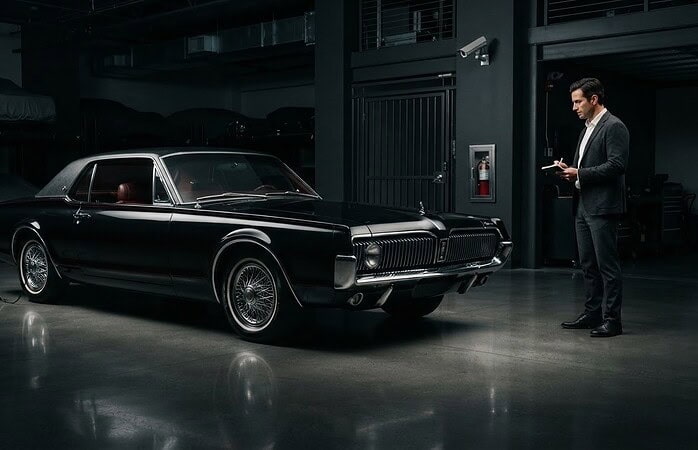

The most dangerous place for a high-performance investment isn’t the open road; it’s the neglected corner of a standard home garage. You’ve spent years curating a collection that represents the pinnacle of automotive history and modern engineering. You understand that these machines are living, breathing pieces of functional art. Yet, even in a secured space, the simple act of standing still triggers a slow, invisible decay. Stagnant oil invites internal engine corrosion, while modern ethanol-blended fuels begin to varnish the very systems designed for peak performance. Understanding the benefits of professional car storage is the difference between owning a museum piece and maintaining a high-performance reality.
We’ve mastered the delicate balance of preserving heritage through rigorous modern protocols. This guide explores how professional oversight shields your vehicle from the silent threats of humidity, pests, and mechanical entropy. You’ll discover the technical precision required to keep bespoke leather supple and engines ready to roar at a moment’s notice. From climate-controlled environments to meticulous battery tending, we’ll outline the essential strategies that ensure your investment remains in showroom condition. It’s time to treat your vehicle with the same level of craftsmanship that went into its creation and prepare it for the drive ahead.
Key Takeaways
- Identify the thirty-day threshold where inactivity transitions from a pause to a period of mechanical and chemical degradation for high-performance internals.
- Explore the technical benefits of professional car storage, including elite fuel stabilization strategies and the application of high-grade synthetic lubricants for long-term protection.
- Master the environmental requirements of investment-grade preservation by maintaining forty to fifty percent relative humidity to prevent material expansion and contraction.
- Protect bespoke leather and artisanal finishes through professional-grade surface treatments and climate-controlled infrastructure that residential garages cannot replicate.
- Transition from passive storage to active preservation with recurring maintenance checks, battery tending, and tire rotation protocols that ensure immediate driving readiness.
The Invisible Toll of Vehicle Dormancy and Inactivity
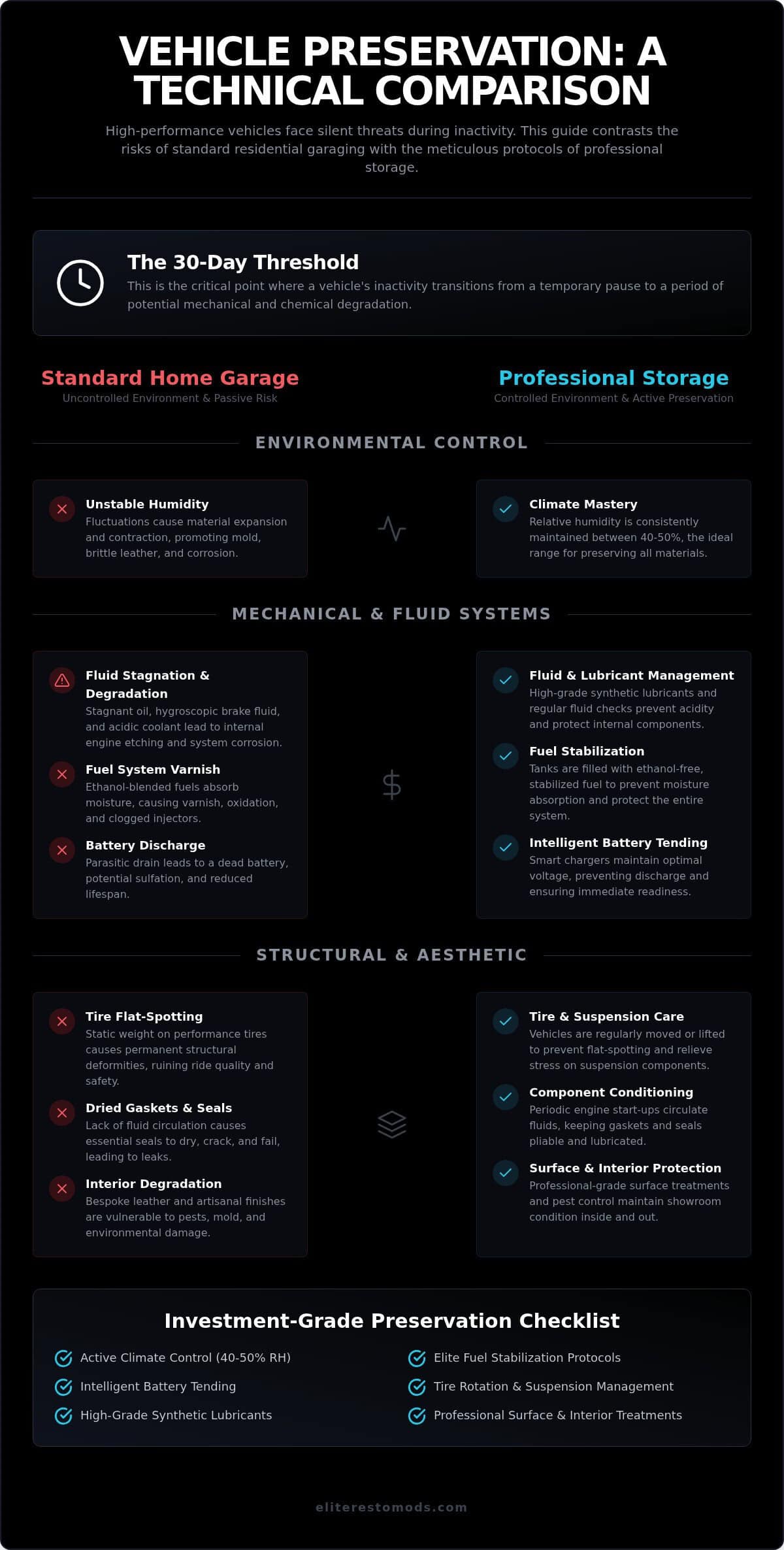
For the discerning collector, time is a silent adversary. While a weekend drive provides the visceral thrill of mechanical harmony, thirty days of inactivity marks the threshold where a vehicle transitions from operational status to long-term storage. This isn’t just a calendar milestone. It’s the critical point where chemical and physical entropy begins to compromise the integrity of your investment. Viewing a high-performance machine as a curated asset rather than a mere utility requires a commitment to vehicle preservation principles that go far beyond a simple dust cover. One of the primary benefits of professional car storage is the active mitigation of these invisible stressors that a standard residential garage simply cannot manage.
The transition from a machine to a masterpiece involves a psychological shift. You aren’t just storing a car; you’re protecting a legacy. Modern environmental stressors, from fluctuating ambient temperatures to microscopic pollutants, act as catalysts for degradation. Without professional oversight, a vehicle’s soul, its mechanical precision and aesthetic perfection, begins to erode under the weight of its own stillness. Our meticulous preservation process ensures that your asset remains in peak condition, ready for the moment you decide to return to the asphalt.
The Chemistry of Fluid Stagnation
Engine oil is designed to lubricate moving parts under heat, but when stagnant, it becomes a reservoir for moisture. Condensation builds within the crankcase, creating an acidic environment that leads to internal etching on polished metal surfaces. Brake fluid is equally vulnerable due to its hygroscopic nature. It actively pulls water from the atmosphere, which lowers the fluid’s boiling point and invites internal corrosion within the hydraulic lines. Even the cooling system faces threats; over time, coolant can become acidic, leading to the catastrophic failure of the radiator and heater core as they are eaten away from the inside out.
Structural and Aesthetic Decay
Physical degradation extends well beyond the engine block. High-performance rubber compounds are engineered for the heat cycles of the road, not for supporting two tons of static weight. This leads to flat-spotting, a structural deformity that can permanently ruin a premium set of tires. Gaskets and seals require regular lubrication to remain pliable and effective. Without the movement of fluids, they dry out, crack, and eventually fail, leading to leaks that compromise the vehicle’s integrity. Finally, we must consider the cabin. Artisanal leather and bespoke interior finishes are incredibly sensitive to humidity. Professional storage ensures these materials don’t become brittle or fall prey to the mold and pests that often haunt unmonitored spaces.
Mechanical Preservation Protocols for Investment-Grade Cars
Preserving an investment-grade vehicle requires a shift from passive parking to active mechanical guardianship. While basic oil changes might suffice for a standard daily driver, high-performance restomods demand a higher tier of technical vigilance. One of the key benefits of professional car storage is the implementation of rigorous protocols that ensure modern LS-swaps and bespoke builds remain in peak operational health. The engine’s heart requires more than just a rest; it needs a controlled environment. Implementing a comprehensive fluid service using high-grade synthetic lubricants and fresh filters ensures that when the ignition eventually turns, the internal components are shielded by a protective film that hasn’t succumbed to chemical acidity.
Fuel System Stabilization and Protection
Modern ethanol-blended fuels are a restomod’s worst enemy during dormancy. Ethanol is hygroscopic, meaning it pulls moisture from the air, which leads to fuel system varnish and internal tank oxidation. Professional facilities utilize ethanol-free gasoline and high-grade stabilizers to neutralize these threats. Filling the tank to capacity minimizes the air volume where condensation can form. It’s also essential to run the engine long enough for the treated fuel to circulate through the injectors and fuel rails. This ensures that every component, from the pump to the nozzle, is bathed in stabilized fuel rather than raw, evaporating gasoline.
Electrical System Maintenance
Modern builds feature complex Electronic Control Units (ECUs) and bespoke wiring harnesses. Simple battery disconnects can cause memory loss in these systems or trigger frustrating fault codes. Precision battery tenders are far superior, providing a consistent, low-amperage charge that preserves the battery’s chemical integrity without overcharging. This meticulous approach to preserving vehicle knowledge and mechanical data is what distinguishes a professional facility from a standard garage. Consistent voltage is the lifeblood of modern electronics, and maintaining it ensures your custom electrical systems remain responsive and reliable.
Moving Component Lubrication
Static vehicles suffer from more than just fluid decay. Door and window seals can bond to frames or become brittle if left unconditioned. Applying silicone-based lubricants to these artisanal finishes prevents adhesion and maintains flexibility. Throttle linkages and exposed suspension joints also require a light coating of protection to prevent surface rust from forming in the still air. Crucially, the parking brake should remain disengaged. Leaving it set for months can cause the pads to seize to the rotors, leading to a damaging breakaway when the car is finally moved. When you explore our professional storage services, you’ll see how these small technical details coalesce to protect your car’s long-term value. One of the primary benefits of professional car storage is this level of granular, expert-led maintenance that keeps your vehicle ready for immediate driving.
Safeguarding Bespoke Interiors and Aesthetic Finishes
A masterfully restored vehicle is more than a mechanical achievement; it is a visual and tactile experience. While the previous sections detailed the internal vigilance required for longevity, the external and cabin surfaces demand an equally rigorous preservation strategy. One of the primary benefits of professional car storage is the transition from standard maintenance to elite surface curation. Protecting custom paint and hand-stitched hides requires a deep understanding of material science. It isn’t enough to simply park and cover. Before a vehicle enters its designated bay, it must undergo a decontamination process that removes the microscopic remnants of the road.
Exterior Surface Preservation Techniques
Organic contaminants are the silent killers of a flawless finish. Leaving bird droppings, insect remains, or road salts on a custom paint job during dormancy leads to permanent etching. Professional protocols involve a meticulous exterior detail that strips away these pollutants as part of our proven preservation process. Beyond the visible bodywork, the undercarriage requires a thorough cleaning to prevent hidden oxidation in the crevices of the frame and suspension. Once pristine, the application of high-end carnauba wax or advanced ceramic coatings provides a sacrificial barrier against the elements. We then utilize breathable, bespoke vehicle covers. These are engineered specifically for indoor use, preventing the accumulation of dust while allowing moisture to escape, which eliminates the risk of micro-scratches caused by abrasive debris trapped against the clear coat.
Curating the Cabin Environment
The interior of an investment-grade vehicle is a sanctuary of artisanal leather and custom fabrics. These materials are exceptionally sensitive to the stagnant air of long-term inactivity. Professional curators focus on removing every trace of organic material from cabin crevices, as even small crumbs can act as attractants for pests. Treating these surfaces with pH-balanced UV blockers ensures that the vibrant colors and supple textures remain unchanged by time. Humidity management is equally critical. We deploy specialized desiccant packs within the cabin to maintain a stable moisture level, preventing the growth of mold or the drying of natural fibers. This level of detail is another reason why collectors prioritize the benefits of professional car storage. Consistent leather conditioning prevents the cracks that often plague unrestored vintage interiors, ensuring the cabin remains as inviting as the day the build was completed.
Environmental Mastery and the Science of Climate Control
Environmental mastery is the bedrock of vehicle preservation. It isn’t just about keeping the car dry; it’s about controlling the molecular environment that surrounds every alloy, gasket, and leather hide. One of the primary benefits of professional car storage is the elimination of the thermal cycles that plague residential garages. While a home space fluctuates with the shifting seasons, a dedicated facility maintains a rigorous stasis. This stability prevents the constant expansion and contraction of metal components, which can lead to stress fractures and fluid leaks over time. We treat the air itself as a tool for preservation.
The Physics of Humidity and Temperature
When temperatures swing, sealed mechanical systems suffer. Rapid cooling causes the air inside engines and gearboxes to contract, drawing in moisture-laden air through breathers and seals. This leads to internal condensation and eventual oxidation. Regulating the atmosphere is one of the most technical benefits of professional car storage. We maintain relative humidity at forty or fifty percent, creating an environment that is dry enough to prevent corrosion but moist enough to keep seals from becoming brittle. For vintage rubber and plastics, a consistent temperature range between sixty-five and seventy degrees Fahrenheit provides the ideal balance to prevent chemical breakdown and material fatigue.
We also address the invisible threat of rising damp. Concrete floors are naturally porous and act as a conduit for ground moisture. Without vapor barriers, this moisture rises and settles on the undercarriage, initiating rust in areas you’ll never see. Our facility combines these environmental controls with a multi-layered security system. High-value asset protection requires more than just a locked door; it demands 24/7 monitoring and restricted access protocols. These layers of defense ensure that your vehicle remains shielded from both environmental entropy and external threats.
Pest Mitigation and Prevention Strategies
Small intruders pose a massive threat to custom builds. Rodents are often attracted to the soy-based insulation found in modern wiring harnesses and the secluded warmth of an engine bay. We implement a physical barrier strategy by sealing exhaust pipes and air intakes with stainless steel wool, which pests cannot chew through. This is paired with non-toxic, botanical deterrents that protect artisanal interiors without leaving a chemical scent. Removing all organic materials from the vehicle’s vicinity is a mandatory protocol. This holistic approach ensures your investment remains as pristine as the day it was delivered. If you’re ready to secure your vehicle’s future, explore our climate-controlled storage solutions to ensure your asset receives the protection it deserves.
Professional Concierge Storage vs Residential Garaging
The debate between residential garaging and concierge facilities often overlooks a fundamental truth. A home garage, regardless of its security, remains an unmonitored environment where entropy works in silence. One of the greatest benefits of professional car storage is the transition from passive ownership to active, expert-led guardianship. While a standard unit offers a roof, a professional facility offers a comprehensive ecosystem designed to maintain the peak performance of your investment. It’s the difference between merely owning a machine and curating a piece of functional art.
The Benefits of Professional Oversight
Professional oversight provides layers of protection that residential spaces cannot replicate. Beyond the obvious 24/7 security and advanced fire suppression systems, the true value lies in the technical vigilance of the staff. We conduct recurring maintenance checks that include professional battery monitoring and fluid level assessments. This systematic approach preserves the resale value of elite restomods by ensuring that every system remains operational. We also perform regular tire rotations to prevent the flat-spotting discussed in earlier sections, ensuring the structural integrity of your high-performance rubber. Maintaining investment-grade documentation within a professional environment provides a verifiable history of care. This provenance is essential when utilizing our consignment program or preparing for a private sale. It positions storage as a strategic component of the broader luxury ownership experience.
Transitioning Back to the Road
Transitioning from the storage bay to the open road should be a seamless experience. We follow a systematic process to prepare your vehicle for its first drive after a period of dormancy. This isn’t just about turning the key. It involves a professional post-storage inspection of critical safety components, specifically the brakes and tires. We check for any signs of hydraulic pressure loss or seal shrinkage that might have occurred despite our best preservation efforts. This level of preparation ensures that your car is ready for immediate, high-performance utilization. Professional assistance simplifies this transition, allowing you to focus on the visceral thrill of the drive rather than the anxiety of mechanical failure. You can see how we integrate these protocols into our wider professional services to provide total peace of mind for every collector. Understanding the benefits of professional car storage means recognizing that the preservation journey only ends when the engine roars back to life on the asphalt.
Securing Your Automotive Legacy
Preserving a high-performance restomod is an act of stewardship that requires constant vigilance. You’ve seen how stagnant fluids, creeping humidity, and environmental stressors can erode the soul of a machine. By choosing a dedicated facility, you leverage the technical benefits of professional car storage to stop chemical and physical entropy in its tracks. It’s about more than simple parking; it’s about maintaining a state of constant mechanical and aesthetic readiness. Your vehicle deserves an environment that matches the craftsmanship of its build.
Our secure, climate-controlled facilities are engineered specifically for investment-grade assets. We provide specialized care tailored for high-performance restomods, including expert maintenance checks and meticulous battery tending. This active preservation ensures your vehicle remains a masterpiece of functional art, ready for the asphalt at a moment’s notice. Don’t let your investment succumb to the quiet decay of a standard garage. Explore our premier vehicle storage and maintenance services to secure your car’s future today. The road is calling; make sure your machine is ready to answer.
Frequently Asked Questions
How often should I start my car while it is in long-term storage?
Ideally, you shouldn’t start your car unless you plan to drive it long enough to reach full operating temperature. Short idles cause moisture to accumulate in the exhaust and oil, leading to internal corrosion. Professional facilities manage this by keeping the vehicle in a state of stasis until it’s time for a full maintenance run. This ensures the engine internals remain protected from the acidic buildup caused by incomplete heat cycles.
Do I need to change the oil before and after storing my vehicle?
You must change the oil before storage to remove contaminants and acids that accumulate during driving. Fresh, synthetic oil provides a neutral pH environment for engine internals. While you don’t necessarily need to change it immediately after storage if the period was under six months, a professional inspection of fluid levels and clarity is essential. This proactive approach ensures your high-performance components are shielded from the microscopic etching caused by stagnant, dirty lubricants.
What is the best way to prevent flat spots on my tires during storage?
Maintaining proper tire pressure and utilizing a professional tire rotation protocol is the most effective strategy. Increasing pressure by approximately 10 to 15 psi above the standard operating level can help, but physically moving the car every thirty days ensures the weight doesn’t settle on a single point. This is one of the key benefits of professional car storage where recurring maintenance checks are a standard part of the service.
Should I keep my car insurance active while the vehicle is stored?
You should maintain a comprehensive storage policy to protect against non-collision risks like fire, theft, or facility damage. While professional facilities provide high-level security and fire suppression, your personal insurance ensures your specific investment-grade asset is covered for its full appraised value. Always consult your provider to adjust your coverage while the vehicle remains off the public road. This maintains your financial protection without the higher premiums associated with regular daily driving and liability.
Is a climate-controlled environment really necessary for a restomod?
A climate-controlled environment is vital for preserving the modern LS-swaps and bespoke electronics found in high-end restomods. Fluctuating temperatures cause condensation within sealed systems, which leads to electrical shorts and internal rust. One of the primary benefits of professional car storage is the regulation of relative humidity to forty or fifty percent. This protects artisanal interiors and keeps gaskets from drying out, ensuring the long-term integrity of your high-performance asset.
How do I protect my custom leather interior from mold during storage?
Preventing mold requires a combination of humidity control and the removal of organic contaminants. You should treat the leather with pH-balanced conditioners and ensure the cabin is free of any debris that could hold moisture. Professional facilities use desiccant packs and maintain strict environmental stasis to ensure your bespoke interior remains supple and odor-free. This prevents the growth of spores that thrive in stagnant, humid air, protecting your artisanal finishes from permanent damage.
What are the risks of using a standard car cover for long-term storage?
Standard covers often trap moisture against the paint or utilize abrasive materials that cause micro-scratches during temperature shifts. If the vehicle isn’t perfectly clean, the cover acts like sandpaper against the clear coat. Professional storage utilizes breathable, bespoke covers designed for indoor environments. These allow air to circulate while providing a soft barrier against dust. This ensures your custom finish remains in showroom condition without the risk of surface marring common with lower-quality, generic alternatives.
Can I store my vehicle with a half-full tank of gasoline?
You should never store a vehicle with a half-full tank because it leaves a large surface area for condensation to form. A full tank of ethanol-free gasoline, treated with a high-quality stabilizer, is the industry standard for preventing internal tank oxidation. This ensures the fuel system remains primed and free of the varnish that results from modern fuel degradation. Maintaining a full tank protects the fuel pump and injectors from the moisture-related failure during dormancy.