
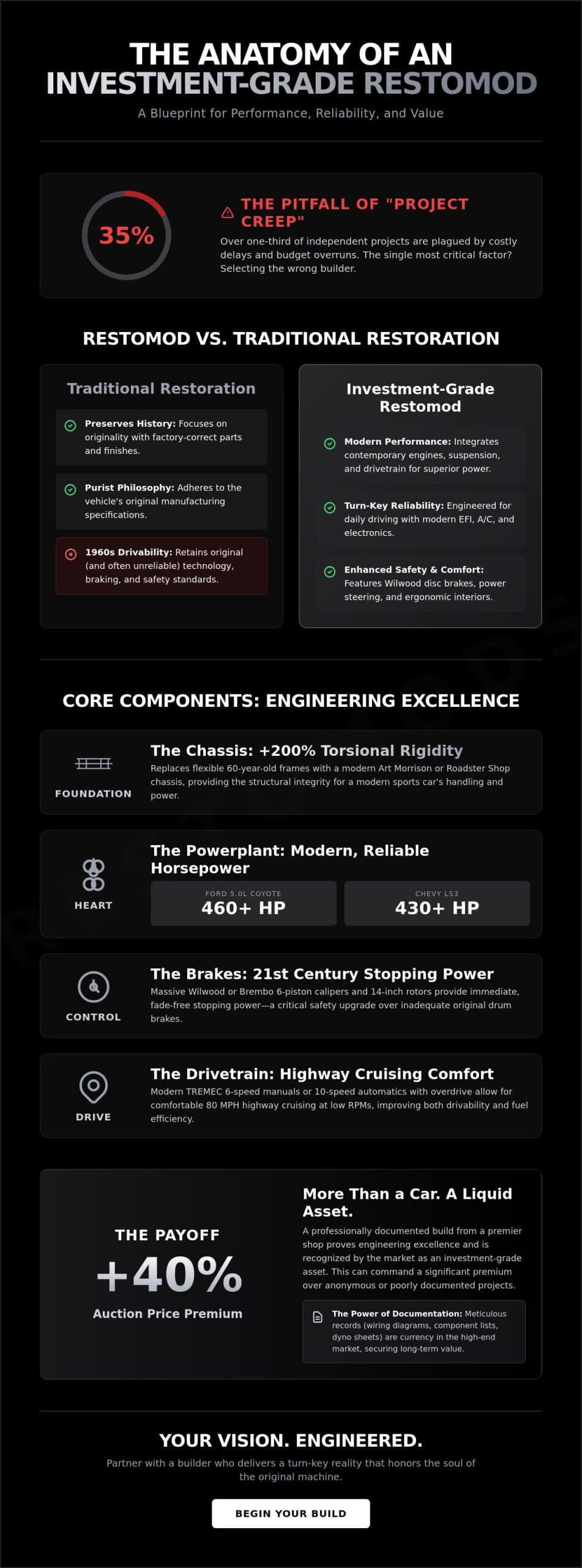
What if the greatest risk to your six-figure automotive dream isn’t the hidden rust in the chassis, but the shop you hire to cut it out? Selecting the wrong custom restomod builder often leads to the “project creep” that plagued over 35 percent of independent restoration projects tracked in 2025. You want the visceral roar of a Coyote engine and the precision of Wilwood brakes, not a three-year sentence in a shop that treats deadlines as suggestions. Iconic style shouldn’t come at the cost of your sanity.
We understand that a true restomod is a bespoke piece of functional art, and you expect the build process to reflect that level of exclusivity. You’re looking for a partner who values meticulous engineering as much as you value the golden age of American muscle. This guide shows you how to identify a premier builder who delivers a daily-driver reliable, investment-grade asset through a transparent, milestone-driven process. We’ll provide a systematic breakdown of how to vet technical expertise, evaluate performance ROI, and secure a turn-key reality that honors the soul of the original machine.
Key Takeaways
- Identify the essential criteria for selecting a premier custom restomod builder capable of merging vintage aesthetics with modern, turn-key reliability.
- Explore the engineering core of a high-performance build, from the structural superiority of specialized chassis to the raw power of contemporary crate engines.
- Learn to apply a “macro lens” to any portfolio to distinguish between a superficial restoration and true investment-grade craftsmanship.
- Gain a step-by-step roadmap of the commissioning process, ensuring your childhood dream is meticulously translated into a functional piece of automotive art.
- Discover the “Fully Sorted” philosophy that ensures your bespoke machine is engineered for the thrill of the drive, not just the silence of a showroom.
What is a Custom Restomod Builder and Why Does the Choice Matter?
Classic soul. Modern adrenaline. That is the essence of the 2026 restomod. It is the marriage of iconic 1960s aesthetics with the relentless performance of the 21st century. A custom restomod builder does not just restore a car; they re-imagine it. While a standard mechanic might focus on basic repairs, a specialized builder executes a total mechanical metamorphosis. They replace temperamental carburetors with fuel-injected LS3 crates. They swap out leaf springs for sophisticated multi-link suspensions. This isn’t just a facelift. It is a ground-up re-engineering of automotive history.
The choice of builder is the most critical decision in your automotive journey. It determines whether your vintage Mustang is a garage queen or a reliable daily driver. You need a partner who understands that turn-key reliability is non-negotiable. Modern drivers demand air conditioning that actually cools and brakes that stop on a dime. A professional custom restomod builder ensures that the vintage chassis can handle the 500-plus horsepower of a Coyote engine without twisting. This level of engineering excellence directly impacts the long-term market value of the vehicle. A documented build from a reputable shop can see a 40 percent premium at auction compared to an anonymous project.
Restomod vs. Traditional Restoration: A Strategic Choice
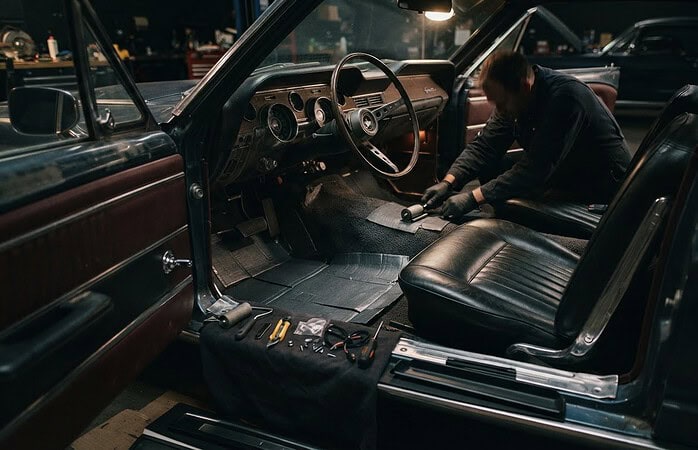
The conservation and restoration of road vehicles traditionally follows a purist philosophy. It prioritizes original parts and factory-correct finishes. While this approach preserves history, it often leaves the driver with 1965 safety standards. Modern drivability is the primary driver for the 2026 collector market. Owners want the roar of a vintage beast without the headache of 60-year-old technology. Restomods solve the inherent safety and comfort issues of original muscle cars by integrating Wilwood disc brakes, power steering, and hand-stitched, ergonomic interiors. It is about enjoying the drive, not just the destination.
The Rise of Investment-Grade Custom Builds
The market has shifted toward high-quality, fully sorted restomods. These are no longer just “modified cars” but are recognized as investment-grade assets. A professional builder ensures the vehicle remains a liquid asset by providing meticulous documentation. This includes every wiring diagram, component list, and dyno sheet. In the current market, transparency is currency. Certification of the build process proves that the car was engineered for performance, not just assembled for looks. This professional pedigree turns a childhood dream into a tangible, high-performance reality that holds its value over time. Before the build even begins, securing the right donor vehicle through a professional classic car sourcing service ensures your project starts with a structurally sound, investment-grade foundation.
The Anatomy of a High-Performance Build: Engineering Excellence
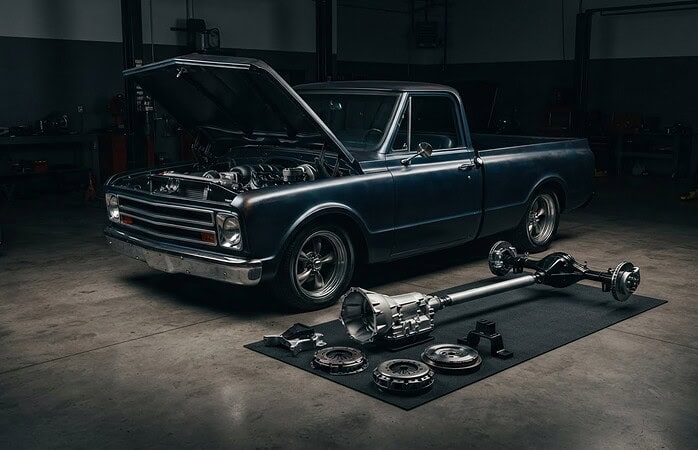
Engineering defines the soul of a modern restomod. It’s the difference between a fragile trailer queen and a cross-country cruiser. A premier custom restomod builder begins with the bones. They replace flexible, 60-year-old factory frames with Art Morrison GT Sport or Roadster Shop Fast Track chassis. These platforms provide 100 percent more torsional rigidity than stock equipment. This structural integrity allows for independent front suspensions and multi-link rears that handle like a 2026 sports car. Classic style. Modern power.
Modern powerplants deliver the visceral thrill owners crave without the vintage headaches. The 430-horsepower LS3 crate engine remains a favorite for its compact footprint and massive aftermarket support. Ford enthusiasts often opt for the 5.0L Coyote swap, bringing a high-revving, 460-horsepower roar to classic Mustangs. To harness this power, builders integrate Wilwood or Brembo braking systems. These setups feature 14-inch rotors and 6-piston calipers to provide immediate, fade-free stopping power that original drum brakes could never achieve. Understanding the full scope of classic car engine swaps is essential before committing to a powerplant strategy for your build.
Drivetrain and Mechanical Sophistication
Modern electronic fuel injection (EFI) systems have revolutionized the driving experience. They provide instant starts in any weather and smooth idling that vintage carburetors lack. High-performance builds often utilize Tremec T56 6-speed manuals or 10R80 10-speed automatics. These overdrive transmissions allow for comfortable 80 mph highway cruising at low RPMs, significantly improving fuel efficiency. A fully sorted drivetrain is a system where every component is synchronized for performance. When you learn how to select a restoration shop, prioritize those who emphasize this mechanical harmony. Achieving that harmony also requires mastering the chassis beneath the drivetrain; a thorough understanding of pro touring suspension upgrades ensures the entire platform is engineered to handle the power being delivered to the wheels.
Aesthetic Mastery: Paint, Body, and Interior
Visual perfection requires hundreds of hours of meticulous labor. Master builders achieve laser-straight bodywork by block-sanding panels until every reflection is undistorted. Modern paint finishes, often involving multiple stages of clear coat, provide a depth of color that was impossible in the 1960s. Inside the cockpit, the focus shifts to ergonomic luxury. Hand-stitched Italian leather covers bespoke seating, while Vintage Air Gen V climate control keeps the cabin ice-cold. Achieving a truly refined driving environment requires mastering the custom classic car interior, where material science and modern comfort converge with vintage soul. To push the envelope, builders now use carbon fiber components to reduce weight by up to 30 percent in hoods and decklids. If you’re ready to start your own journey, you can view our current inventory to see these details in person.
Evaluating Builders: How to Identify Investment-Grade Craftsmanship
Most enthusiasts are familiar with the “10-foot rule,” where a car looks stunning from a distance but reveals its flaws upon closer inspection. An elite custom restomod builder rejects this standard entirely. They operate through a macro lens. This means every fastener is clocked, every seam is sealed, and every panel gap is measured to a tolerance within 3 to 4 millimeters. When you evaluate a builder’s portfolio, look for consistency across multiple projects. A single flawless car might be a fluke; ten cars with identical door-to-fender gaps represent a disciplined process.
Wiring is the nervous system of a restomod. It’s often the first thing to fail in a low-quality build. Professional shops use custom-labeled looms and weather-sealed connectors rather than generic, “universal” kits that lead to electrical gremlins. Transparency in sourcing is equally vital. A premier builder will disclose their use of Tier 1 components from brands like Wilwood, Brembo, or Art Morrison. If a shop is vague about where their chassis or fuel systems originate, they’re likely cutting corners to pad margins. High-performance machinery demands high-performance parts.
Precision is the baseline. Perfection is the goal. This level of detail ensures that the vehicle doesn’t just look like a piece of art; it performs like a modern supercar. Every component must work in harmony. If the suspension isn’t tuned to the specific weight of the LS3 or Coyote engine, the driving experience will suffer. A true master custom restomod builder understands the physics of the machine, not just the aesthetics of the metal.
The Red Flags of Sub-Par Build Shops
Project creep is the most common killer of automotive dreams. If a shop lacks a structured project management system with 30-day milestone updates, the build will likely stall for months or years. Watch for poor mechanical integration. If headers sit too low or the engine bay looks like a chaotic web of hoses, the shop lacks engineering foresight. The most dangerous trap is “lipstick on a pig.” This involves applying high-end PPG paint over poorly patched body panels or hidden rust. Always ask for “metal-work” photos taken before the primer was applied to ensure the foundation is solid. Partnering with a reputable classic car sourcing service before the build begins is the most effective way to avoid inheriting a compromised donor vehicle with hidden structural defects.
The Value of a Certified Build Process
A car isn’t finished just because the engine turns over. It’s finished when it’s fully sorted. An “Elite Certified” build undergoes rigorous testing protocols, including a 500-mile road-test phase to heat-cycle the components and stress-test the cooling system. This prevents the mechanical failures that plague unvetted projects. You can see our classic car restomods for sale to understand the standard of a certified build. These vehicles aren’t just display pieces; they’re high-performance machines built for the open road. Reliability is the ultimate luxury.
The Commissioning Journey: From Concept to Your Driveway
Commissioning a masterpiece is a transformative experience. It’s the bridge between a vintage memory and a high-performance reality. When you partner with a premier custom restomod builder, you aren’t just buying a car; you’re authoring a legacy. The process begins with an initial consultation where we align your childhood dreams with 2026 engineering standards. We discuss how that 1967 fastback can retain its iconic silhouette while utilizing a modern multilink suspension and active aerodynamics.
The design phase is where we select the soul of the machine. You’ll decide between the visceral roar of a 707-horsepower Hellcrate or the refined, high-revving precision of a Gen 3 Coyote engine. We map out the stance, the paint depth, and the wheel offset to ensure the car looks as aggressive as it performs. This isn’t a restoration; it’s a reinvention. Classic style. Modern power.
Fabrication represents the most labor-intensive portion of the journey. Vintage metal is stripped and reinforced with CAD-designed structural braces to handle the torque of modern powerplants. We integrate bespoke components, from Roadster Shop chassis to Wilwood six-piston braking systems. During assembly, our technicians meticulously merge 1960s aesthetics with 2026 electronics, ensuring that digital ECUs and analog gauges work in perfect harmony. Every wire is hidden; every bolt is torqued to racing specifications.
Planning Your Build Scope and Budget
Success requires transparency and realistic expectations. A world-class restomod often requires over 2,500 man-hours of expert labor to achieve a concours-level finish. You should prioritize upgrades that maximize your driving enjoyment, such as climate control systems and modern rack-and-pinion steering. Read our how to plan a restomod build for a deeper dive into the planning phase. High-end builds retain their value best when the “bones” of the car utilize name-brand, industry-standard components.
Communication and Project Milestones
The modern build experience relies on total visibility. We provide weekly high-definition photo and video updates so you can watch your vision take shape from the chassis up. You’ll collaborate directly with our artisans on bespoke interior details, from the grain of the Italian leather to the CNC-machined trim. Crafting a cabin that rivals modern luxury vehicles demands the same expertise as any mechanical upgrade; our approach to the custom classic car interior ensures every stitch, surface, and climate system is engineered to complement the performance beneath the hood. We establish a rigorous timeline that respects the craft. Quality takes time, but professional project management ensures we hit every milestone without unnecessary delays.
Before the keys are handed over, the beast must be tamed. We perform a rigorous 500-mile shakedown and multi-point inspection to ensure turn-key reliability. We test every sensor, seal, and stitch under real-world driving conditions. When the car finally arrives at your driveway, it’s ready for the open road, not just the trailer. It’s a flawless fusion of history and future tech.
Why Elite Restomods is the Premier Partner for Your Custom Build
At Elite Restomods, we don’t build trailer queens. Our “Fully Sorted” philosophy ensures that every vehicle we deliver is engineered for the open road, not just the showroom floor. While many shops focus solely on aesthetics, we prioritize the mechanical harmony required for daily reliability. As a premier custom restomod builder, we subject every project to a rigorous 500-mile break-in period. This process identifies and resolves the minor gremlins that often plague high-performance vintage builds, ensuring your car is ready for a cross-country trek the moment it leaves our shop.
Bespoke engineering is the heartbeat of our facility. We don’t believe in cookie-cutter solutions or one-size-fits-all kits. Every build is a unique reflection of the client’s vision, whether that involves a 1969 Mustang fastback with a 700-horsepower Coyote engine or a 1972 K5 Blazer optimized for modern coastal cruising. Our team integrates advanced chassis systems, Wilwood braking kits, and custom-tuned suspensions to transform heavy vintage steel into agile, responsive machinery. We balance raw power with refined comfort, utilizing hand-stitched leather interiors and modern climate control to elevate the driving experience.
Our expertise spans the full spectrum of American muscle. We understand the specific structural nuances of classic Ford, GM, and Mopar platforms. This deep institutional knowledge allows us to push the boundaries of performance while respecting the iconic silhouettes that define automotive history. We treat every vehicle as a piece of functional art, meticulously crafted to survive the demands of 21st-century traffic.
A Curated Ownership Experience
The relationship with our clients extends far beyond the initial build. We manage the total ownership lifecycle to protect your investment. This includes leveraging our climate controlled car storage to shield your asset from the degrading effects of humidity and temperature swings. Our facility provides a laboratory-grade environment where your vehicle remains in peak condition during the off-season. When you eventually decide to begin a new automotive chapter, our professional classic car consignment services maximize the return on your investment by connecting your car with our global network of qualified collectors. We maintain total transparency throughout this journey, fueled by a shared passion for perfection.
Your Legacy, Engineered
Elite Restomods serves as the definitive bridge between your childhood nostalgia and a high-performance reality. We recognize that a custom restomod builder is ultimately crafting a legacy, not just a car. To ensure that legacy starts on the right note, our national transport network provides white-glove delivery across all 48 contiguous states. Your vehicle arrives in flawless condition, enclosed and protected from road debris. We handle every logistical detail so you can focus on the first turn of the key.
Drive Your Legacy Into 2026
Your journey toward owning a piece of automotive history starts with a single, critical decision. Selecting the right custom restomod builder is the difference between a simple project and a functional masterpiece. We’ve explored the necessity of engineering excellence and the meticulous standards required for investment-grade craftsmanship in the 2026 market. You now understand the roadmap from initial concept to that first, visceral turn of the key. Elite Restomods bridges this gap by combining 1960s soul with modern reliability. Our Elite Certified Quality Assurance Process ensures every component meets a 100 percent performance standard before it leaves our floor. We provide Investment-Grade Documentation for every build to secure your vehicle’s provenance and future value. When your car is ready, our National Enclosed Vehicle Transport provides white-glove delivery across all 50 states. It’s time to transform your vision into a high-performance reality that’s meant to be driven. Classic aesthetics meet turn-key perfection.
Start Your Custom Build Journey with Elite Restomods
The road is calling; make sure you’re behind the wheel of something truly extraordinary.
Frequently Asked Questions
What is the average timeline for a full custom restomod build?
A full custom restomod build typically requires 12 to 24 months from the initial teardown to the final shakedown. This timeframe accounts for the 1,500 to 3,500 man-hours required to achieve a Concours-level finish. Meticulous metalwork and custom fabrication consume 40% of this schedule. We ensure every panel gap meets 3mm tolerances before the first coat of paint hits the steel.
Can I provide my own donor car for a restomod project?
You can absolutely provide your own donor car for a project. Approximately 65% of our clients source their own vintage steel, while others rely on our network to find a rust-free foundation. Our team conducts a 100-point inspection on every incoming vehicle to evaluate structural integrity. Choosing a reputable custom restomod builder ensures your family heirloom receives the modern engineering it deserves.
Are restomod cars more reliable than original classic cars?
Restomod cars offer vastly superior reliability compared to original classics. By replacing 1960s points ignition with modern ECUs and swapping leaking carburetors for fuel injection, we eliminate the common failure points of vintage machinery. Data from the 2025 SEMA Show indicates that modern drivetrain conversions increase vehicle uptime by over 80%. You get the soul of a classic with the turn-key confidence of a 2026 luxury vehicle.
What are the most popular engine swaps for a custom restomod?
The GM LS3 crate engine and the Ford 5.0L Coyote remain the most requested powerplants in the industry. These engines dominate 75% of the high-end market because they offer a perfect balance of 430 to 500 horsepower and daily-driver dependability. We’ve also seen a 15% increase in requests for the LT4 supercharged V8. Every swap includes modern cooling systems and bespoke wiring harnesses to handle the increased thermal loads. Our comprehensive guide to iconic classic car engine swaps covers each of these powerplant options in greater detail to help you make the right choice for your build.
How do I ensure my restomod build will hold its investment value?
You protect your investment by prioritizing a documented build process and using premium components like Wilwood brakes or Art Morrison chassis. High-quality builds often retain 90% or more of their value at premier auctions like Barrett-Jackson. A professional custom restomod builder provides a digital portfolio of the entire transformation. This transparency proves the quality of the hidden craftsmanship, ensuring the vehicle’s provenance for future collectors. When the time comes to sell, working with specialized classic car consignment services ensures your investment-grade build reaches qualified buyers who understand and appreciate the full value of a professionally documented restomod.
Do you offer financing for custom restomod commissions?
We partner with specialized automotive lenders like Woodside Credit or J.J. Best Banc & Co. to offer tailored financing solutions. These institutions recognize the appraised value of high-end builds, often providing terms up to 144 months. This allows you to preserve your capital while commissioning a bespoke masterpiece. Most clients opt for a structured payment plan that aligns with the major milestones of the construction phases. For a comprehensive overview of your funding options, our guide to classic car financing for investment-grade restomods details how to secure low-interest, long-term funding that respects the value of an Elite Certified build.
What is the difference between a restomod and a pro-touring build?
A restomod focuses on blending classic aesthetics with modern comfort, while a pro-touring build is specifically engineered for track-level performance. Pro-touring vehicles emphasize 1.0g lateral acceleration and aggressive suspension geometry. Restomods prioritize the driving experience on public roads. Both styles utilize modern power, but the pro-touring route often sacrifices interior quietness for weight reduction and stiff competition chassis. Our detailed guide to pro touring suspension upgrades explores the specific chassis geometry and coilover systems that define this performance-focused discipline.
How do I choose between an LS3 and a Coyote engine for my build?
Choose the LS3 for its compact pushrod design that fits into tight engine bays or the Coyote for its advanced 32-valve overhead cam technology. The LS3 offers a smaller physical footprint, making it the standard for 90% of custom chassis swaps. The Coyote provides a 7,000 RPM redline and a distinct mechanical roar. Your choice often depends on the specific dimensions of your engine bay and your brand loyalty to GM or Ford.