
What if the price on an EFI kit tells you less about a classic car EFI conversion cost than the work needed to fit it to the car? A throttle-body system may look straightforward in a product listing, but the complete project can involve changes to fuel delivery, wiring, installation, and tuning for the engine and its modifications. The details determine the scope.
It’s reasonable to want a clear figure before committing, especially when an online kit listing can make conversion look like a simple parts purchase. A useful estimate starts with the whole vehicle: its engine, existing fuel setup, electrical condition, chosen EFI approach, and the integration work required. This guide explains the main cost factors, compares throttle-body and port-injection systems by fit and complexity, and shows what to document before planning a custom build. The aim is to help you define the work clearly, not suggest a one-size-fits-all price.
Key Takeaways
- Assess the classic car EFI conversion cost as a complete project, not just the advertised price of a kit.
- Account for fuel delivery, electronic controls, wiring, sensors, calibration, and the labor needed to integrate them.
- Compare throttle-body and port-injection systems by engine configuration, installation scope, and intended use.
- Document your engine setup, current fuel system, electrical condition, and driving goals before choosing hardware.
- Plan around the whole vehicle: Elite Restomods’ AIM Quality Assurance Methodology includes inspection of fuel and electrical systems.
Classic Car EFI Conversion Cost: Why the Kit Price Is Only One Part
A classic engine can retain its character while using electronic fuel delivery. But the kit price alone won’t show what it takes to integrate that system into a particular car. The classic car EFI conversion cost depends on more than the parts in the box. Vehicle preparation, installation, and the work required to make the components function as a coordinated system all shape the project.
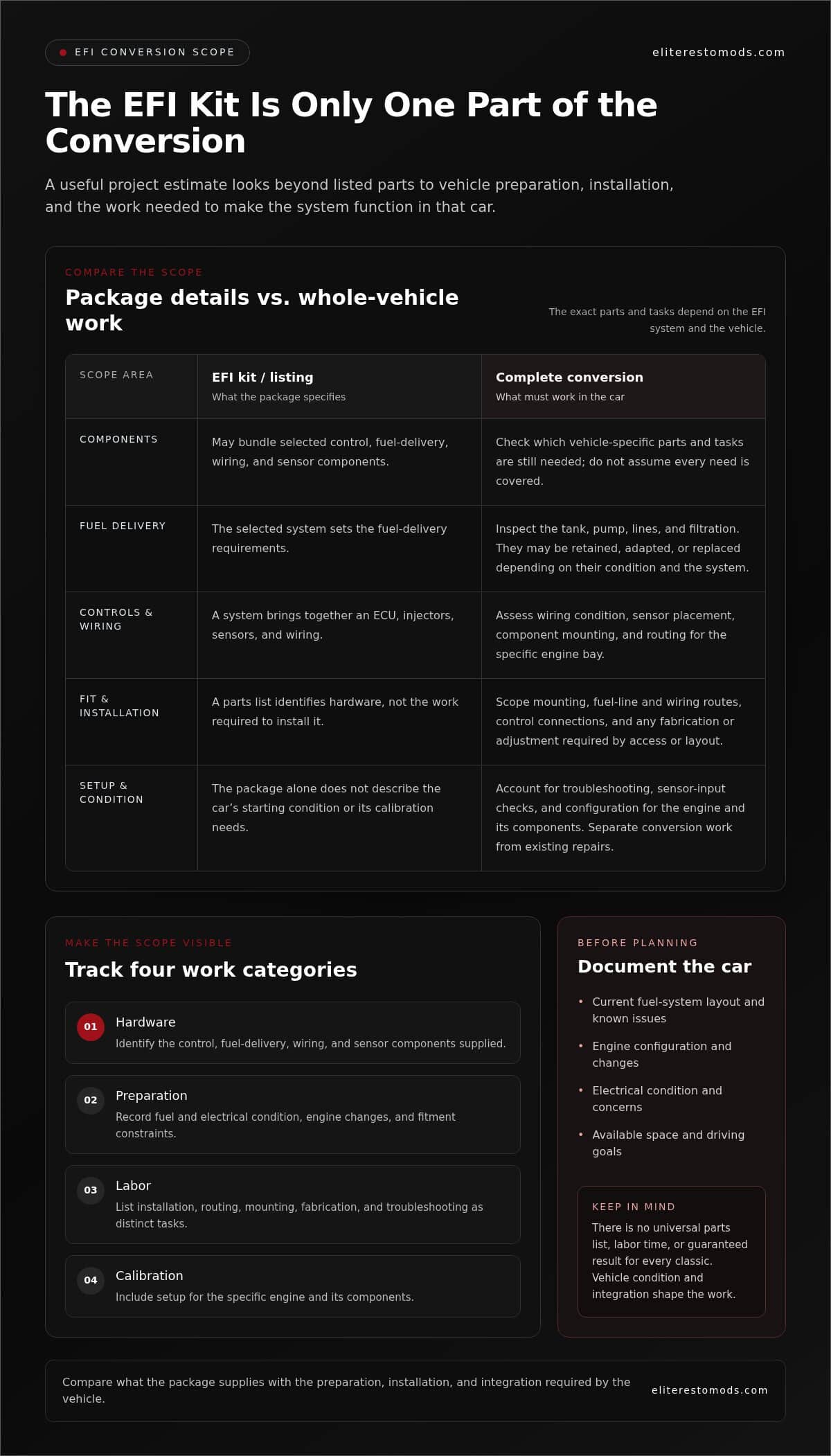
An advertised kit may bundle selected components without covering every part or task the vehicle needs. A car with a compatible fuel system and sound wiring presents a different scope from one that needs fuel-system repairs or electrical work. The EFI architecture matters, too, because each system has its own layout, fitment requirements, and installation tasks.
For a visual example of an EFI project in a classic, watch this video:
What does an EFI conversion typically involve?
An EFI setup brings together an electronic control unit (ECU), fuel injectors, sensors, wiring, and fuel-delivery components. The ECU uses sensor input to manage fuel delivery, while the fuel system must supply fuel in a way that suits the chosen setup. The Fuel injection systems overview explains the difference between approaches such as throttle-body and multi-point injection. Exact components and installation needs depend on the system and vehicle, so there is no universal parts list for every classic.
Why does a classic car’s starting condition matter?
The vehicle’s condition determines what may need attention before installation. The fuel tank, lines, and pump may be suitable for reuse, or they may need work to support the selected EFI system. Wiring condition, engine configuration, and available space can also affect routing, component mounting, and setup. Inspecting these details early helps distinguish conversion work from repairs that the car needs regardless of EFI.
An EFI kit is a set of specified components. A complete conversion also includes the vehicle preparation, installation, and integration needed to make the system work in that car. Use that distinction when comparing proposals or planning a custom build: list what the package supplies, then identify vehicle-specific parts and labor separately.
- Record the current fuel-system layout and any known condition issues.
- Document engine changes, electrical concerns, and space constraints that could affect compatibility or setup.
- Separate confirmed requirements from questions that need a vehicle-specific assessment.
Which EFI Conversion Components and Labor Shape the Project Scope?
Once you understand the vehicle and system approach, account for the work that connects the components. A parts list describes hardware. A project scope also covers access, fitment, installation, troubleshooting, and setup. Two cars using similar EFI systems can require different work because their fuel systems, wiring, engine configurations, or available installation space differ.
Fuel delivery, wiring, and control components
EFI relies on coordinated fuel delivery and electronic control. The pump must supply fuel in a manner suited to the selected system, and the lines and filtration are part of that delivery path. Depending on the vehicle and system, the tank, pump, lines, and filter may be retained, adapted, or replaced. Check the package contents item by item rather than assuming a kit covers every vehicle-specific need.
The ECU interprets information from sensors and manages injector operation. Wiring connects those components and carries their signals and power. Aging or altered wiring may need inspection and careful routing, while sensor placement and component mounting must suit the engine bay. Match these requirements to the specific system and car instead of treating them as a universal checklist.
Installation, calibration, and vehicle integration
Hardware selection is only one part of the work. Installation may involve mounting components, routing fuel lines and wiring, connecting controls, and resolving fitment around existing vehicle systems. Tight access or a layout that differs from the EFI system’s intended arrangement can call for fabrication or adjustment. Diagnosing and correcting fuel or electrical issues discovered during installation can also expand the scope beyond assembly.
Setup and calibration matter because the system must be configured for the engine and its components. The work may include checking connections, reviewing sensor inputs, and addressing issues that appear as the system is brought into operation. The amount of setup depends on the combination being installed. There is no universal labor time or guaranteed result for every classic.
Vehicle condition and integration are major variables in EFI project scope. The same system can call for different preparation and labor in different cars. To make planning more precise, separate the work into clear categories:
- Hardware: Identify which control, fuel-delivery, wiring, and sensor components the chosen system supplies.
- Preparation: Record existing fuel and electrical conditions, plus known engine changes or fitment constraints.
- Labor: Account for installation, routing, mounting, fabrication, troubleshooting, and calibration as distinct tasks.
This breakdown shows what a component package covers and where vehicle-specific work begins. For a broader view of how a tailored restomod project is developed around the vehicle as a whole, explore the custom build process.
Throttle-Body or Port-Injection EFI: Compare Scope Before Cost
Choosing an EFI architecture is a practical fit decision, not a contest with one universal winner. Throttle-body injection and port injection deliver fuel in different parts of the intake system. That affects component layout and can change the installation work. Start your comparison with the engine in the car, the space available, and how you intend to drive it.
How do throttle-body and port-injection systems differ?
A throttle-body system delivers fuel from a central assembly mounted at the intake, in a position that can resemble a carburetor. Port injection places injectors at the individual intake ports. The difference affects the components around the intake and the way fuel is delivered. The package varies by system and application, so architecture alone does not establish fit or total scope.
Which project factors should guide the comparison?
Start with the engine configuration and intake already in the car. Then consider available space, wiring routes, fuel-system condition, and intended use, whether the priority is regular street driving or a more extensively modified combination. A kit’s headline contents won’t identify every adaptation or installation task. Compare the complete system with the vehicle-specific work required to integrate it.
| Architecture | Potential scope considerations | Questions to resolve |
|---|---|---|
| Throttle-body injection | Central assembly at the intake; assess intake fit, fuel supply, wiring routes, and access for installation. | Does the selected unit suit the engine and intake? What fuel-delivery and wiring parts are supplied, and what may need adaptation? |
| Port injection | Injectors at intake ports; assess intake arrangement, injector and fuel-rail fit, wiring, and available engine-bay space. | Does the system match the engine and intake layout? What components or installation work are needed to accommodate it? |
Use the table to make a like-for-like comparison. For each approach, separate system hardware from vehicle preparation, installation, and setup. For example, the engine’s existing intake and available mounting space may suit one layout but require adaptation with another. Resolve that fitment question for the actual vehicle rather than assuming one architecture always takes less work.
Intended use also guides the decision. An engine that remains close to its original configuration may present different system requirements from one with substantial modifications. Neither layout guarantees fuel savings, added power, or improved drivability by itself. Outcomes depend on the complete combination and its setup.
The classic car EFI conversion cost is useful to compare only when it includes the parts, fitment needs, and integration labor for the specific car. Compare what each system requires, not just the labels on the boxes.
How to Plan a Classic Car EFI Conversion Without Guesswork
A useful plan begins with the car, not a kit catalog. Clear records help separate known requirements from assumptions, making it easier to compare system options and understand what could shape the classic car EFI conversion cost. They also give a custom-build discussion a practical starting point: the vehicle’s current configuration, your goals, and the work that matters most.
What information should owners gather first?
Build a short vehicle profile before selecting hardware. Record what you know and mark anything uncertain rather than guessing at a cause. Include a brief description of how you use the car, whether for occasional cruising, regular driving, or a broader restomod project.
- Identify the vehicle: Record its make, model, year, and engine configuration, including known engine modifications.
- Describe the current fuel system: Note the existing setup and any known history or condition concerns.
- Document fuel and electrical condition: List visible issues, past repairs, or symptoms without assuming what caused them. Photos and notes can help capture details for later discussion.
- Define intended use: Explain how you drive the car and what you want the conversion to accomplish. Keep goals specific, such as modernizing fuel delivery, without assuming a particular result.
How can a project brief clarify the scope?
Turn those records into a brief that separates the system choice from supporting work. Avoid treating every possible upgrade as essential. A priority list keeps the plan focused on what the vehicle needs and what you would like to add if the wider build calls for it.
- Core system: Describe the EFI approach under consideration and the components expected to be part of it.
- Supporting work: List fuel-system, wiring, or fitment items that may need attention, separating confirmed needs from open questions.
- Installation and integration: Identify the work involved in fitting components and connecting them to the vehicle.
- Priorities: Mark each item as essential to the project, desirable, or optional for a later phase.
Itemize the proposed work, exclusions, assumptions, and open items. This keeps the parts package, vehicle preparation, installation, and optional upgrades distinct in the plan. If an inspection reveals a condition that changes the scope, update the brief so the added work is clear rather than folded into an unclear estimate.
For a project that considers EFI as one element of a complete vehicle, explore custom-build services as a way to shape a tailored restomod plan. Organized vehicle details and clear priorities make the planning discussion more productive, while leaving room for the build to reflect the car and its intended use.
How Elite Restomods Approaches Custom Restomod Projects
An EFI decision belongs within the story of the whole car. The engine, fuel delivery, electrical system, brakes, suspension, and intended driving experience all contribute to a restomod. Planning these elements together keeps an individual component choice in context instead of treating a kit as a complete solution on its own.
Why whole-vehicle assessment matters in a restomod
Elite Restomods’ AIM Quality Assurance Methodology includes inspection of drivability, suspension, brakes, fuel, electrical systems, exhaust, exterior, and interior. This broad assessment reflects a whole-vehicle perspective: fuel and electrical systems are considered alongside the systems that shape how the car operates and feels on the road. AIM is an inspection methodology, not an EFI-specific certification or a claim that a particular conversion is included.
For readers planning the classic car EFI conversion cost, that distinction matters. An inspection helps place fuel-system considerations within the vehicle’s wider condition, while project planning addresses the specific goals and work for the build. The restomod quality-assurance process reflects this broader approach to evaluating a vehicle rather than viewing one component in isolation.
When a custom build is the right next step
A custom build can make sense when your goal extends beyond selecting a single part and involves shaping a complete restomod around a particular car and owner. Driving priorities, the existing vehicle, and the desired balance of classic character and modern capability can guide the plan. The scope is specific to each project, so consider those details before choosing an EFI package.
Elite Restomods offers Custom Builds and operates an in-house Elite Performance Center. Together, they provide a foundation for planning a tailored project with whole-vehicle thinking. The focus is how intended changes relate to the car’s systems and your priorities, rather than treating EFI as an isolated purchase or promising a specific outcome.
All Restomods include a 1-year extended service contract provided through Classic Vehicle Protection. This ownership detail is separate from planning a custom conversion, but it forms part of the broader picture for buyers considering a complete restomod.
If you’re ready to shape a project around your vehicle and goals, explore Custom Build Services and start planning your custom restomod.
Shape Your Classic Into Something You’ll Love to Drive
A classic deserves more than a collection of modern parts. The most rewarding projects begin with a clear vision for how the car should feel, sound, and serve you, then turn that vision into a considered plan. When you view the classic car EFI conversion cost in the context of the full build, you can make more informed decisions and keep the car’s character at the heart of each choice.
Bring together your priorities: the vehicle you have, the experience you want behind the wheel, and the changes that matter most. Those details can set the direction for a tailored restomod, whether EFI is one element of a broader transformation or part of a larger vision for the car.
Explore Elite Restomods Custom Builds and start shaping a project that brings classic character and modern capability together.
Frequently Asked Questions
How much does a classic car EFI conversion cost?
There isn’t one figure that applies to every car. The classic car EFI conversion cost depends on the selected system, required fuel-delivery components, vehicle condition, installation, and integration work. To prepare a useful estimate, record the car’s engine configuration, current fuel setup, and known electrical or mechanical issues. Then define the scope, separating essential work from optional changes, so the estimate reflects the actual project rather than a kit listing alone.
Is an EFI conversion worth it on a classic car?
EFI may suit a classic if its potential benefits align with how you use the car and what you want from the build. Consider how often you drive the vehicle, whether its current fuel setup meets your needs, and how much originality you want to preserve. Compare the complete conversion scope with your priorities. Fuel economy, power, and reliability results aren’t guaranteed. They depend on the engine, system, calibration, vehicle condition, and driving conditions.
Can you install EFI on a carbureted classic car?
Many EFI systems are designed to replace carbureted fuel delivery, but compatibility depends on the specific car, engine, and system. A conversion isn’t always a direct swap: the fuel supply, wiring, electronic controls, component fit, and setup need to work together. For example, the engine’s intake arrangement and available mounting space can influence which system is suitable. Assess the complete application before treating any kit as a fit for every classic.
Does an EFI conversion include a new fuel tank and fuel pump?
Some packages include fuel-delivery parts, while others focus on EFI hardware and leave supporting components to be selected separately. Read the package contents as a product-specific list, not as a standard promise about every conversion. Check how the tank, pump, lines, and filtration are addressed, and account for any installation or adaptation they may require. Don’t assume an existing tank or pump is suitable without considering the selected system and vehicle.
Will EFI improve a classic car’s fuel economy?
EFI may change how fuel is metered, but an improvement isn’t assured. The outcome depends on the engine configuration, system calibration, vehicle condition, and how the car is driven. A classic used for short trips may have different results from one driven steadily on longer journeys. Before choosing EFI primarily for economy, define your broader priorities and consider whether the full project scope makes sense for the car’s intended use.
Can an EFI conversion affect a classic car’s originality or resale value?
An EFI conversion changes the car’s configuration, so its effect on originality and buyer appeal can vary. A preservation-focused enthusiast may value factory-style components, while a buyer seeking a modernized driving experience may view the modification differently. Keep records of the work and retain removed original parts when practical. Documentation can help a future owner understand what changed, but it can’t predict resale value or guarantee how a particular buyer will respond.