
Selling a high-performance vintage asset privately often feels like inviting a storm into your quiet driveway. You are met with insulting low-ball offers and the persistent anxiety of strangers handling your bespoke investment during unsanctioned test drives. It’s natural to feel skeptical about classic car consignment fees when you’ve spent years perfecting every mechanical detail and artisanal finish. You want to ensure that every dollar of commission translates directly into a higher net return and a seamless, professional experience that respects the soul of the machine.
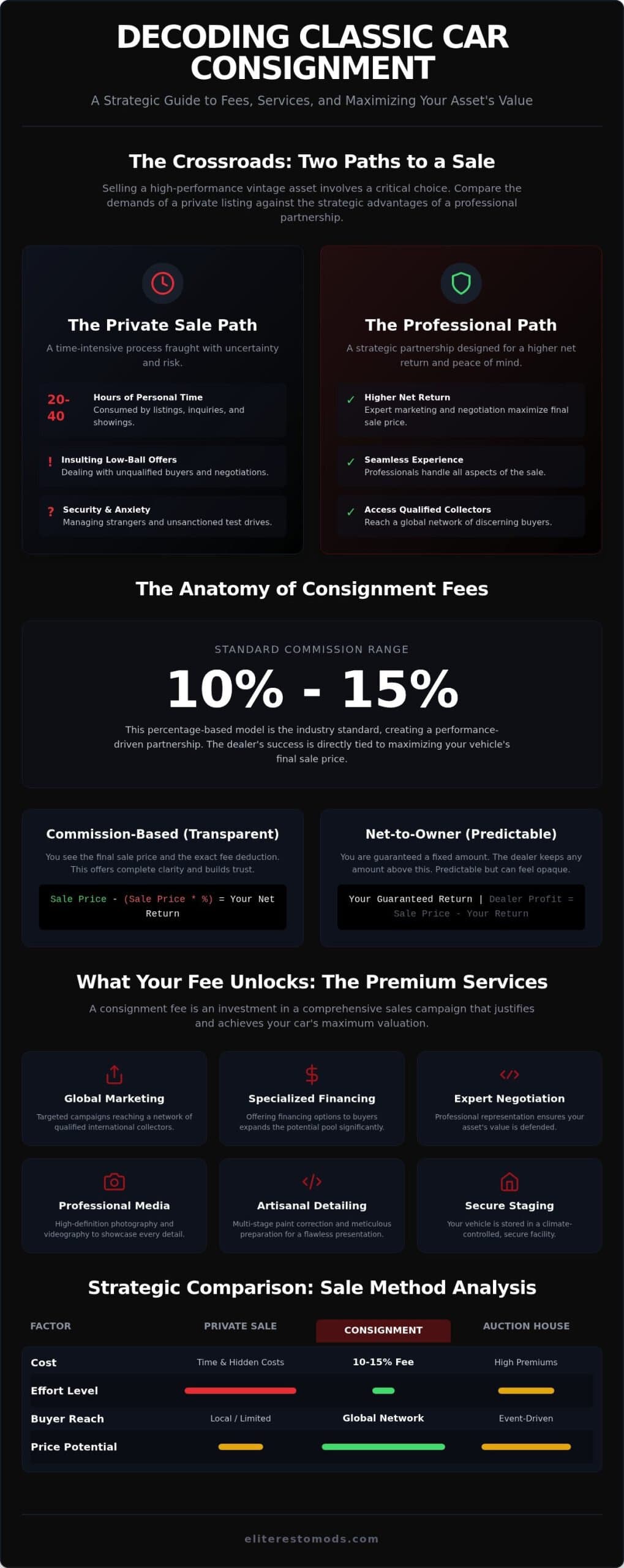
While a DIY listing can consume 20 to 40 hours of your personal time, a professional partnership offers a more refined path. This 2026 guide will pull back the curtain on standard commission structures, hidden costs, and the premium services that justify the investment. You’ll learn how professional marketing, specialized financing for buyers, and elite representation transform a simple sale into a strategic victory for your portfolio. We will break down exactly what you’re paying for, from climate-controlled staging to national reach, ensuring your vehicle finds a curator who values its heritage as much as you do.
Key Takeaways
- Understand that standard classic car consignment fees typically range from 10 to 15 percent, acting as a strategic investment to access a higher tier of qualified collectors.
- Distinguish between non-refundable entry fees and success-based commissions to better evaluate the total cost of professional sales representation.
- Compare the total financial impact of consignment against the hidden costs and time-intensive nature of private listings or high-premium auction houses.
- Learn how specialized dealer financing and professional detailing services expand your buyer pool and maximize the final resale value of your vehicle.
- Use a targeted checklist to evaluate consignment contracts, ensuring your partner provides the level of marketing and security your investment-grade asset deserves.
Understanding the Standard Structures of Classic Car Consignment Fees
Consignment is the bridge between a collector’s prized asset and a discerning new owner. You retain legal title while a professional curator handles the visceral work of marketing and negotiation. Understanding the Standard Structures of Classic Car Consignment Fees requires a deep dive into how these partnerships are legally and financially forged. It’s about more than just a sticker price. It involves the technical expertise required to represent an investment-grade vehicle. You aren’t just selling a machine; you are transferring a piece of functional art. This process demands a fee structure that reflects the meticulous nature of the representation.
The Percentage-Based Commission Model
The percentage-based commission model is the industry standard for a reason. In the 2026 market, classic car consignment fees typically range from 10 to 15 percent of the final sale price. This structure creates a powerful synergy. When the dealer works to highlight the modern engineering hidden beneath a vintage silhouette, their reward is directly tied to your success. It’s a performance-driven arrangement. For an elite restomod, this ensures that the salesperson is motivated to learn every detail of the build, from the specific gear ratios to the artisanal leather stitching. They become an advocate for your vision. This alignment of interests is the cornerstone of a successful consignment program.
Flat Fees and Success-Based Pricing
Flat fees offer a different kind of precision. These are often reserved for vehicles at the extreme ends of the value spectrum. For a multi-million dollar asset, a flat fee might be more equitable than a standard percentage. On the other end, minimum fees ensure that even for more accessible classics, the dealer can afford to invest in high-end marketing. Success-based pricing often includes specific triggers:
- Minimum fees to cover professional photography and detailing costs.
- Performance bonuses for sales that exceed a pre-agreed valuation.
- Negotiated flat rates for ultra-exclusive, seven-figure inventory.
This turns the sale into a shared victory. If the dealer secures a price that sets a new market benchmark, a bonus might be applied. It rewards the perfectionism required to move high-performance assets in a competitive market. You’re paying for the vision to bring a vintage asset into the modern era of sales.
Finally, it’s vital to distinguish between commission and net-to-owner agreements. In a net-to-owner setup, you receive a guaranteed amount, and the dealer retains the spread. It’s predictable but can feel opaque. Commission-based agreements offer total transparency. You see the final sale price. You see the exact deduction. This clarity is essential for maintaining trust while evaluating classic car consignment fees. It ensures that the focus remains on the quality of the build rather than just the mechanics of the transaction.
Upfront Costs vs. Success Fees in Professional Consignment
The financial architecture of a professional sale often begins with a critical choice: pay now for excellence or pay later in lost equity. Some dealers promote a zero-cost entry model. While alluring, these programs frequently offset the lack of upfront investment with significantly higher back-end commissions. In contrast, a premium consignment program often requires a transparent entry fee. This capital is immediately deployed to transform your vehicle from a garage-kept treasure into a globally marketed asset. It covers the visceral storytelling required to attract serious collectors. You aren’t just paying for a listing. You are funding a professional campaign that justifies your car’s valuation. Understanding how these upfront classic car consignment fees function is the first step in protecting your vehicle’s resale potential.
Marketing and Detailing Preparations
Investment-grade restomods demand a level of preparation that exceeds standard retail detailing. It’s an artisanal process. Specialized technicians perform multi-stage paint corrections to ensure the finish glows under studio lights. Engine bays are meticulously cleaned to showcase high-performance components. This physical preparation is paired with high-definition videography that captures the raw, mechanical symphony of the powertrain. Detailed historical research and professional write-ups then provide the necessary narrative context. This meticulous documentation builds buyer confidence. It transforms a machine into a piece of functional art with a documented pedigree, ensuring the final classic car consignment fees reflect a superior sales price.
Storage and Maintenance During the Sale
Preservation is a continuous act. While your vehicle awaits its next curator, it must remain in a climate-controlled environment to prevent the degradation of sensitive aesthetic finishes and mechanical seals. Professional facilities offer more than just a roof. They provide integrated maintenance. Battery tending keeps modern electrical systems primed. Regular fluid checks ensure the car is ready for immediate delivery. Insurance considerations are equally vital. A professional dealer carries comprehensive floor-plan insurance to protect your asset against the unexpected. This level of climate-controlled storage and care ensures that when the right buyer arrives, the car performs flawlessly. It maintains the integrity of the build throughout the entire sales cycle, justifying the cost of professional representation.
The roar of the auction crowd is intoxicating. It’s a visceral experience that captures the raw excitement of the automotive world. Yet, for the seller, that excitement is often tempered by the reality of the final settlement statement. Navigating classic car consignment fees involves a strategic comparison of market avenues. Consignment stands as a refined alternative to the chaotic auction block and the exhausting nature of private sales. It offers a structured environment where the soul of your vintage asset is protected by a professional curator who prioritizes your net return over a quick hammer fall. You maintain control over the narrative and the final price.
The True Cost of the Auction Block
Auctions rely on volume and momentum. This often comes at a steep price for the consignor. While a seller’s fee might sit at 8 to 10 percent, the buyer’s premium adds another layer of cost that directly impacts what a bidder is willing to pay. If a buyer has a $100,000 budget, they must account for a 12 percent premium, effectively lowering their maximum bid to roughly $89,000. You lose equity on both sides of the ledger. Consignment models avoid this hidden tax on the buyer’s psychology. You retain the power of a firm asking price without the threat of non-refundable no-sale fees that many auction houses charge if the reserve isn’t met. It’s a more calculated, professional approach to asset liquidation.
Why Free Private Sales Are Rarely Free
A private sale appears cost-effective on the surface. The reality is a grueling investment of personal resources. Industry data suggests that managing a high-end vehicle listing can take between 20 and 40 hours of active labor. You become the secretary, the mechanic, and the security guard. Most private sellers struggle with the technical intricacies of global vehicle inventory management and secure escrow. They lack the leverage of a professional showroom and the trust it instills in a buyer. By choosing a professional partner, you trade the frustration of low-ball offers for a marketing package that justifies a premium price point. You aren’t just paying a fee; you are buying back your time and securing a higher final valuation through expert negotiation.
Ultimately, the decision rests on where you want the friction to occur. Auctions provide speed but sacrifice price control and high premiums. Private sales offer the lowest direct fees but demand the highest personal toll and carry significant security risks. Professional consignment strikes the balance. It utilizes the dealer’s established reputation and specialized buyer network to net you more money than you could likely secure on your own, even after the commission is paid. It turns the sale of your functional art into a seamless, high-performance transaction.
How Consignment Services Maximize Your Final Sale Price
Maximizing the equity in a high-performance build requires more than just a clean engine bay. It requires a strategic environment that removes every hurdle between a buyer’s desire and their final signature. While we have already explored the standard structures of classic car consignment fees, the real value lies in the dealer’s ability to expand the market through professional infrastructure. A private seller is limited to cash buyers or those with pre-arranged loans. A professional curator provides the tools to close complex deals that would otherwise stall in a residential driveway. They transform a machine into a certified asset. Vintage soul. Modern precision.
The Power of Dealer Financing and Trade-ins
Many collectors pursuing six-figure restomods seek the leverage of specialized classic car financing. This is a niche financial product that standard banks rarely understand. Dealers maintain deep relationships with lenders who recognize the true value of high-performance mechanical components housed in vintage steel. This access transforms a limited pool of cash-heavy buyers into a global audience of qualified collectors. Additionally, the ability to accept trade-ins is a massive tactical advantage. A buyer may have a pristine vintage asset they need to move before acquiring yours. By facilitating this exchange, the dealer accelerates the transaction and secures a price that reflects the vehicle’s elite status. Brute force. Refined comfort.
Professional Negotiation and Closing Services
The final stages of a sale are often the most precarious. Managing out-of-state title transfers, secure escrow, and enclosed vehicle transport requires a meticulous attention to detail. Dealers act as a professional buffer. They handle the inevitable friction of pre-purchase inspections by providing a neutral, well-equipped space for third-party mechanics. This professional setting instills a level of confidence that a private garage simply cannot replicate. It validates the integrity of the build. When a vehicle is elite certified, it carries a weight of authority that justifies a premium asking price. The dealer navigates the technicalities of registration and tax compliance, ensuring the transition is as smooth as the car’s power delivery. It is a seamless journey from your collection to the next.
Investing in professional representation ensures that your classic car consignment fees aren’t just an expense; they are a catalyst for a record-breaking result. If you are ready to elevate your vehicle’s market position, explore our consignment program to reach a network of serious collectors. We treat every project not merely as a machine, but as a bespoke piece of functional art.
Choosing the Right Consignment Partner for Your Restomod
Selecting a partner to represent your investment-grade restomod is a decision of both logic and legacy. You are not simply looking for the lowest classic car consignment fees. You are looking for a curator who understands the marriage of brute force and refined comfort. A general classic car dealer might appreciate a vintage aesthetic, but they often lack the technical lexicon to sell a high-performance, modern build. They might miss the significance of a custom-tuned suspension or a bespoke artisanal interior. You need a specialist who can translate the meticulous nature of your build into a value proposition that resonates with serious collectors. It is about finding a bridge between your dream and a high-performance reality.
Questions to Ask Before Signing a Consignment Agreement
Transparency is the bedrock of a professional relationship. Before committing your asset to a showroom, you must peel back the layers of the contract. A premium fee is only justified if the service is equally superlative. Use this checklist to ensure your interests are protected:
- What is the exact commission percentage, and are there additional charges for detailing or photography?
- Where specifically will the car be marketed, and what is the frequency of listing updates on global platforms?
- What is the required term length for the consignment period, and what are the conditions for withdrawal?
- How does the dealer handle inquiries, and do they have a dedicated team for specialized classic car financing?
These answers will reveal if the dealer is a passive lister or an active advocate for your vehicle. A true partner invests their own resources into the narrative of your car. They don’t just wait for a phone call. They hunt for the right buyer through an established national network.
The Elite Restomods Approach to Professional Sales
We treat every project as a bespoke piece of functional art. Our focus remains exclusively on fully sorted, investment-grade vehicles that meet our rigorous standards for mechanical excellence and aesthetic finish. This specialization allows us to command top dollar in a crowded market. When a vehicle enters our program, it benefits from a national reach that a private seller cannot replicate. We manage the visceral excitement of the sale while maintaining the precision of a professional brokerage. Our goal is to net you more money than a private sale ever could, even after accounting for classic car consignment fees.
The journey from your garage to a new collection should be as seamless as a perfectly executed gear shift. If you are ready to secure the resale value your build deserves, we invite you to explore our consignment services. Let us provide the professional representation, specialized marketing, and technical authority required to find your vehicle’s next curator. Your masterpiece deserves nothing less than perfection in its final transaction.
Elevating Your Resale Strategy for Maximum Return
Evaluating the structure of classic car consignment fees is about more than just numbers. It is about recognizing the value of elite representation. By choosing a partner who understands the mechanical intricacies of a modern restomod, you ensure that your vehicle’s soul is communicated to the right audience. You trade the frustration of private negotiations for a systematic, professional approach that prioritizes your equity. Vintage heart. Modern expertise.
Our professional marketing reaches a global audience of qualified collectors, ensuring your functional art is seen by those who value its heritage. We handle every detail, including elite certified inspections and final title transfers, to provide a seamless experience. Our access to specialized financing makes your car more accessible to premium buyers who demand both vintage character and modern performance. Learn more about our premier classic car consignment services to begin your vehicle’s next chapter with confidence. Your masterpiece deserves a world-class curator.
Frequently Asked Questions
What is the average commission for classic car consignment in 2026?
Commission rates for professional representation typically range between 10 and 15 percent of the final sale price. This percentage ensures the dealer is motivated to secure the highest possible return for your investment-grade asset. While some high-volume auction groups offer rates as low as 8 percent, these often lack the personalized, high-touch marketing required for complex, modern restomods.
Are there upfront fees for consigning a classic car?
Yes, many professional dealers charge an enrollment or listing fee to cover the initial costs of inspection and preparation. These classic car consignment fees generally range from $0 to $250 and are used to launch a high-impact marketing campaign. This upfront investment ensures your vehicle is presented as a bespoke piece of functional art rather than just another static listing.
Who pays for the insurance while my car is on consignment?
The consigning dealer typically carries a comprehensive floor-plan insurance policy to protect vehicles while they are on their premises. However, it’s standard practice for the vehicle owner to maintain their own private insurance policy as the primary coverage until the title is officially transferred. You should always verify the dealer’s specific coverage limits and liability terms before signing a formal agreement.
Can I still sell my car myself while it is on consignment?
Most professional consignment agreements are exclusive, meaning the dealer has the sole right to represent and sell the vehicle during the contract period. This exclusivity allows the dealer to invest heavily in professional marketing and detailing without the risk of a side-sale. If you do find a buyer independently, the contract usually requires you to refer them to the dealer to complete the transaction.
Do consignment fees include professional photography and detailing?
Premium consignment programs often bundle professional photography and detailing into the initial fee or the success commission. High-definition videography and multi-stage paint correction are essential for capturing the visceral excitement of a modern restomod. Always check your contract to see if these artisanal services are included or if they are billed as additional line items during the intake process.
How long does a typical classic car consignment agreement last?
A standard agreement generally spans between 90 and 180 days to allow for a comprehensive global marketing cycle. This duration provides enough time to reach qualified collectors and navigate the technicalities of specialized financing. If the car remains unsold after this period, many dealers offer the option to renew the term or return the vehicle to your private collection.
Why are consignment fees higher for restomods than standard classic cars?
Restomods require a higher level of technical authority to represent accurately to a discerning buyer. The dealer must be able to explain the marriage of brute force and refined comfort, from the specific engine management systems to the custom suspension geometry. This specialized knowledge and the need for a targeted, global buyer network justify a more premium fee structure for these assets.
What happens if my car does not sell during the consignment period?
If the vehicle doesn’t find a new curator within the agreed timeframe, you can typically choose to pick up the car or extend the listing. Some dealers may charge a small no-sale fee to cover the costs of climate-controlled storage and marketing incurred during the representation. It’s a moment to re-evaluate the market position and ensure the car is elite certified to attract the right interest.