
The easier body to replace after an accident may not be the one that best protects a classic car’s originality or resale appeal. Fiberglass replacement parts are more prevalent than steel replacements, while steel is often the stronger fit for buyers seeking a factory-correct car and stronger resale prospects. That’s the central trade-off in choosing fiberglass vs steel classic car bodies.
Fiberglass resists corrosion and can be shaped into custom forms. Steel retains appeal when authenticity matters, but it can rust and may need more extensive bodywork. The right choice depends on how you plan to drive, restore, and eventually sell the car.
This comparison looks at replacement-part availability, originality, cost, resale value, flexibility, and durability. It explains where each material has an advantage, what can complicate repairs and finishing, and how to weigh the trade-offs for a build or purchase. The goal is to help you choose a body that suits the car and your plans for it.
Key Takeaways
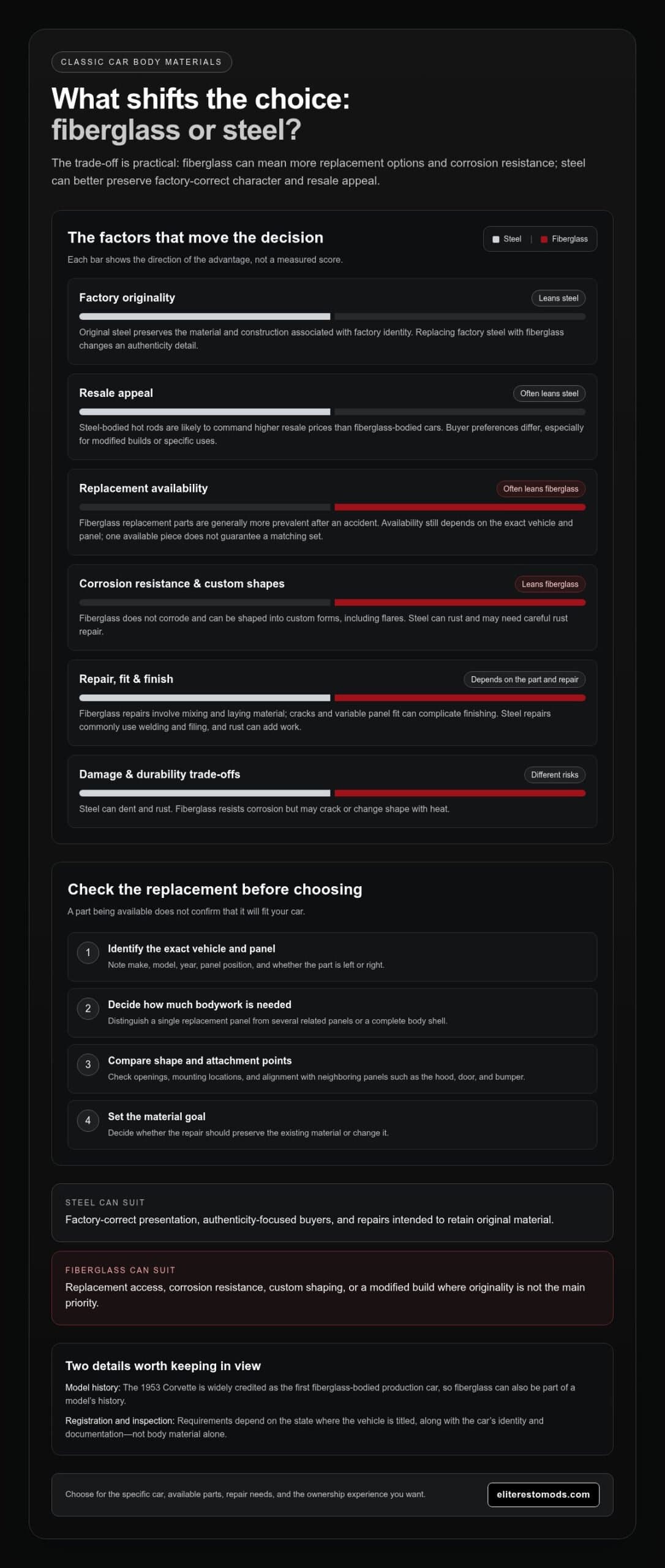
- Start with your priority: factory-correct originality often favors steel, while fiberglass can offer more options for replacement parts and custom shaping.
- Compare the body material with the car’s intended use; buyers seeking an authentic example may view fiberglass panels differently from drivers prioritizing practical repairs.
- Factor bodywork and paint into the initial cost comparison, then weigh how material choice may influence resale appeal.
- Consider the trade-offs: steel can dent and rust, while fiberglass resists corrosion but may crack or change shape with heat.
- Before choosing, assess the specific car’s condition, replacement-panel availability, repair needs, and the kind of ownership experience you want.
Original and reproduction body desirability
Original steel can appeal to buyers seeking factory-correct character, while reproduction fiberglass offers an alternative when preserving or replacing bodywork is the priority. The distinction affects originality, repair decisions, and how buyers interpret a classic.
Original Steel Body Desirability
An original steel body preserves the material and construction associated with a car’s factory identity. On a Z car, steel fenders are the factory-original choice, so replacing them with fiberglass changes an important authenticity detail. Buyers pursuing a faithful restoration may value original panels, particularly when their condition and fit support a period-correct appearance. Steel can still require careful rust repair.
Reproduction Fiberglass Body Desirability
Reproduction fiberglass bodies and panels can be an alternative when steel pieces are damaged or unavailable. Fiberglass does not corrode, and its panels can be shaped into custom forms, including flares. But reproduction parts are not necessarily identical: fit and finish can vary substantially by builder. Some buyers may also associate fiberglass parts with track use, even when the car’s history says otherwise.
Body Material, Value, and Authenticity
Steel generally better supports a factory-correct presentation, and steel-bodied hot rods are likely to command higher resale prices than fiberglass-bodied cars. That preference isn’t universal: a buyer may prize fiberglass for a modified build or a specific use. A fiberglass body can affect perceived originality, so describe the material accurately and distinguish reproduction parts from factory steel. The 1953 Corvette, widely credited as the first fiberglass-bodied production car, shows how fiberglass can also be part of a model’s history.
Both fiberglass and steel can be repaired after damage, but the methods differ. Fiberglass repair involves mixing and laying material; steel repairs commonly use welding and filing. Fiberglass can be easier to repair in some cases when the repairer understands the material, while cracks and poor panel fit can complicate finishing. Steel can dent or rust, and an exact reproduction panel with stock mounting points can simplify replacement.
A fiberglass body alone does not determine which U.S. registration, title, or inspection rules apply. Requirements depend on the state where the vehicle is titled, as well as the car’s identity and documentation.
| Body option | Originality | Buyer perception | Damage repair |
|---|---|---|---|
| Original steel | Supports factory-correct presentation | Often desirable to authenticity-focused buyers | Welding and filing; rust can complicate work |
| Reproduction fiberglass | Changes material originality | May suit modified builds; some buyers associate it with track use | Mixing and laying fiberglass; fit and finish vary |
Choose original steel when factory authenticity and resale appeal are priorities. Consider fiberglass when replacement access, corrosion resistance, or custom shaping matters more.
Availability of steel and fiberglass bodies
After an accident, fiberglass replacement parts are generally more prevalent than steel parts. That may give you another option when replacing a damaged panel. But the material alone does not tell you whether a particular part will fit your car. A front fender for one model year may differ from a similar-looking panel for another.
Start with the vehicle’s make, model, year, and the damaged panel’s position. Specify whether you need a left or right fender, a door, or a complete body shell. Then distinguish a single replacement panel from a full body. This simple inventory helps prevent an available part from being mistaken for the correct one.
Fiberglass can offer more replacement options after collision damage, but availability still depends on the vehicle and component. A reproduction fender might be available while the matching door or rear quarter is not. Steel replacements can also be difficult to locate for some repairs. The practical question is whether you can source the needed parts as a coherent set, not whether one panel appears in a listing.
Before choosing a material, compare the replacement piece with the car’s existing body. Check its outline, mounting locations, openings, and alignment with neighboring panels. A fender, for instance, needs to meet the hood, door, and bumper cleanly. A mismatch can turn an apparent parts solution into extra fitting and finishing work. Assessing adjacent pieces early helps you see whether the replacement will integrate with the rest.
- Identify the exact vehicle and panel location.
- Decide whether the repair requires one piece or several related panels.
- Compare the replacement’s shape and attachment points with the surrounding body.
- Consider whether the repair is intended to preserve the existing material or change it.
These steps turn parts availability into a practical assessment. A fiberglass panel may be easier to find after a collision, but fit and finish still affect the work ahead. A steel replacement may suit a repair intended to retain the original material, though the part can be harder to find. The choice depends on the damaged area, the parts available for that exact car, and your build priorities.
For a classic with extensive damage, map every affected panel before choosing a replacement material. A single fiberglass fender may solve one shortage; a multi-panel repair needs a consistent plan for fit, finish, and appearance. Treat the parts search as part of the restoration. First identify the components, then compare panels, and finally choose a material based on what the car needs.
Initial cost and resale value
Body material affects restoration costs and can shape buyer interest later. Labor and build time depend on the body’s condition, repair scope, panel fit, and finishing work.
Fiberglass Body Costs and Build Times
A forum member estimated that a new fiberglass Bronco tub would cost half as much as a new steel tub. That comparison concerns the tub itself, not the complete build. Labor still depends on fitting panels, correcting surface imperfections, and preparing the body for paint. Each step affects the schedule, particularly when reproduction pieces need adjustment.
Fiberglass may reduce the initial body-shell expense, but the shell is only part of the finished build. For a custom project, include fitting, finishing, and paint alongside the body purchase. The amount of work depends on the component and how well it fits.
Steel Body Costs and Build Times
Steel can carry a higher initial body cost. A hot-rod estimate puts the added expense of a steel body at at least 10 grand after bodywork and paint. That figure reflects the combined effect of shaping and finishing, rather than the bare panel alone. Rust repair or extensive metalwork can add further labor.
Steel build time depends on the body’s condition and the extent of metalwork. A clean shell needing little preparation differs from one requiring rust removal, panel alignment, and extensive bodywork. Compare material costs separately from the labor needed to prepare each body for paint.
Fiberglass Body Resale Value
Resale depends on the model, build quality, and the buyers a car attracts. Steel-bodied hot rods are likely to bring a higher resale price than fiberglass-bodied cars, particularly among buyers who value traditional construction.
These reports illustrate how condition and buyer demand shape value; they are not a universal valuation guide. Keep records of body repairs, replacement panels, and paintwork so future buyers can understand the car’s material choices.
For a useful cost comparison, separate the body purchase, labor, and paint into distinct estimates. Then compare the finished build with the resale audience you want to reach. A steel-bodied hot rod may require at least 10 grand more after bodywork and paint, while a fiberglass Bronco tub was estimated at half the steel tub’s cost. The initial saving matters most when it supports the intended build without undermining its appeal to likely buyers.
Material flexibility and durability
Fiberglass panel fit can vary by builder, while exact steel reproductions with stock mounting points generally simplify replacement. In a collision, steel can bend and fiberglass can crack, but body material alone does not establish a car’s overall crash protection.
Fiberglass Body Flexibility and Panel Fit
Fiberglass can flex only so far before cracking or breaking, and heat can change a panel’s shape after molding. Fit and quality vary substantially between builders, so compare a replacement fender with its hood, door, and mounting points before finishing. A flare joined to a fender may also crack at the seam, making that transition worth close inspection.
Steel Body Flexibility and Panel Fit
Steel is ductile, so a panel can bend without breaking. Exact reproduction steel panels with stock mounting points can make replacement more straightforward. Before welding, compare the panel’s edges and attachment points with the original body; a close match helps preserve alignment with adjacent pieces. Steel still requires attention to rust, especially in snowy regions or near the ocean.
Fiberglass Body Durability and Collision Safety
Fiberglass doesn’t corrode, but it can crack under impact or stress. That distinction matters after a collision: a panel may need fiberglass repair or replacement rather than metal straightening. A reported Jeep hood incident involved a falling log, about 4 inches in diameter and 4 feet long, with only a paint scratch. That anecdote isn’t a general measure of collision protection.
Race-weight fiberglass panels require substantial internal structure and Dzus fasteners for support; they are not intended for street use. Street-weight panels are different, so do not treat all fiberglass components as interchangeable. For a road-going classic, consider the panel’s intended application, support, and attachment method. Material alone cannot establish how the whole car will perform in a crash.
Steel Body Durability and Collision Safety
Steel can absorb damage by bending, which may leave a dent rather than a fracture. But a steel panel can rust, and corrosion can weaken the affected area over time. Before judging durability, inspect seams, lower body sections, and repaired areas for visible deterioration. Snowy roads and coastal air make corrosion a particular concern for steel-bodied classics.
With either material, inspect the full repair area rather than judging one panel. Check fiberglass for cracks at joined flares and changes in shape; examine steel for dents, rust, and panel alignment. Compare the fit with adjacent components, such as a fender against the hood and door. These checks reveal the panel’s condition, but they do not replace an assessment of the complete vehicle’s collision-safety features.
Choose fiberglass when corrosion resistance or custom shaping matters; choose steel when ductile repair and stock-panel fit are priorities.
What are the main differences between fiberglass and steel classic car bodies?
Steel and fiberglass differ in corrosion resistance, impact behavior, fit, finish, and repair method. A street-weight fiberglass panel may be only slightly lighter than standard steel. The better choice depends on the car’s condition and your build priorities.
Steel is ductile, so it can bend under impact, but it can also dent and rust. Fiberglass resists corrosion, yet it can crack when stressed beyond its flexibility. Snow and coastal air increase steel’s exposure to corrosion, while heat can change a fiberglass panel’s shape. Neither material is maintenance-free.
| Criterion | Fiberglass | Steel |
|---|---|---|
| Weight | Street-weight panels are only slightly lighter | Standard panel comparison point |
| Corrosion | Impervious to corrosion | Can rust, especially in snow or near the ocean |
| Damage | Can crack | Can dent or bend |
| Fit and finish | Quality varies by builder; finish may differ | Exact reproductions can use stock mounting points |
| Repair | Mixing and laying fiberglass | Welding and filing |
Fit is another key difference. Fiberglass panel quality and fit can vary substantially by builder, so inspect edges and mounting points before paint. A steel reproduction made with stock mounting points can make replacement more straightforward. Fiberglass can take paint differently from steel, and painted fiberglass may fade more. Color affects the degree of change.
Customization also favors fiberglass in certain applications. It can be shaped into forms such as flares, though joined or filled flare areas may crack. A forum participant estimated that a 1972 Charger could save about 100 pounds by replacing its complete front clip with street-weight fiberglass. That estimate illustrates a specific build, not a universal weight reduction.
- Choose steel when factory-style fit and repair by welding matter most.
- Consider fiberglass when corrosion resistance or custom shaping leads your priorities.
- Inspect steel for rust and dents, and fiberglass for cracks or heat-related distortion.
- Compare each panel’s fit and finish before committing to paint.
For either material, judge the whole panel, not just its surface. Check mounting points, adjacent panel alignment, and prior repairs. A fiberglass fender that needs extensive fitting may change the project’s finishing work; a rusted steel panel may require more metal repair. Plan your classic build around the body’s condition, intended use, and desired finish.
Elite Restomods: Elite Certified Restomods
Elite Restomods offers Elite Certified Restomods for drivers seeking a finished classic with modern capability. If you’re weighing steel originality against fiberglass flexibility, first define how you want the car to look, drive, and retain its character. Custom Build Services offer a path to a restomod shaped around those priorities. The Consignment Program can help owners prepare a classic for sale, while Climate-Controlled Storage provides dedicated vehicle storage.
Material is only one part of the decision: the car’s purpose, condition, and the ownership experience you want all matter. Explore the options at Elite Restomods, or visit eliterestomods.com to start a conversation.
Shape the Build Around the Drive
Before settling on a body material, picture the car in your life beyond the workshop. Is it for weekend drives, a carefully curated collection, or a personal vision brought to life through a custom build? Your intended use can clarify which compromises feel worthwhile and which details deserve priority.
Choosing between fiberglass and steel classic car bodies is ultimately about the experience you want, not simply a material preference. Write down your priorities for appearance, use, originality, and future ownership. That gives your next conversation a clear direction, whether you’re considering a finished restomod, developing a custom build, or preparing a classic for sale.
Elite Restomods offers Elite Certified Restomods, Custom Build Services, and a Consignment Program for distinct stages of that journey. Take the next step at your pace and bring your vision into focus. Contact Elite Restomods today to discuss your direction, and move closer to a classic you’ll be proud to drive.
Frequently Asked Questions
How much does a fiberglass body shell cost compared with a steel replacement body?
A forum member estimated that a fiberglass Bronco tub would cost half as much as a new steel tub. Treat this as a model-specific comparison, not a universal price guide. The final project budget also depends on labor for fitting, surface preparation, and paint. Compare the exact body components and their condition, then account for the work required to make each option ready for assembly.
How do fiberglass and steel bodies compare in weight, strength, and durability?
Fiberglass panels are generally lighter, while steel can bend under stress and fiberglass may crack after reaching its flex limit. The weight difference depends on the panels being compared, so do not apply a body-shell claim to every component. For a practical comparison, consider the complete panel set, its supporting structure, and how the car will be used. Durability also depends on condition and repair quality.
How do fiberglass and steel classic car bodies differ in rust resistance and maintenance?
Fiberglass does not corrode, while steel needs attention to rust, especially in snowy areas or near the ocean. Maintenance priorities differ: inspect steel seams and vulnerable body areas for corrosion, and monitor fiberglass for cracks, heat-related shape changes, and paint fading. Color can affect how much painted fiberglass changes over time. Documenting the finish and body condition also helps explain the car’s care history.
Which classic car models have widely available fiberglass or steel replacement bodies?
Replacement availability varies by model and panel, so no single material rule applies to every classic. Fiberglass replacement parts are more prevalent than steel parts after an accident. For example, steel fenders are the factory-original choice for the Z car, while Bronco discussions compare replacement tubs in both materials. Identify the exact model and damaged component before deciding which body option is easier to source.