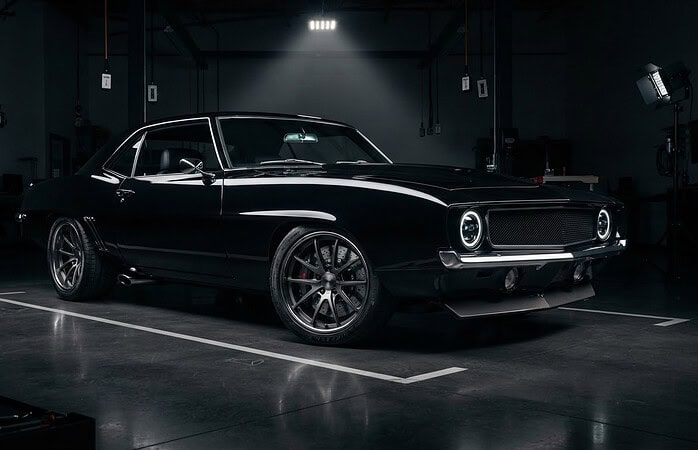

The easiest classic to live with is usually one that is straightforward to maintain, has accessible parts, and is structurally sound. The MGB and Chevrolet C/K Series are often practical starting points among low maintenance classic cars because of their simple mechanical layouts and parts support. A Volkswagen Beetle or Mazda Miata may also suit long-term ownership, provided rust is carefully assessed. Ultimately, condition and maintenance history matter as much as the badge.
A familiar design can make routine work more approachable, but rust, neglected maintenance, and poor storage can turn an appealing classic into a demanding project. How you drive and store the car also affects how reliably it serves you over time.
This guide compares models that are relatively straightforward to maintain and repair, explains what to inspect before buying, and shows how driving habits, storage, parts access, and owner communities shape long-term ownership. The goal is to help you find a car with the character you want and a maintenance burden you can manage.
Key Takeaways
- Favor models with straightforward mechanical layouts, accessible parts, and active owner communities to make ongoing care more manageable.
- Look beyond the paint: rust in body panels, underbody areas, and structural mounting points can shape the effort of ownership.
- Match the car to how you’ll drive and store it, since use and care influence reliability over time.
- Compare maintenance needs and repair access before choosing; a well-sorted example can make classic motoring more enjoyable.
1. Parts availability, rust, and owner communities
Parts support can make a classic easier to keep on the road. The MGB has extensive parts and club support, while 1960s–70s Chevrolet C/K trucks are known for simple mechanical setups and widely available parts. These are strong starting points when comparing low maintenance classic cars, but “cheapest” depends on the specific part, its condition, and whether you need an original or replacement component.
Before buying, research availability and affordability for the exact model, body style, and engine. Separate routine service items from model-specific trim or body pieces, since a car can be straightforward mechanically but difficult to restore cosmetically. Ask experienced enthusiasts which parts sources support the version you’re considering and what ownership typically involves. A Mustang owner community, for example, can help you understand differences between Ford Mustang variants and identify relevant mechanical knowledge.
Check for rust before judging a car by its finish. On a Volkswagen Beetle, inspect the body panels, the metal beneath them, and the suspension mounting points. Check a Mazda Miata for corrosion too, including areas that a quick walk-around may miss. Look underneath, along seams, and around structural attachment points. Fresh paint alone tells you little about the condition of the metal below.
During a test drive, note how the engine starts, idles, and responds. Look for leaks or improvised repairs, and compare maintenance records with the car’s current condition. Owners’ clubs can explain common model-specific issues, point you toward suitable parts, and share practical service knowledge. They can also help you understand which body style and engine suit your intended use. If you find rust or metalwork beyond your abilities, get a specialist assessment before committing to repairs. A sound, well-supported example is often a better long-term choice than a cheaper car with hidden corrosion.
2. How Does Reliability Affect A Classic Car’s Value Over Time?
Reliability can add to a classic’s appeal, but condition, originality, service records, and parts access matter too. For an older sports car, dependable starting, predictable handling, and a healthy engine make regular use easier to plan. A mechanically sound example can suit buyers looking for an enjoyable driver rather than a long repair project. Maintenance records help show how the car has been cared for.
Safety is another part of the ownership decision. According to the National Highway Traffic Safety Administration, the average vehicle on the road in 2012 posed 56% less fatality risk than vehicles from the late 1950s. Classic models lack many later safety improvements, so assess brakes, tires, lights, seatbelts, and steering condition. A strong mechanical inspection matters, especially if you plan to drive beyond occasional local trips.
Fuel injection is not automatically easier to maintain than a carburetor. Carburetors have a relatively simple mechanical design but may need adjustment. Fuel-injected systems can reduce routine tuning, while repairs may require suitable diagnostic knowledge. The better option depends on the system’s condition and access to service expertise for that model.
Common reliability concerns include aged hoses and seals, cooling-system faults, electrical problems, fuel-delivery issues, and worn brakes. Review service records and ask how the car behaves when cold and fully warmed. During a running test, observe starting, idling, acceleration, braking, and temperature stability. These checks reveal more than a polished exterior can.
A classic can work for regular driving when its condition, maintenance needs, and intended use align. Frequent use calls for attention to fluid leaks, tire condition, and changes in engine or brake behavior. A weekend car may suit owners who prefer occasional drives and less daily wear. If affordability is part of your planning, classic car financing can be considered alongside the car’s condition and ongoing maintenance needs.
3. What Are the Most Reliable Classic Cars for Long-Term Ownership?
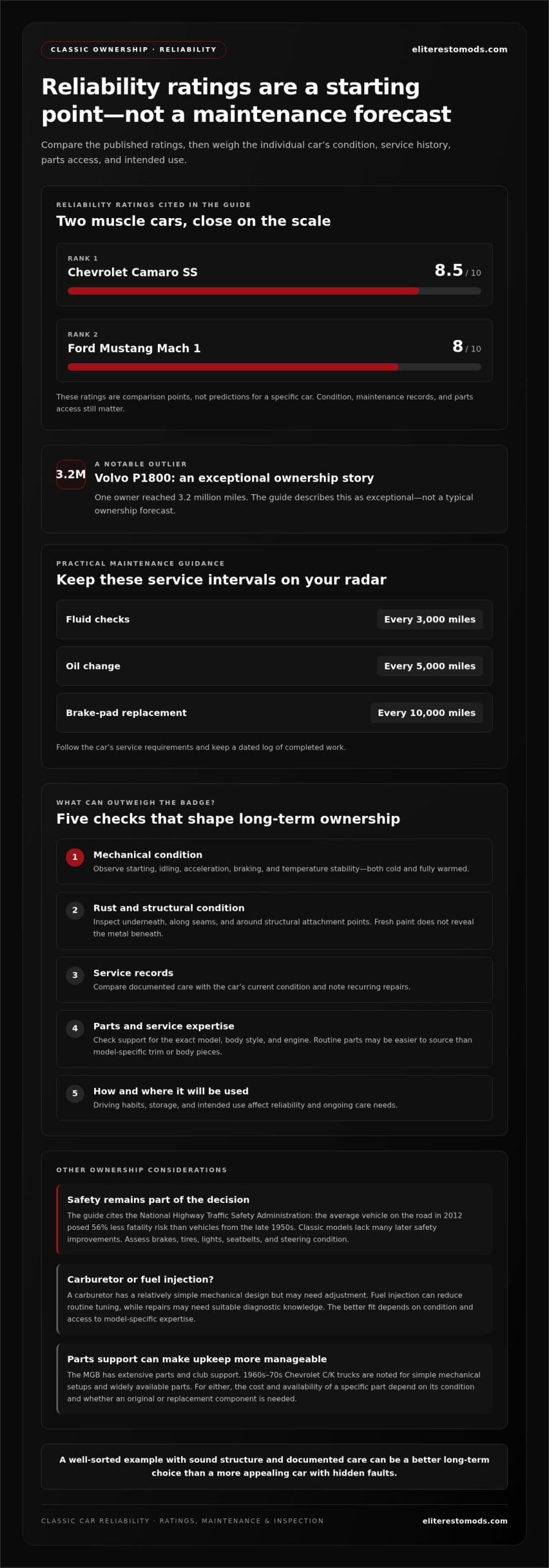
Reliability rankings can help narrow the field, but they don’t predict each car’s condition or future upkeep. The Ford Mustang Mach 1 is rated 8/10 for reliability, while the Chevrolet Camaro SS is rated 8.5/10. Treat these numbers as comparison points, then assess service history, mechanical condition, and parts access on the individual car.
The Volkswagen Beetle and Volvo P1800 also have strong reputations among classic-car owners, but reputation isn’t a maintenance plan. One Volvo P1800 owner reached 3.2 million miles, an exceptional example rather than a typical ownership forecast. For long-term durability, look for documented care, sound systems, and repairs completed before small faults become larger jobs.
Servicing needs vary by model, condition, and use. A practical baseline in the provided maintenance guidance is an oil change every 5,000 miles, brake-pad replacement every 10,000 miles, and fluid checks every 3,000 miles. Follow the car’s service requirements and track work in a dated log. That record helps owners spot recurring repairs and understand how the car has been maintained.
Fuel consumption and running costs depend on engine design, tuning, traffic, and driving habits. A large-engine muscle car may use more fuel than a lighter Volkswagen, while an older car’s condition can affect both consumption and repair needs. Compare the models against your expected use, not just their appeal at purchase. Insurance costs also depend on factors such as vehicle value, usage, and coverage.
Insurance, registration, and emissions requirements vary by state. A car’s age, intended use, and state-specific rules can affect its classification and applicable requirements, so include these considerations in your ownership budget. Ask your insurer how its policy treats limited-use classics, and review your state’s registration and emissions rules before driving regularly.
Servicing isn’t the only long-term expense: tires, brakes, fuel, storage, and occasional repairs all matter. A Porsche Carrera 3.2 is listed with 240% value retention, but appreciation doesn’t erase maintenance needs. Compare a car’s documented upkeep and likely use with your budget, then choose for enjoyable ownership, not reputation alone.
4. Classic cars considered easier to repair
Repairability often comes down to accessible components, straightforward systems, and clear service knowledge. Cars from the 1960s to 1980s were engineered for a different era, before modern vehicles added layers of electronic control. That can make some mechanical faults easier to trace, but age still matters. A simple layout won’t offset worn components, poor past repairs, or corrosion.
The Volkswagen Beetle is air-cooled, so it does not rely on a liquid-cooling system or radiator. This simpler arrangement can make some routine mechanical work more direct. Still, repair needs depend on the condition of the engine, transmission, brakes, and body. An easy-to-understand design is an advantage, not a substitute for sound maintenance.
American classics such as the Ford Mustang have broad name recognition, but buying by reputation alone can mislead. Mustang models span the 1965–1973 model years, and differences between generations and configurations affect parts needs and repair work. Before choosing, identify the exact model and engine, then compare parts availability and service knowledge for that version. Popularity helps only when the parts and expertise match the car.
Use a practical repairability test during your inspection. Ask what maintenance has been completed, review receipts, and note non-original modifications. Look for accessible service points and repairs carried out consistently. If you find a fault, consider whether it involves routine mechanical work or specialist metalwork. Rust treatment and complex body repairs can turn a seemingly simple project into a demanding restoration.
The best choice isn’t automatically the cheapest to buy. A car with a clear service history and familiar mechanical systems may be more enjoyable to own than a lower-priced example needing extensive work. Compare the specific car’s condition, parts support, and repair complexity before deciding. To explore available classic models, browse the classic car inventory and consider which platform best fits your intended use.
Elite Restomods: Elite Certified Restomods
Elite Restomods offers Elite Certified Restomods for drivers who want classic styling paired with modernized capability. These fully sorted, investment-grade vehicles undergo a quality assurance process, making them a natural next step if you’d rather enjoy a completed restomod than take on a car needing extensive work.
For a classic tailored to your priorities, Elite Restomods’ Custom Build Services provide a path to a personalized project. The Consignment Program helps owners sell a vehicle, while Climate-Controlled Storage offers a dedicated way to care for a classic between drives. These services support different stages of ownership, from creating a finished car to caring for one you already own.
If you’re considering a sorted restomod, a custom build, or care for a classic you own, contact Elite Restomods to discuss your next step.
Choose the ownership experience you want
Before committing, picture an ordinary month with the car: where you’ll drive it, how much time you can give its upkeep, and whether you want original character or a contemporary driving feel. Those preferences turn a broad search for low maintenance classic cars into a practical shortlist. Choose a car that fits your routine, so you can enjoy it rather than wait for the “right” occasion.
Then decide what kind of ownership journey appeals to you: a finished restomod, a tailored build, or help finding a classic that matches your priorities. Elite Restomods can help you explore these options and choose a direction that suits your vision.
Take the next step and explore Elite Restomods. Your ideal classic should feel right on the road and rewarding to own.
Frequently Asked Questions
How Do Usage And Storage Conditions Affect Long-Term Reliability?
Regular use and suitable storage both help preserve a classic’s condition. Long periods outdoors expose paint, seals, and metal to the weather, while a damp garage can encourage corrosion. Before storing a car, clean and dry it, address leaks, and arrange periodic checks of the battery, tires, and fluids. After storage, check for fresh leaks or pests before driving.
How Does Reliability Affect A Classic Car’s Value Over Time?
Reliability can support buyer confidence, especially when maintenance records show consistent care. A car that starts, runs, and performs predictably may appeal to drivers seeking more than a display piece. Keep receipts, record repairs, and document original components and modifications. These records help a future buyer understand the car’s history, though condition and desirability also influence market appeal.
What Are the Most Reliable Classic Cars for Long-Term Ownership?
Models with straightforward mechanical systems and established owner communities can be practical long-term choices. The Chevrolet Impala models produced from 1961 to 1966 are among the everyday-driving classics discussed for reliability. Consider a specific car’s maintenance history and present condition rather than relying on a model’s reputation alone. A detailed inspection can reveal whether its past upkeep supports the kind of driving you plan.
Which Classic Cars Are Easiest To Maintain Over Decades?
Cars with uncomplicated mechanical layouts and accessible service knowledge are often easier to maintain over decades. The Volkswagen Beetle’s air-cooled design is one example of a relatively direct arrangement. Long-term ownership also rewards consistency: keep a service log, investigate new noises promptly, and use parts suited to the car’s exact configuration. Even a simple design needs careful attention as components age.
What classic cars are the most reliable and low maintenance?
For buyers considering low maintenance classic cars, the MGB and Chevrolet C/K Series are useful starting points because of their straightforward mechanics and parts support. The best fit depends on the individual car, its service history, and how you plan to use it. Compare the exact engine and configuration, then consider whether parts and repair expertise suit your ownership plans.
What are the best low-maintenance classic cars for beginners?
Beginners can start with a well-documented model, a clear service history, and an active enthusiast community. An MGB offers approachable mechanical character, while a Volkswagen Beetle has a distinctive, relatively simple layout. Choose a sound example over a heavily modified car, and learn its routine checks before attempting repairs. Community advice can help new owners build confidence over time.