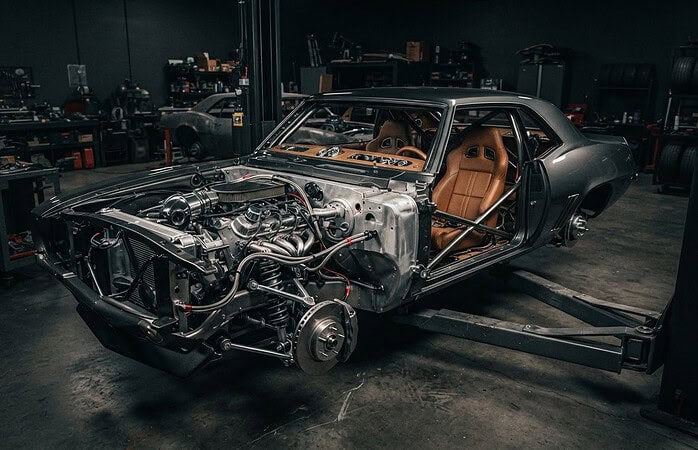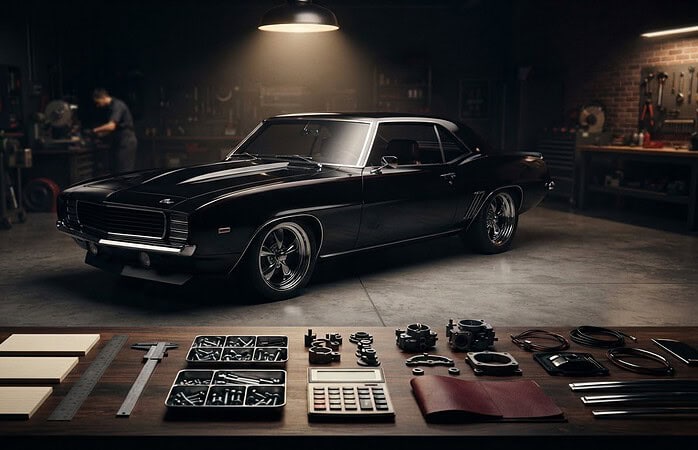

The most expensive classic car you’ll ever own isn’t the one with the highest sticker price; it’s the one built with shortcuts. When enthusiasts ask how much does a restomod build cost, they’re often looking for a simple number, but a world-class machine is an exercise in investment-grade engineering rather than a mere list of parts. You want the visceral roar of a vintage V8 paired with the unwavering reliability of a modern supercar. Achieving that balance requires a sophisticated understanding of how heritage and hardware intersect.
It’s natural to feel concerned about project creep or the fear of buying a vehicle that’s little more than lipstick on a pig. You deserve a turn-key masterpiece that’s as comfortable on a cross-country tour as it is on a concours lawn. This guide provides a transparent look at the financial architecture of a premium build, explaining why one project demands a different level of capital than another. We’ll examine the meticulous labor hours required for perfection, the necessity of bespoke components, and how the Elite Certified standard ensures your vehicle remains a lasting asset for years to come.
Key Takeaways
- Transition from the concept of a simple restoration to a comprehensive engineering project that marries vintage design with modern luxury performance.
- Gain clarity on how much does a restomod build cost by analyzing the critical impact of professional labor hours and the selection of premium, high-performance hardware.
- Explore the Elite Certified standard to understand why the final testing and quality assurance phase is the bridge between a project and a reliable, daily-driven asset.
- Learn strategic budgeting and sourcing methods to navigate the 2026 market, ensuring your capital is allocated toward performance rather than remediating a poor donor car.
- Protect the long-term value of your bespoke machine through a dedicated preservation strategy that safeguards both mechanical integrity and hand-crafted aesthetics.
The Value of Modern Engineering: Why Investment-Grade Restomods Command a Premium
In 2026, the definition of a classic car has shifted from a museum piece to a high-performance lifestyle asset. A modern restomod represents a deliberate marriage between visceral heritage and supercar-level performance. When evaluating how much does a restomod build cost, you aren’t just paying for a donor vehicle and a fresh coat of paint; you’re investing in a comprehensive engineering project. This evolution involves defining a restomod as a vehicle that retains its historical soul while gaining the unwavering reliability of a contemporary luxury machine.
A professional custom restomod builder is essential because they transition the vehicle from a simple restoration to an engineered platform. You can’t safely drop 600 horsepower into a chassis originally designed for 200 without professional structural reinforcement. This process ensures that the nostalgia of driving a vintage icon isn’t ruined by the mechanical failures or safety risks of the past. Every component is scrutinized to guarantee that the raw, mechanical excitement of the drive is tempered with refined, modern control.
To visualize the scale of an investment-grade project and the craftsmanship involved, watch this detailed walkthrough:
Restomod vs. Traditional Restoration: A Financial Comparison
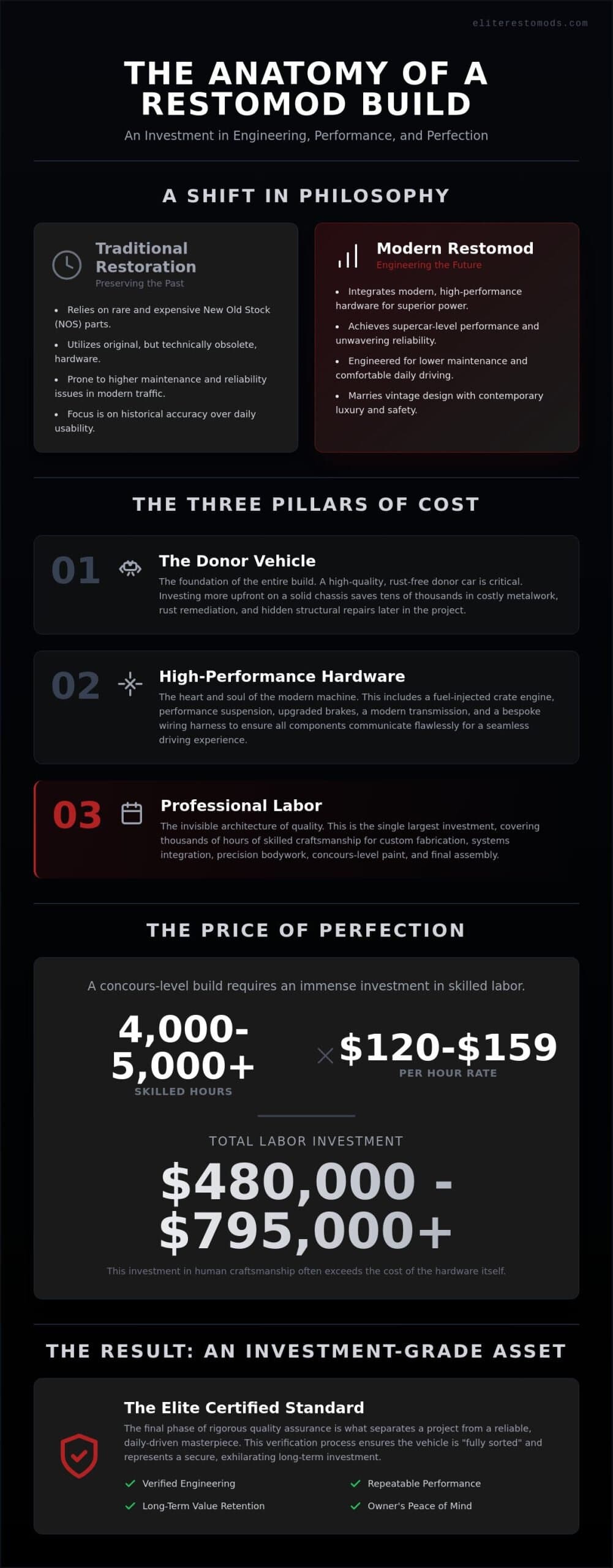
Traditional restorations often rely on New Old Stock (NOS) parts that are rare, expensive, and technically obsolete. These components frequently fail to meet the demands of modern traffic. By contrast, restomodding utilizes high-performance hardware like fuel-injected crate engines and independent rear suspensions. This modern technology significantly reduces maintenance costs over a five-year ownership period. You won’t spend your weekends chasing vacuum leaks or adjusting carburetors. Instead, you’ll have a machine capable of modern highway speeds and equipped with advanced safety features. This operational reliability is a massive factor when determining how much does a restomod build cost for a client who intends to actually drive their vehicle.
The Rise of Functional Art as an Asset Class
High-end builds have emerged as a legitimate asset class, often referred to as functional art. Investment-grade restomods hold their value far better than unfinished project cars or “lipstick on a pig” builds. Collectors prioritize “fully sorted” vehicles that have passed rigorous quality benchmarks like our Elite Certified inspection. These cars command a premium because the engineering is verified and the performance is repeatable. Buyers aren’t just purchasing a car; they’re purchasing the peace of mind that comes with a master builder’s vision. You can explore our current inventory of investment-grade restomods to see how these bespoke machines represent a secure and exhilarating long-term investment.
The Anatomy of a Build: Breaking Down the Primary Cost Drivers
Peeling back the layers of a world-class project reveals a complex ecosystem of costs. While many enthusiasts focus on the engine or the paint, understanding how much does a restomod build cost requires looking at the three foundational pillars: the donor car, the high-performance components, and the thousands of professional labor hours required for seamless integration. Labor is the invisible architecture of quality. In 2026, professional concours-level restorations typically require 4,000 to 5,000 hours of skilled labor. With national average labor rates for independent shops ranging between $120 and $159 per hour, the investment in human craftsmanship often exceeds the cost of the hardware itself.
Engineering a modern soul into a vintage shell is far more than a simple parts exchange. It involves custom wiring harnesses, ECU tuning, and bespoke fabrication to ensure modern electronics communicate with classic gauges. Beyond the mechanical, the impact of artisanal interior craftsmanship cannot be overlooked. A full restomod interior averages between $6,000 and $18,000, where hand-stitched leather and modern sound dampening transform a noisy cabin into a refined sanctuary. To help plan your investment, industry experts often categorize projects into Three realistic budget tiers based on the desired level of customization and performance.
Powertrain and Drivetrain Engineering
The heart of a restomod is its modern heartbeat. Crate engines like the LS3 offer a reliable foundation, with a complete turn-key package including EFI systems costing approximately $13,749. For those seeking more aggressive power, high-performance big blocks can exceed $30,000. Integrating these powerplants requires sophisticated drivetrain engineering. This includes mating the engine to modern six-speed manuals or advanced automatic transmissions with paddle shifters. Thermal management is equally critical. Custom exhaust fabrication and high-capacity cooling systems are essential to ensure 600 horsepower remains manageable during a summer cruise. You can learn more about how we manage these technical complexities by reviewing our meticulous build process.
Chassis and Suspension: The Foundation of Performance
A vintage frame was never intended to handle the torque of a Gen 3 Coyote or an LT4. Replacing an antiquated chassis with a high-performance Art Morrison or Roadster Shop frame typically costs between $20,000 and $35,000. This foundation allows for advanced suspension geometry and modern coilover systems that provide a supple yet responsive ride. To match this newfound speed, upgrading to modern braking systems is non-negotiable. Wilwood or Brembo hardware provides the supercar-level stopping power necessary for modern safety standards. This holistic approach to the chassis ensures the vehicle handles with the precision of a contemporary sports car while retaining its iconic silhouette.
The Price of Perfection: Identifying the Fully Sorted Standard
The true measure of a vehicle isn’t found in a static showroom; it’s found at sixty miles per hour on a coastal highway. Many enthusiasts underestimate the cost to put together a fully customized classic because they overlook the sorting phase. This is the period after assembly where a master builder transforms a collection of high-end parts into a cohesive, reliable machine. Defining a vehicle as fully sorted means every mechanical gremlin has been exorcised and every modern system is calibrated to perfection. When calculating how much does a restomod build cost, the investment in this final testing phase is what distinguishes an investment-grade asset from a frustrating project car.
Professional sorting prevents the money pit syndrome that plagues amateur builds. Transparency and documentation are the hallmarks of a professional project. A comprehensive build book, detailing every component and calibration setting, adds five-figure value to a vehicle’s resale. It’s the difference between a car that sells for its parts value and one that commands a premium as a turn-key masterpiece. Our Elite Certified rigorous inspection process ensures that every vehicle meeting our standard is ready for daily utilization, not just display.
The Final Five Percent: Where Master Craftsmanship Lives
Mastery lives in the details. Eliminating rattles, wind noise, and electrical interference requires exhaustive road testing and meticulous adjustment. A modern wiring harness is only as good as its integration; professional ECU calibration is required to ensure the engine delivers power smoothly across the entire RPM range. You can learn about our Elite Certified process to see how we bridge the gap between assembly and excellence. This phase ensures the car doesn’t just run; it performs with the poise of a modern luxury vehicle.
Artisanal Aesthetics: Paint, Body, and Interior
The visual impact of a restomod must match its mechanical prowess. A show-quality paint job typically starts at $20,000 for investment-grade vehicles, requiring hundreds of hours in block sanding and clear coat refinement to achieve a mirror finish. Inside the cabin, bespoke costs reflect the use of premium Italian leathers and the seamless integration of modern climate control systems. We often utilize 3D-printed custom components to create a truly one-of-one feel, ensuring that the touchpoints of the vehicle are as refined as its performance. These artisanal finishes are essential for any build intended to hold its value in the high-end market.
The Financial Roadmap: Budgeting for Your Custom Restomod Commission
Navigating the financial commitment of a bespoke automotive project requires more than a simple savings account. It demands a strategic roadmap. When prospective owners ask how much does a restomod build cost, they’re often surprised to learn that the timeline of a build dictates the capital allocation as much as the parts list does. A world-class project isn’t a single transaction; it’s a phased investment that typically spans twelve to twenty-four months. This duration allows for a structured approach to funding, ensuring that your liquidity is preserved while master builders execute the technical intricacies of the chassis, powertrain, and artisanal finish.
Establishing realistic price brackets in 2026 depends heavily on the starting point. Professional builds start at a minimum of $300,000, but the final invoice is often a direct reflection of the donor car’s initial condition. Strategic sourcing is the first step toward a successful commission. By identifying a vehicle with a sound structure, you ensure that your capital is invested in high-performance hardware rather than remediation.
Sourcing and Procurement Strategies
Choosing the right foundation is the most critical financial decision you’ll make. Starting with a rust-free, structurally sound donor is always a smarter move than attempting a total rescue of a derelict shell. A cheap project car often hides catastrophic structural decay that requires hundreds of additional labor hours in metal fabrication. By utilizing a professional sourcing service, you can identify an ideal foundation that allows your budget to be spent on modern engineering rather than rust repair. Learn more in our article on how to find the perfect classic car sourcing service.
Financing Your Dream: Specialized Lending for Restomods
Many collectors assume that an investment-grade build requires a full cash outlay. However, the 2026 market offers sophisticated financial tools specifically designed for high-end assets. Classic car loans differ significantly from standard automotive financing because they recognize the vehicle’s long-term appreciation potential. Financing an Elite Certified build allows you to preserve your personal capital for other investments while securing a fixed-rate loan tailored to the unique value of a restomod. It’s a professional approach to luxury ownership that balances passion with fiscal responsibility. For a deep dive into these options, read the 2026 guide to classic car financing.
If you’re ready to begin your journey toward a bespoke masterpiece, explore our Custom Build Services to see how we transform your vision into a high-performance reality.
Protecting Your Investment: Post-Build Ownership and Value Retention
The journey doesn’t end when the final bolt is torqued and the engine roars to life. Owning a world-class restomod is about maintaining its status as an investment-grade icon for decades. When considering how much does a restomod build cost, one must look beyond the initial construction to the long-term preservation of the asset. A bespoke machine requires a higher level of care than a standard production vehicle. This involves a systematic approach to storage, maintenance, and logistics to ensure the engineering remains as sharp as the day it left the shop. Neglecting these post-build realities can quickly erode the value you’ve meticulously built into the car.
Maximizing your exit value is a critical part of the financial roadmap. Professional consignment programs play a vital role here. By utilizing a curator who understands the Elite Certified standard, you position your vehicle for a premium sale in the global market. It’s about simplifying the ownership experience so you can enjoy the visceral thrill of the drive while experts handle the complexities of valuation and market placement. Understanding how much does a restomod build cost involves factoring in the entire lifecycle of the vehicle, from the first weld to the final sale. This comprehensive perspective ensures your capital remains protected while you enjoy the rewards of a master-built machine.
Climate-Controlled Storage and Preservation
High-end paint and custom leather are sensitive to environmental fluctuations. Modern electronics, which we’ve integrated to provide modern reliability, can suffer in humid or extreme temperature conditions. The science of maintaining a fully sorted vehicle over long periods is rooted in stability. Standard garages expose your investment to moisture and temperature swings that can degrade artisanal finishes and compromise electrical integrity. Read more about the importance of climate controlled car storage to see how we protect your investment from degradation. This level of care is what keeps a restomod in showroom condition for years of reliable daily driving.
National Transport and Global Logistics
Moving an investment-grade restomod requires more than a simple tow truck. Enclosed vehicle transport is a necessity to protect the artisanal finish from road debris and weather. Whether you’re heading to a national show or relocating your collection, professional logistics ensure the vehicle arrives in show-ready condition. You can discover our full range of professional services, including climate-controlled storage and enclosed transport, to see how we simplify the life of the modern collector. By centralizing these services, we provide a turn-key experience that allows you to focus on the drive while we manage the technical and logistical demands of your automotive asset.
Realize Your Vision of Automotive Excellence
A world-class restomod is more than a vehicle; it’s a legacy redefined by modern engineering. You now understand that the true value lies in the thousands of hours of skilled labor and the meticulous sorting process that ensures a turn-key experience. By prioritizing a rust-free donor and utilizing professional sourcing, you protect your capital from the hidden pitfalls of amateur projects. Understanding how much does a restomod build cost allows you to approach your commission with the confidence of a curator rather than the uncertainty of a hobbyist. Heritage met with hardware. Soul paired with certainty.
You deserve a machine that captures the spirit of the past without the mechanical burdens of yesteryear. Whether you require specialized classic car financing to preserve liquidity or national enclosed transport services to deliver your asset in pristine condition, we provide the professional infrastructure for your success. Our Elite Certified quality assurance ensures that every detail meets the highest standards of functional art. Now is the time to bridge the gap between your long-held dream and a tangible, high-performance reality. Commission your investment-grade build with Elite Restomods and begin your transformative journey today.
Frequently Asked Questions
How much does a restomod build cost on average in 2026?
A full professional build in 2026 typically starts at a minimum of $300,000. While entry-level projects exist, investment-grade machines often range from $500,000 to over $1,000,000. When calculating how much does a restomod build cost, you are funding 4,000 to 5,000 hours of master-level engineering. You’re paying for the price of perfection and the seamless marriage of vintage soul with modern performance.
What is the difference between a restomod and a standard classic car restoration?
Standard restoration returns a vehicle to factory specifications using period-correct, often technically obsolete parts. Restomodding preserves the iconic silhouette but integrates modern performance components like fuel-injected engines and advanced suspension geometry. It’s the marriage of brute force and refined comfort. This duality allows you to enjoy a classic era of design with the unwavering confidence of modern engineering and safety standards.
Are restomods a better financial investment than original classic cars?
Investment-grade restomods often hold their value better than unfinished projects because they appeal to a broader market of collectors who prioritize reliability. While an original car is a historical artifact, a restomod is a functional asset meant to be utilized. The Elite Certified badge ensures the engineering meets the standards required for long-term value retention and daily driving capability in a modern world.
How long does a professional custom restomod build typically take?
A professional custom build typically spans twelve to twenty-four months. This duration allows for the meticulous engineering of the chassis and the seamless integration of modern powertrains. Perfection takes time. The final sorting phase alone requires exhaustive road testing to ensure the vehicle is fully sorted and ready for daily utilization without the mechanical burdens of the past.
Can I finance a restomod build that hasn’t been finished yet?
Specialized classic car financing is available for builds that are currently in progress. These financial instruments recognize the projected value of the completed asset rather than just the current state of the donor shell. This approach allows you to preserve your personal capital while funding the transformation in strategic phases as the project reaches specific engineering milestones throughout the build process.
What are the most common hidden costs in a restomod project?
Structural remediation and electronic integration are the most frequent hidden costs. A donor car that looks clean on the surface can hide structural decay that requires hundreds of hours in metal fabrication to correct safely. Additionally, the complexity of custom wiring and ECU tuning for modern performance engines often demands more resources than a simple parts list suggests. Expect the unexpected in custom engineering.
Do I need to find my own donor car or can a builder source it for me?
We provide professional vehicle sourcing to identify a rust-free foundation for your project. You don’t need to bring your own donor car. Finding the right platform is a strategic move that ensures your capital is spent on high-performance upgrades rather than remediating a poor foundation. It’s about starting with excellence to ensure a superior final product.
How do I maintain a restomod with modern performance parts?
Maintenance follows modern service intervals due to the use of reliable, contemporary hardware. You’ll perform standard oil changes and fluid checks as you would on a modern luxury car. To preserve the investment, we suggest utilizing climate-controlled storage. This protects the artisanal leather and modern electronics from environmental degradation, ensuring the vehicle remains in showroom condition for years of exhilarating use.